What does an elaborate garment have in common with a slice of jamón ibérico? For a start, there’s the detail. Then there are the hands that make it, the inspirations behind it and the sheer trouble and time that goes into attaining a satisfactory result. Where Savile Row brings razor-sharp cuts or Cristóbal Balenciaga dresses give meticulous structure, jamon ibérico is a vivid sensory experience that is deeply layered in its heritage and production process. At Outernet Live London, these connections shaped a conversation of Ibérico that went far beyond a plate of jamón, asserting the brand into the realm of art, fashion and cultural exchange.
Jamón Ibérico: From slice of ham to cultural leader
Promoted by
Jamón Ibérico
Words by
Sphere Editors
26th November 2026
At London’s Outernet last week, a panel exploring jamón ibérico brought leading voices of gastronomy, art and fashion together to ask the weighty question: how does jamón tie them together? Marking the end of a three-year EU-backed campaign, the activation is an illustration of how luxury brands are tapping into culture to engage new audiences.
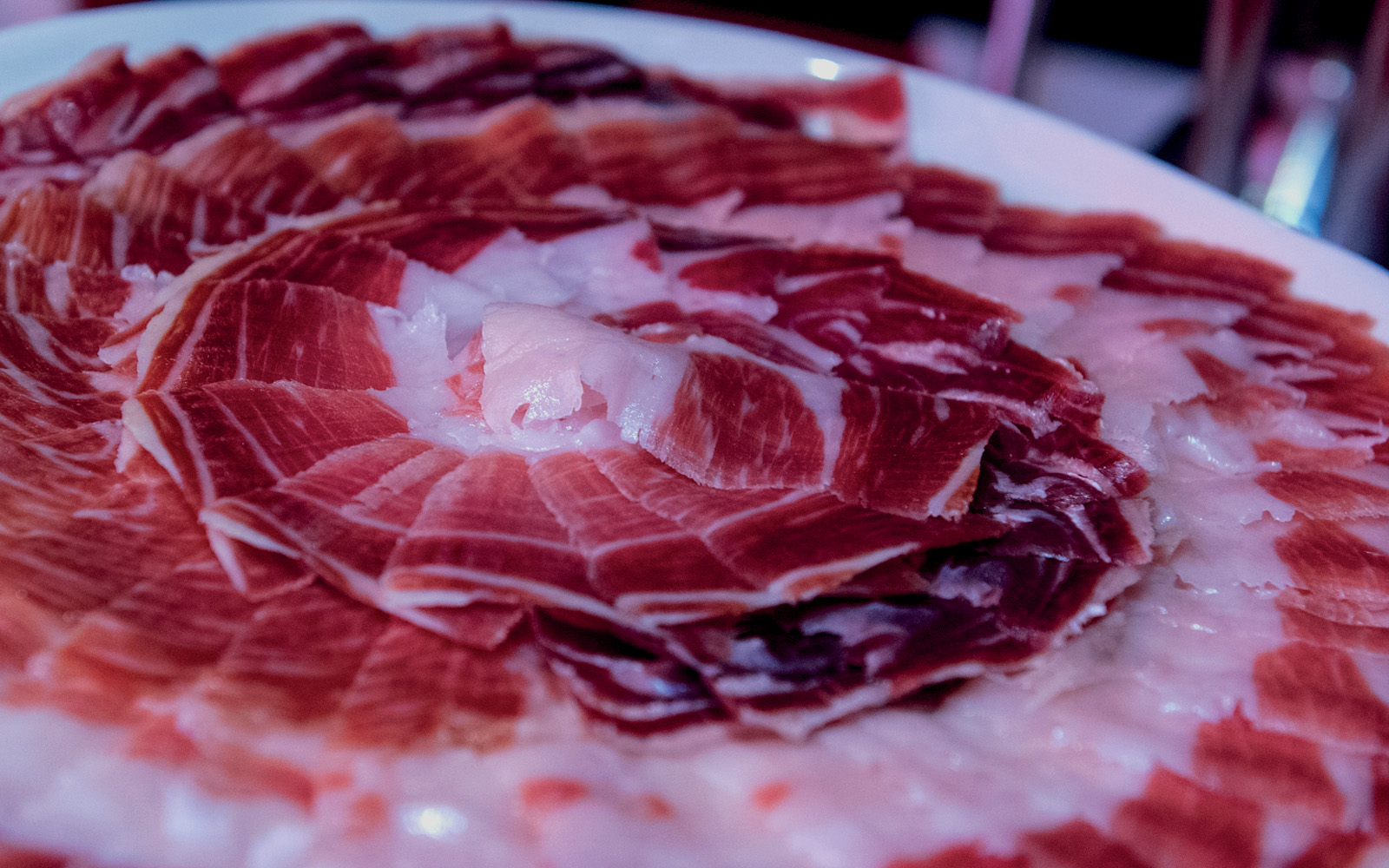
Jamón Ibérico.
The occasion marked the culmination of the three-year “Awaken Your Ibérico Sense” campaign, with a book launch and a panel discussion exploring how a traditional Iberian product can find fresh expression. Rather than treating heritage and innovation in silo, the speakers put the spotlight on both, settling on the conclusion that knowing where something comes from gives us more ways to imagine its future.
Presenting Jamón Ibérico to the world
Jamón is so ingrained into Spanish gastronomy and culture it’s almost devout. Often accompanied by a glass of wine and the orange-tinged light of the early evening, it’s a pintxos staple. Over in London, at the opening ceremony of Outernet Live, Raúl García president of ASICI, the Interprofessional Association for the Iberian Pig brought the audience along the journey behind the blush-pink fare known for its intensely savoury flavour and silky-smooth texture. He divulged into the breadth of the sector behind the tapas ingredient, how Ibérico is produced and why it occupies such a distinctive place in Spanish gastronomy.
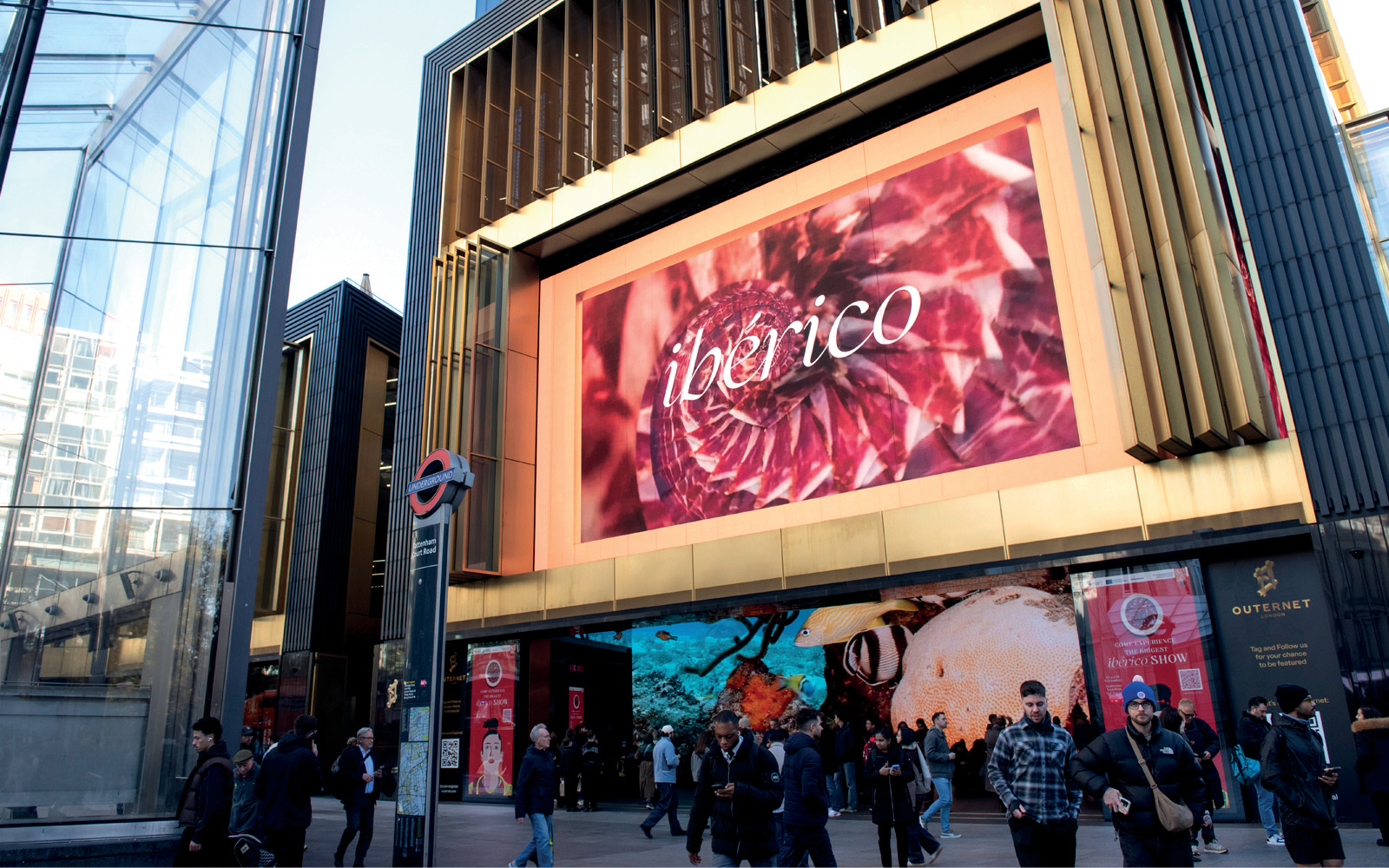
Outside Jamón Ibérico's opening ceremony at Outernet London.
No mean feat, Jamon Iberico’s campaign began with artists from the UK, China and Japan arriving to the Iberian Peninsula to encounter Ibérico and its origins. After this initial discovery, chefs, importers and distributors were educated through an introduction to its sustainability and traceability tools, including a dedicated app. Finally came public experiences, inviting London audiences to taste, smell and engage with the product. Along with the launch of the book, The Great Book of the Ibérico Sense, the intention behind Outernet was to give the product a life beyond the event.
The UK’s growing appetite provided a commercial backdrop. According to figures presented at the event, the value of Ibérico exports to the UK rose from €19 million in 2021 to more than €30 million in 2025, making Britain one of the sector’s three leading export markets outside the European Union. Yet the emphasis throughout was on building cultural understanding as well as demand.
The landscape that shapes the flavour
To gain a more complete picture of the product, means a closer look at the dehesa. It is here, in the sweeping, verdant landscape dotted with native oak trees, in which the Iberian pigs are raised. The trees, deeply rooted in the land, serve as a symbol of the patience and wisdom of the product, which is something that takes decades to mature and cannot be understood through instant gratification.
That sense of place also informed the creative work presented at the event. In a video exploring the book’s visual world, Spanish artist Jacobo Gavira described using photography, colour, texture and sensory illusion from the dehesa to translate the experience of tasting Ibérico into something visible. The aim was not merely to illustrate ham, but to evoke the landscape and sensations that surround it.
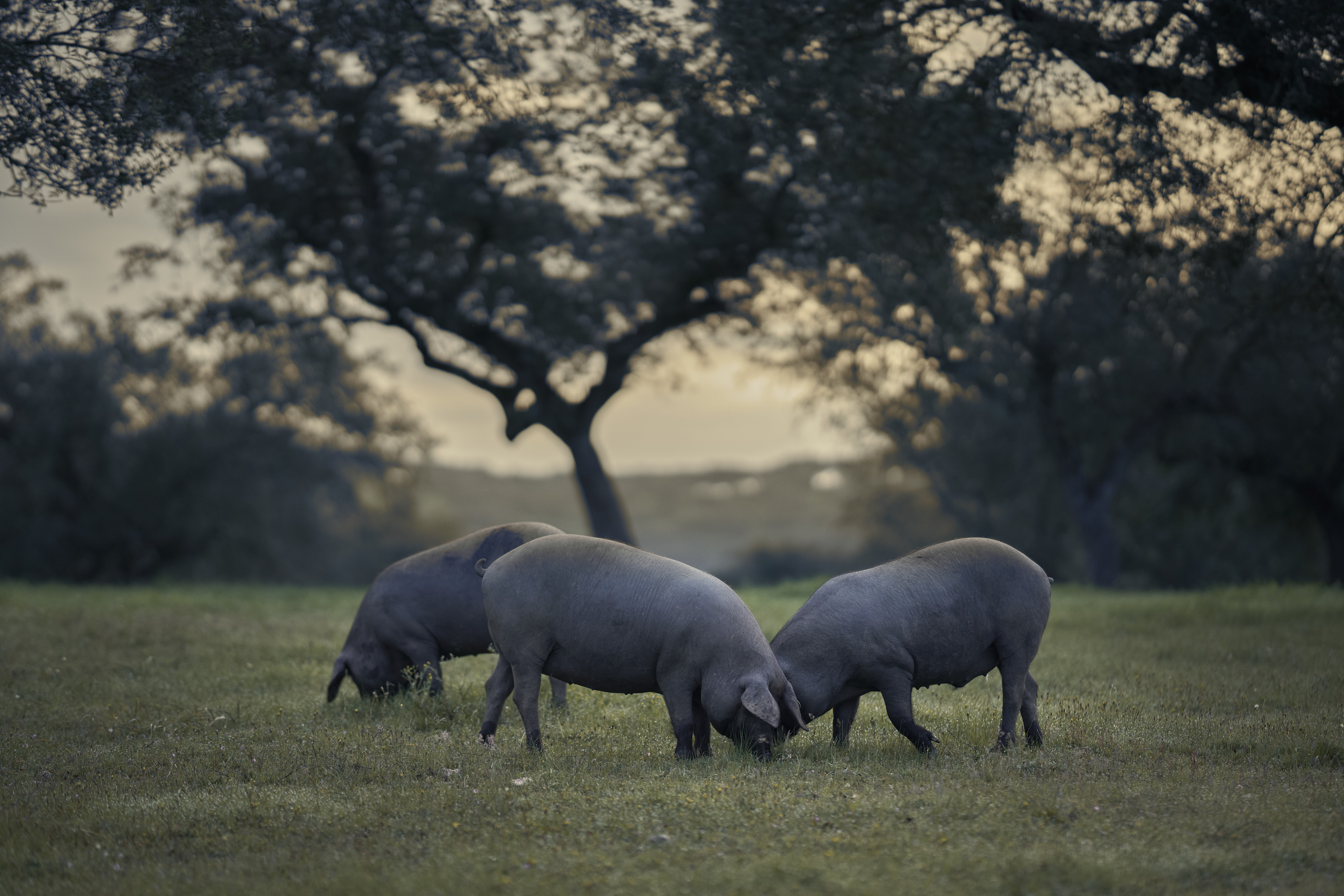
The dehesa, where Jamón Ibérico begins.
“The dehesa is a man-made, highly sophisticated environment,” Antonio Jesús Torralbo Buenestado, representing the Protected Designation of Origin (PDO) Los Pedroche explained. His description of the creative process as “alchemy” captured the project’s central idea: one ecosystem can become both a flavour and an image. Art offered another route into a story usually told through food.
The luxury of taking time
With SPHERE’s Izzy Schaw Miller guiding the panel, fashion brought a parallel perspective. Designer Leandro Cano spoke about the patience demanded by a carefully constructed piece: precision, attention and the willingness to invest time in something that cannot be rushed. The affinity with Ibérico lay less in the finished objects than in the discipline behind them.
Complicating the conversation a little, was accessibility. How do you bring something associated with exclusivity to a wider audience without losing what makes it special? “Pret a porter” – or ready-to-wear – offered one point of comparison, suggesting that a broader reach need not mean abandoning excellence. The challenge was to communicate the value of the work rather than its rarity.
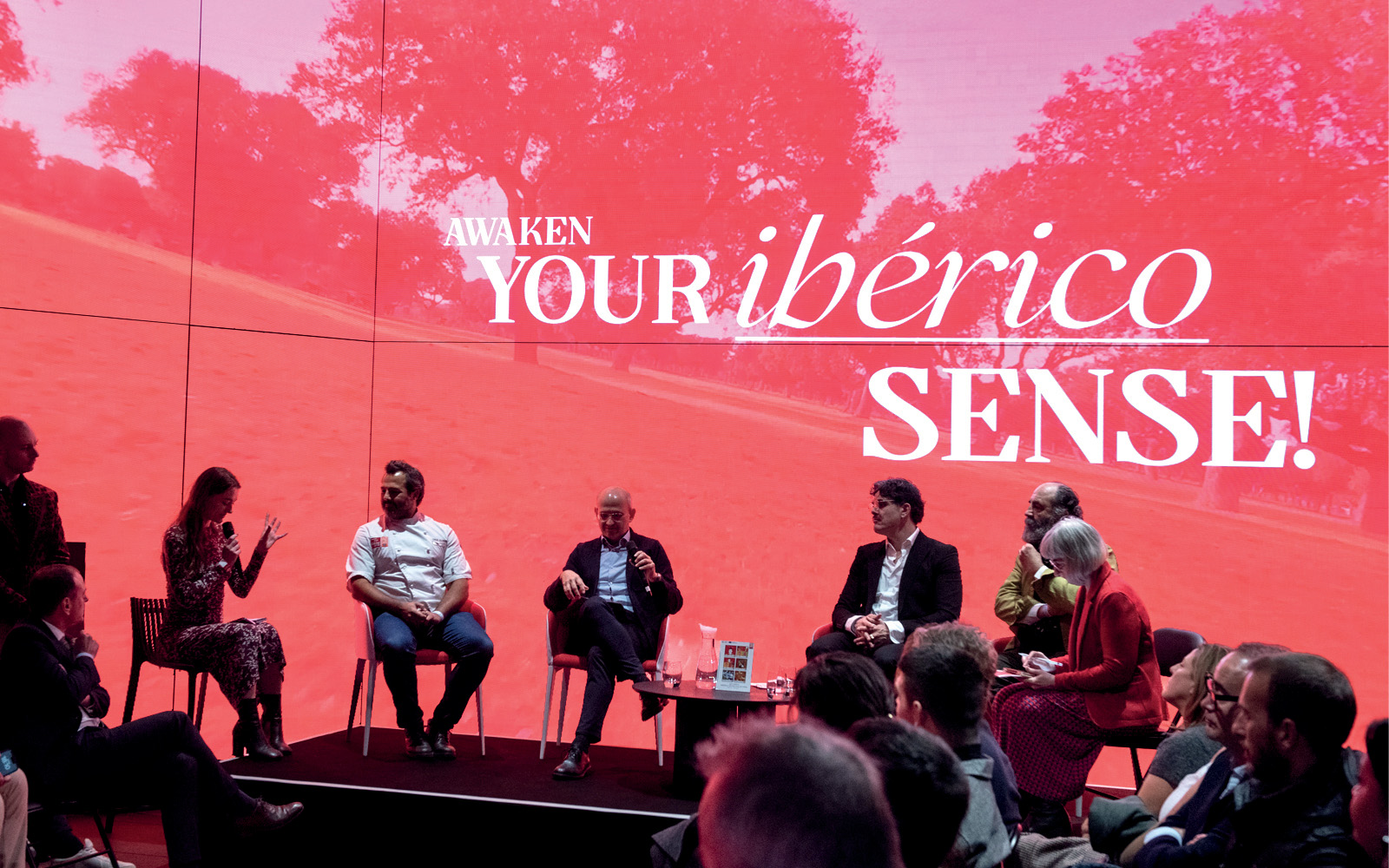
Panel on Jamón Ibérico at Outernet London.
In the kitchen, the same tension became a question of tradition and invention. The campaign’s UK chef ambassador, Omar Allibhoy, aka. The Spanish Chef, argued that a centuries-old product still leaves room for individual interpretation. A cook can respect the ingredient while putting a personal stamp on a recipe, twisting and turning jamón into inventive foams and garnishes for example. However, for all the possibilities, the dishes that drew his affection most leant more towards familiarity than anything overly elaborate. When asked what’s on the top of his menu of choice, he responded saying, "well, to me, there is just simply nothing like good croquetas de jamón”.
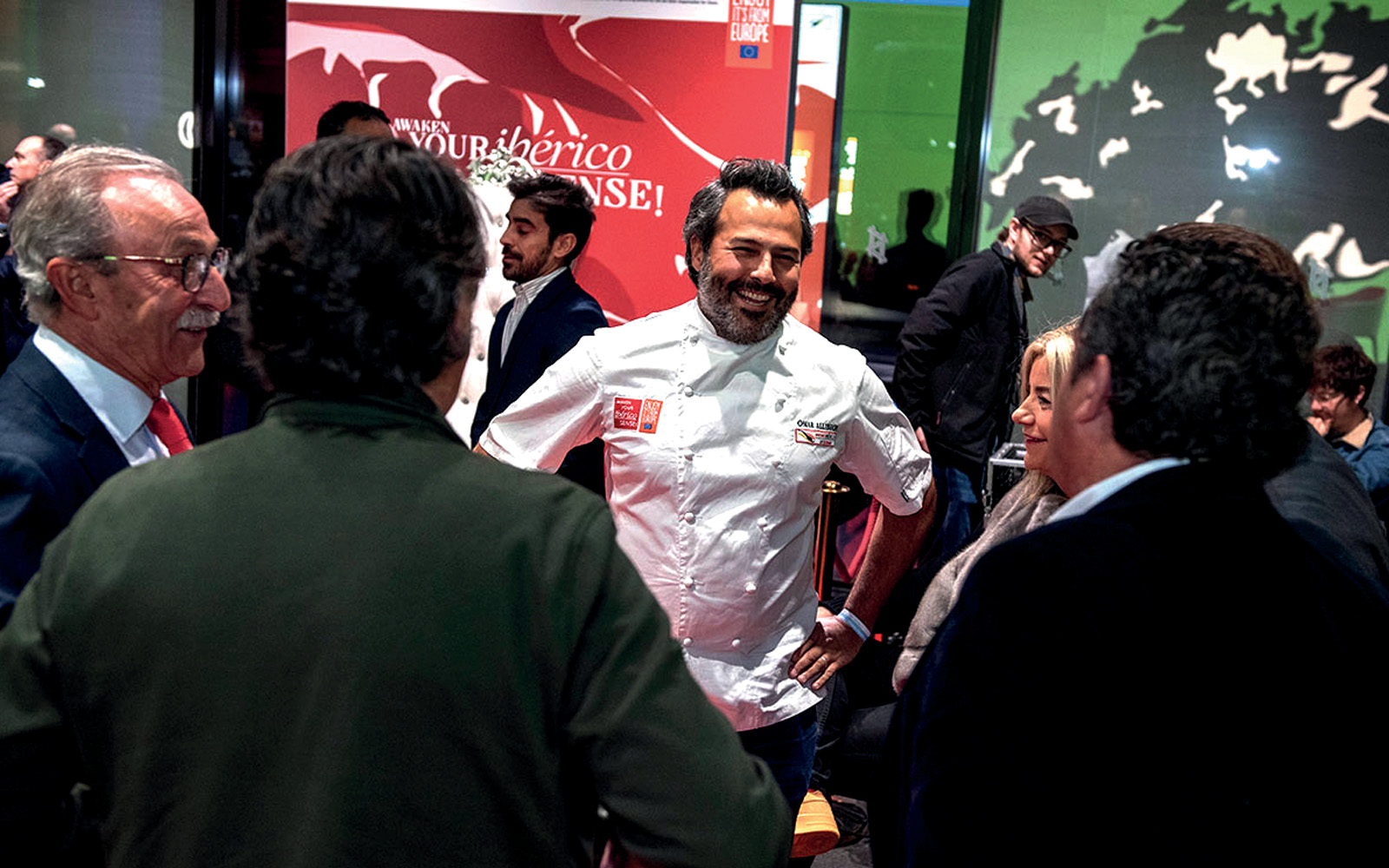
Celebrity Chef Omar Allibhoy.
How to be a cut above
For José Miguel Herrero Velasco, Director General of Food at Spain’s Ministry of Agriculture, Fisheries and Food, reaching new audiences meant making the story legible. Where was the product made? How was it made? Who made it? In a crowded market, he remarked, the background is just as important as the product itself. And so, we find ourselves at the panel connecting food with contemporary product – through art, fashion and gastronomy – carving a pathway for the story to resonate beyond those already in the know.
When the panel turned to what separates the good from the exceptional, the answers resisted any single formula. There was quality but also provenance, the skill of the maker and the enjoyment of sharing with friends and family. The panel nodded to effort and execution, alongside the courage to communicate something of genuine value, as Gavira said, "you have to take risks", continuing, and “to tell people how you feel about the depth of the quality of the product”.
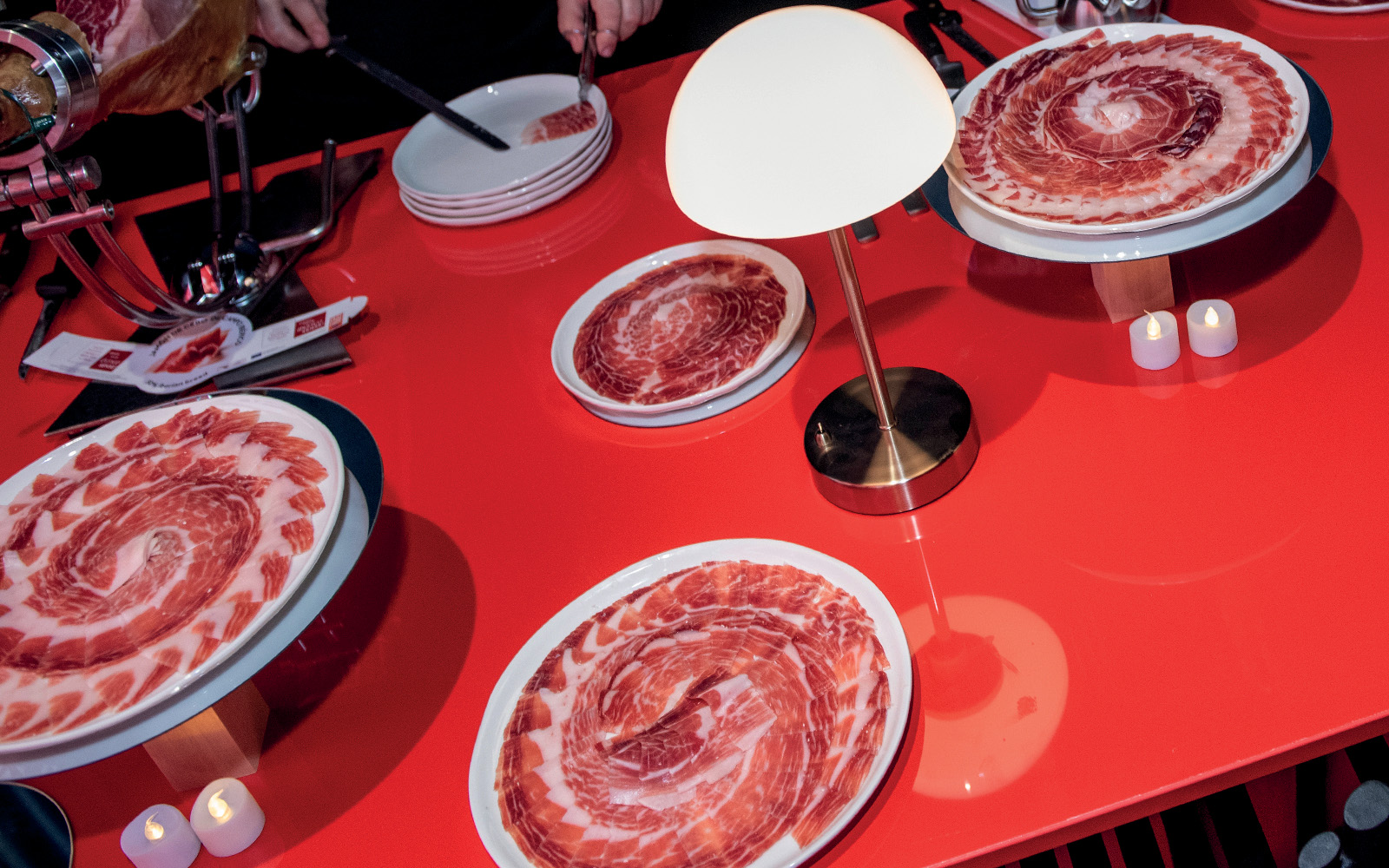
Spread of Jamón Ibérico at Outernet London.
The closing tribute to Iberico’s farmers and producers brought the discussion back to its foundations. Behind the book, the performance and the plate were people whose work made the entire celebration possible. Outernet’s panel and campaign helps us to understand how luxury brands are connecting with their heritage and wider culture to infiltrate new, discerning audiences. But more importantly, how something patiently made and deeply rooted, is best appreciated in company.