There’s a new phrase being used in the jewellery industry which doesn’t seem appealing. “Negative space” sounds like a hard sell but is currently on the lips of many designers and business heads. The concept is not new — it dates back centuries to the early days of finely crafted jewellery made for royal courts.
The Return of Negative Space in Jewellery
Words by
Avril Groom
17th November 2026
The negative space technique in jewellery is having a renaissance, with today’s designers creating innovative and harmonious pieces.
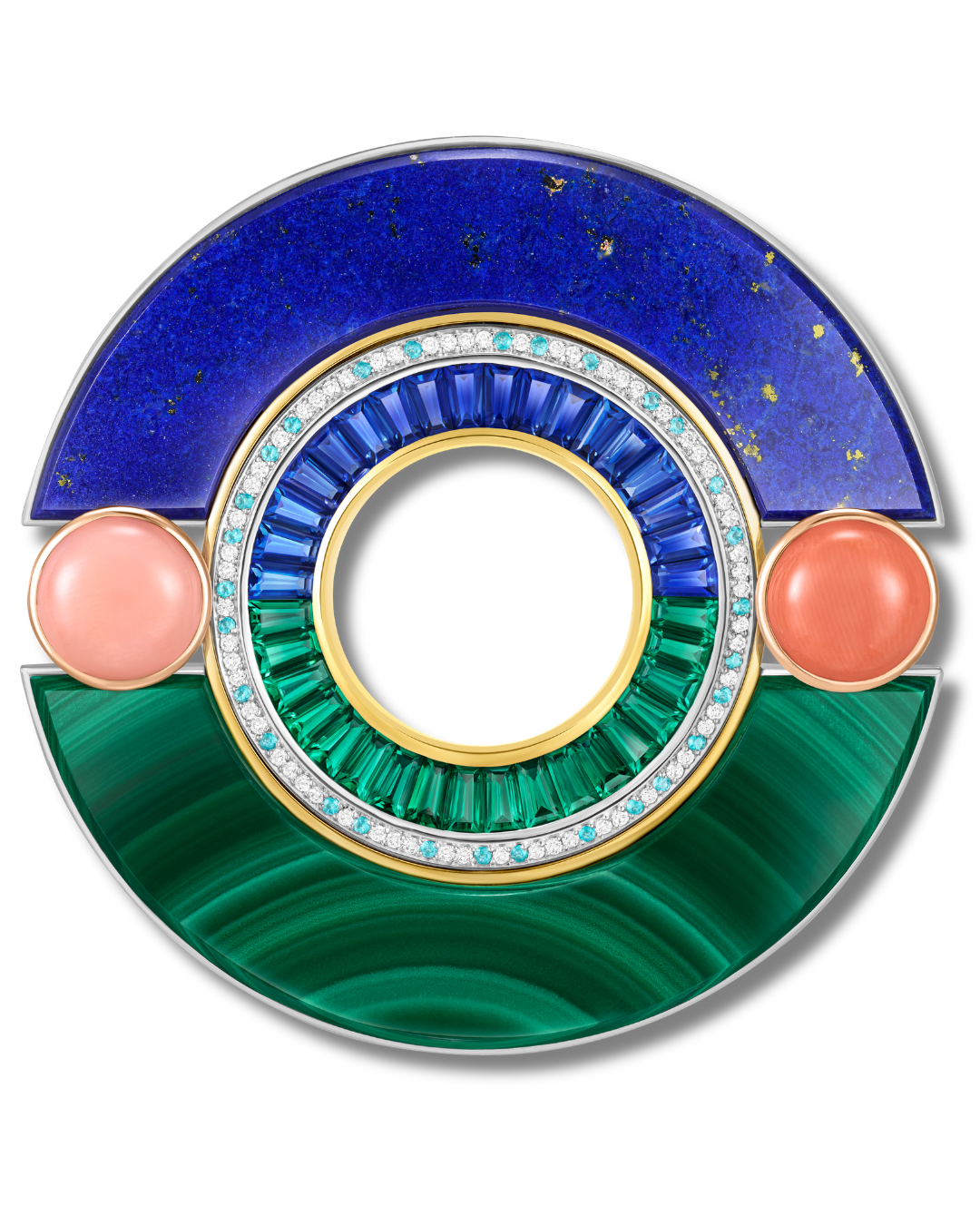
Van Cleef and Arpels Fascinating Egypt Mythe Celeste Clip, diamonds, sapphires, emeralds, green tourmalines, mismatched coral cabochons, lapis lazuli, malachite, 18ct yellow gold.
It arguably needs a less downbeat moniker; this phrase is merely shorthand for an intentional absence of material for strategic purposes, applied to many areas of design. In the glamorous world of high jewellery, where items are designed to amaze, delight and terrify with vast prices, a more flowery term might seem appropriate. However, this catch-all term covers all market levels where, for various reasons, the idea is catching on.
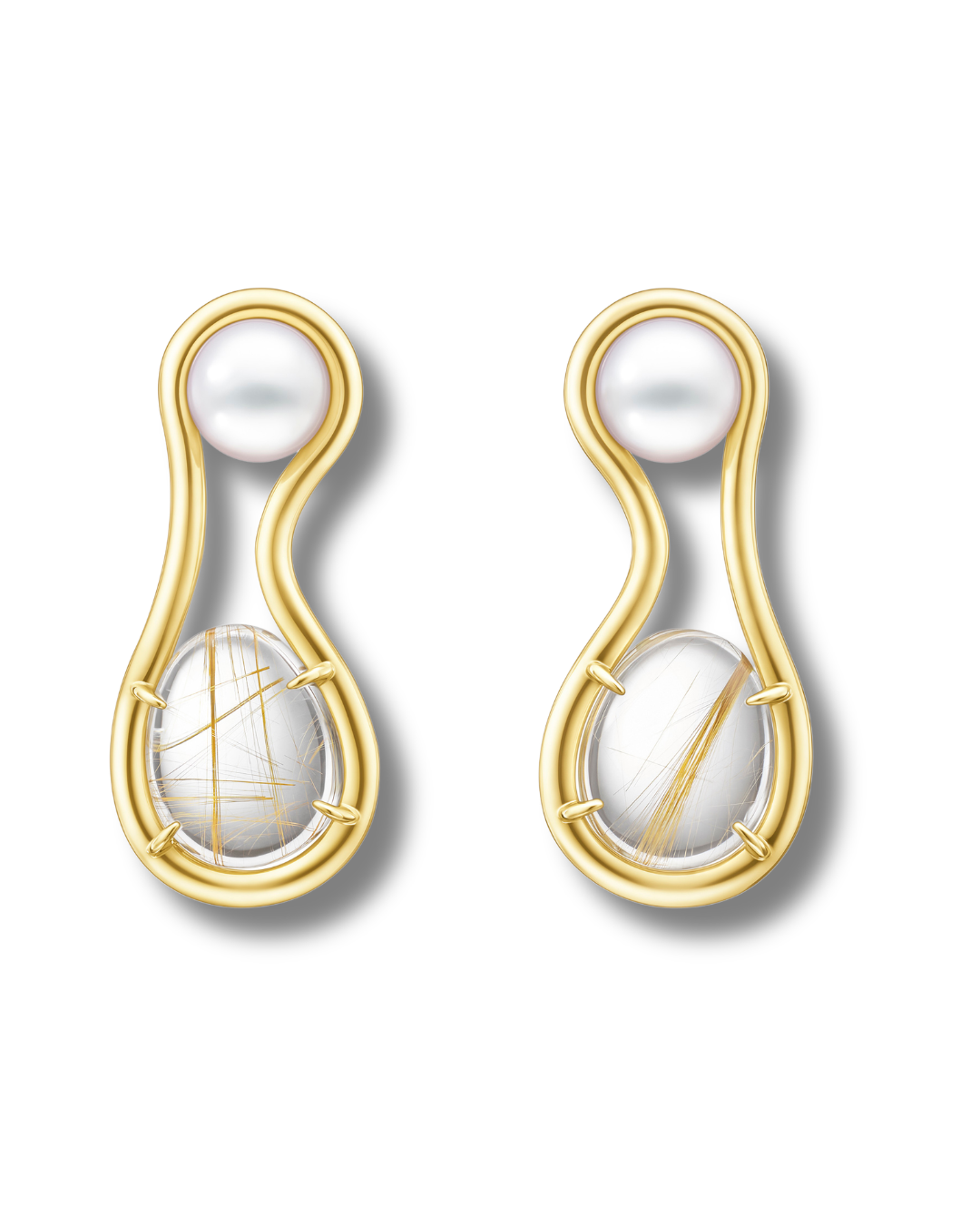
Tasaki x Niccolo Pasqualetti Fluid earrings, Akoya pearls, white South Sea pearl, rutilated quartz, 18ct yellow gold.
Historically, the idea of leaving an area of unfilled space in jewellery was a craftsman’s ploy to draw attention to a miraculously large and beautiful gem, suspended almost invisibly by delicate yet strong metal, free from the distraction of closely packed smaller stones. Gold had become a weighty concern. The heaviest British crown, made for Charles II in the 17th century and employed solely for coronations, weighs just under five pounds.
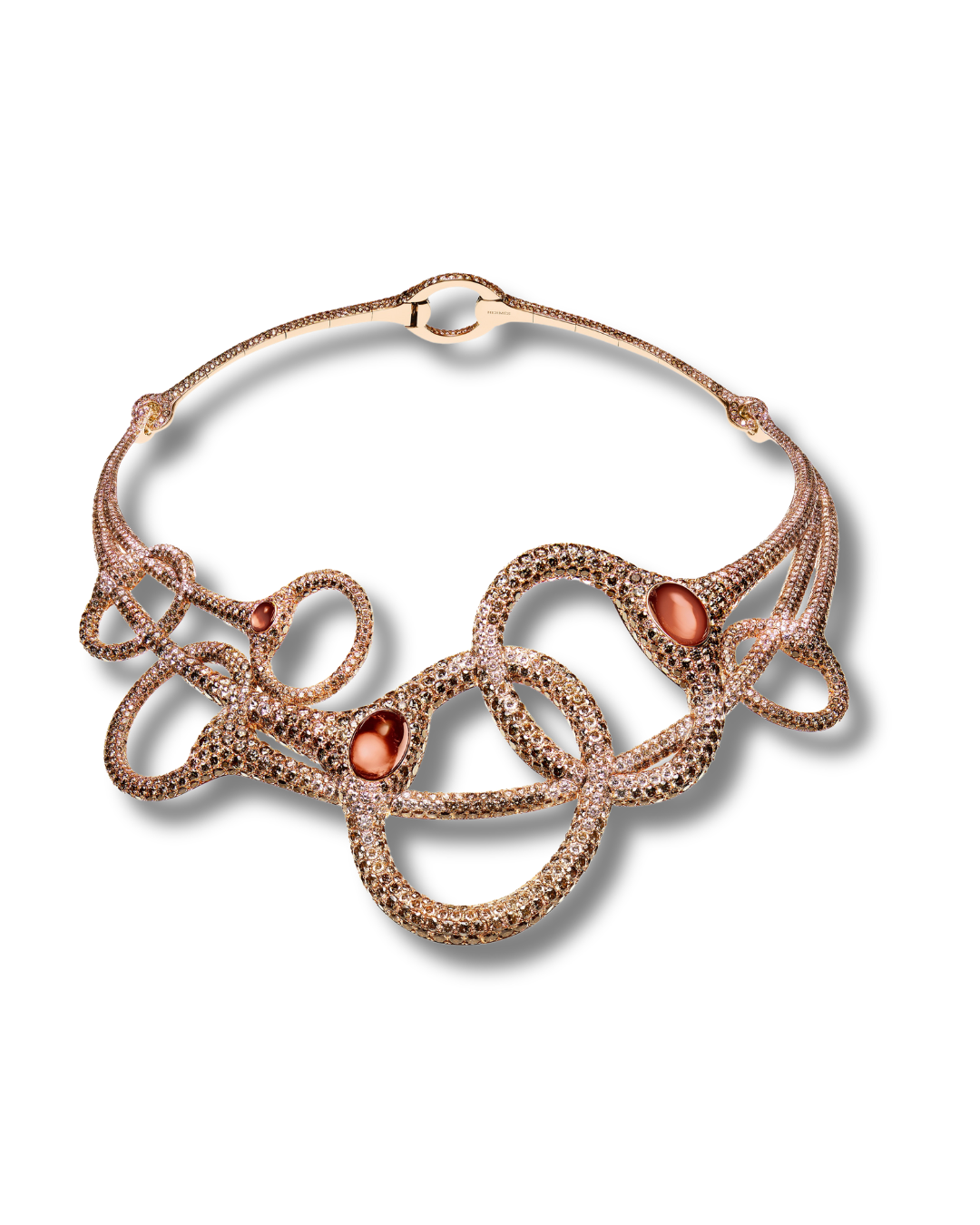
Hermès Into the Horsescape high jewellery Étreintes necklace, diamonds, brown diamonds, pink-brown tourmaline cabochons, 18ct white, yellow and rose gold.
As design evolved and became more sophisticated, craftsmen devised ways to create lightweight, precious-metal frameworks to support gems, leading especially to delicate headband-style tiaras and showy but lightly metalled chandelier earrings. Later still, positioning the spaces in a jewellery piece became an integral part of the aesthetic design — by the mid-20th century it was reflecting similar voids in contemporary sculpture and art. As Anne-Eva Geffroy, design director of Graff, whose traditional jewels are crafted in London, explains: “A sense of openness enhances the gemstones; every element has room to exist in harmony with the next. The jewellery is defined by the dialogue between presence and absence, so space guides the eye through a piece, creating rhythm, lightness and balance.”
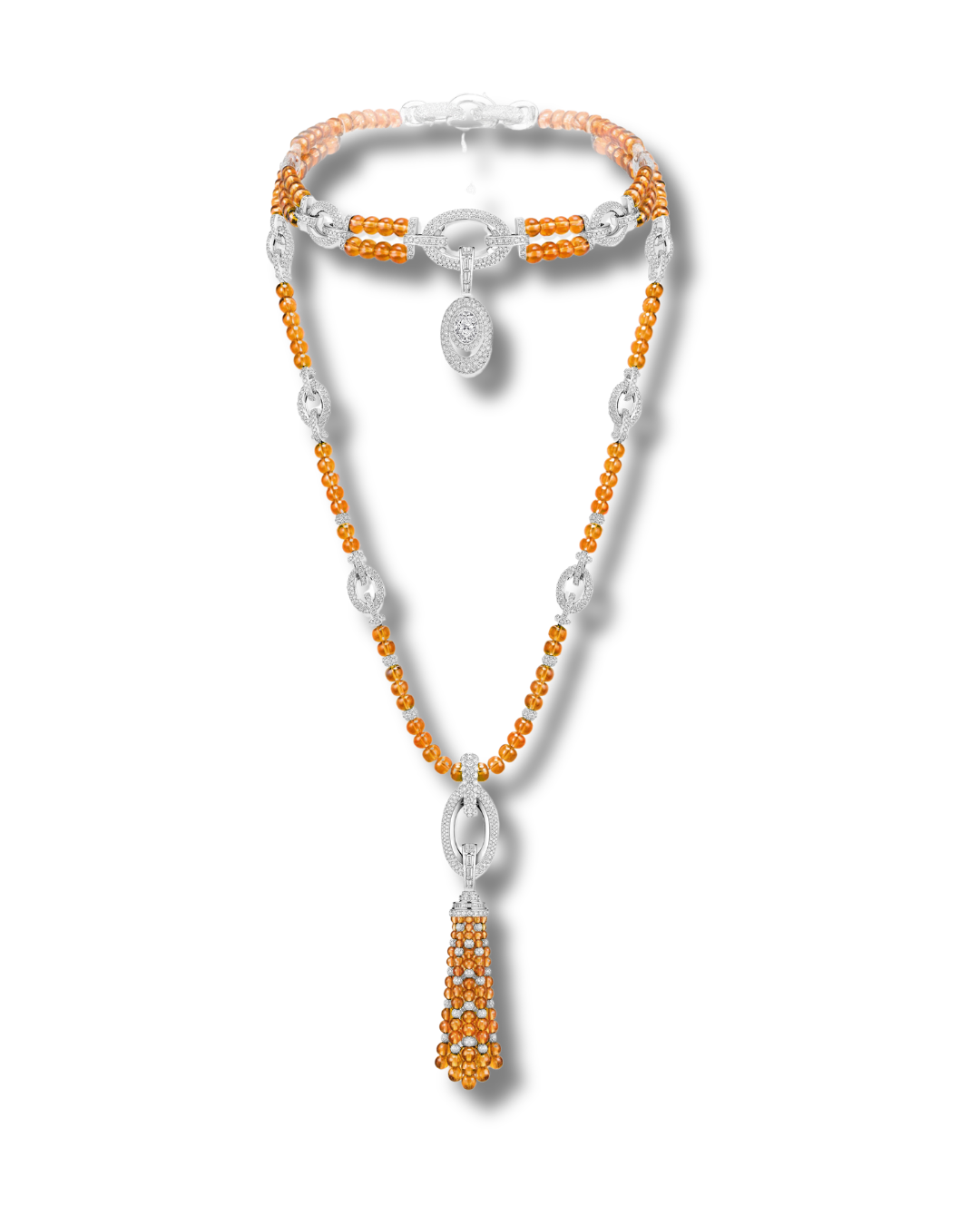
Messika high jewellery Groove sautoir, diamonds, spessartite garnets, 18ct white gold.
Today’s circumstances have refocused attention on this unsung design essential. Now that individuals can become trillionaires, the mega-rich can afford to adorn themselves like royalty and are as interested in jewellery’s investment worth as they are in its rarity or intrinsic value. So when very large, top-quality gemstones come to market, competition is fierce, and prices rocket — especially for vanishingly rare, intensely coloured diamonds. When these are set, the principle of allowing them to shine in space still holds, as does the necessity for a lightweight framework.
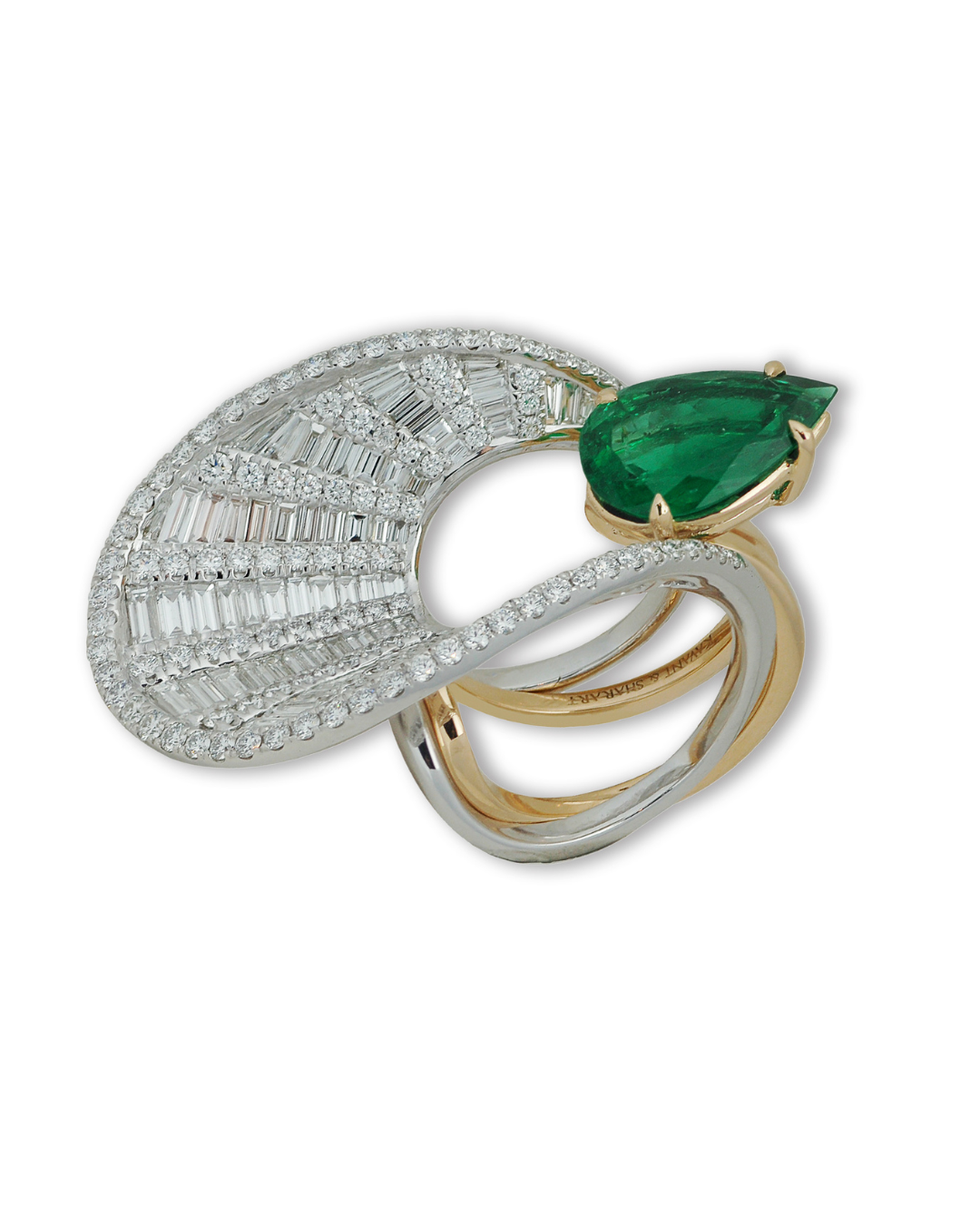
Kavant and Sharart ring, pear-shaped emerald, baguette and brilliant cut diamonds, 18ct yellow and white gold.
In Europe, Paris was the original source of the highest-level jewelcraft, servicing the extravagant needs of the French court. Historic names there remain the great practitioners — from the oldest, Mellerio, established in 1613, through Napoleon’s court jeweller Chaumet, to the top 19th-century names of Cartier and Boucheron, which forged trade links west to America and east to India’s royal houses. In the early 20th century, Van Cleef and Arpels became as associated with Art Deco as Cartier.
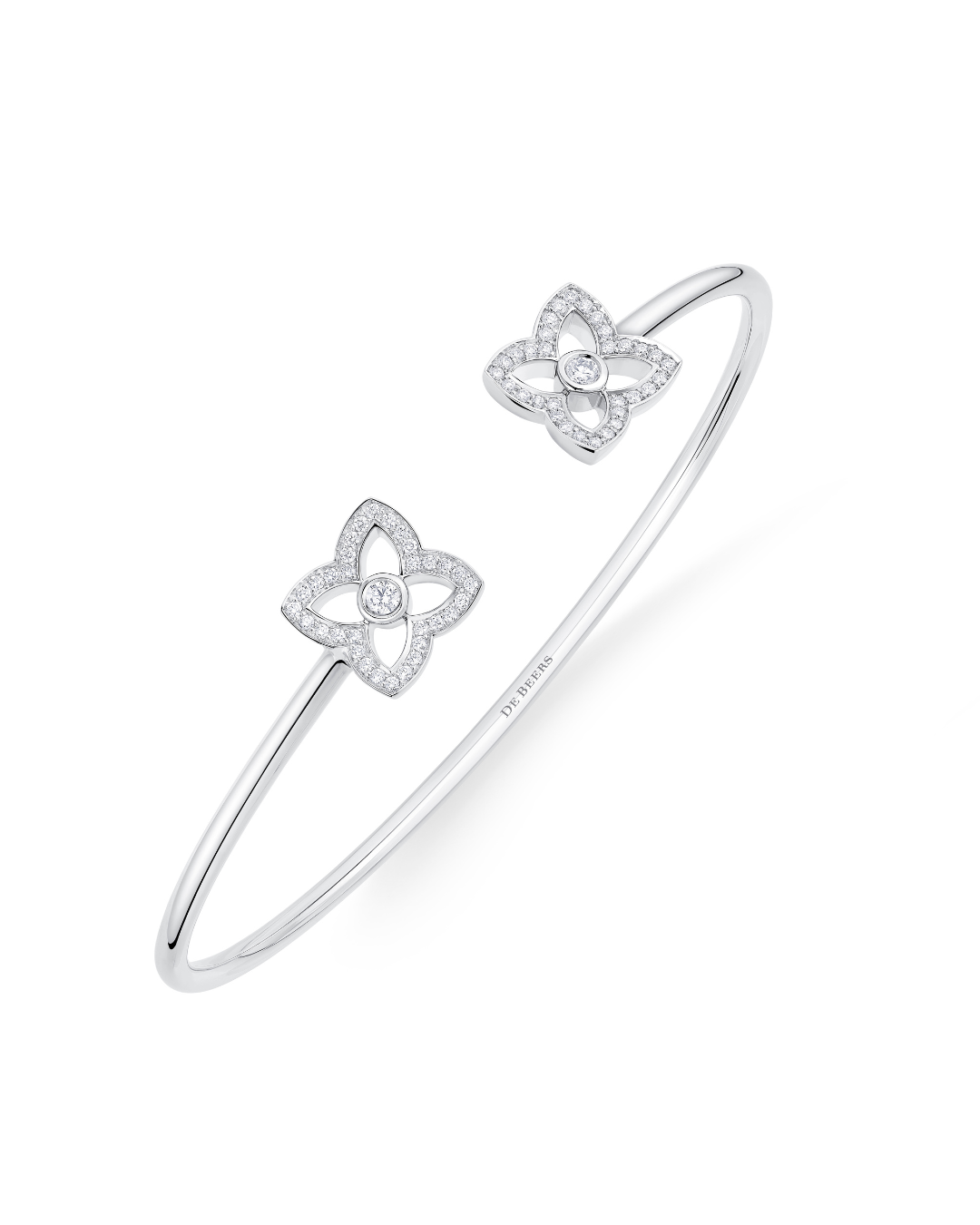
De Beers Lotus bangle, diamonds, 18ct white gold.
All these and others still work in the traditional, handcrafted way and are the trusted first ports of call for international, top-level clients. A stunning example is Chaumet’s Verbena Bouquet suite, in its new Journey through Nature collection. Here, gold mesh is fringed with multi-coloured sapphires, creating — as Olga Corsini, director of the creative studio, explains — a “balance between voids and solids which allows significant volume and great lightness. The intersection of diagonal gold threads makes rhomboidal spaces a distinct code within the overall design.”
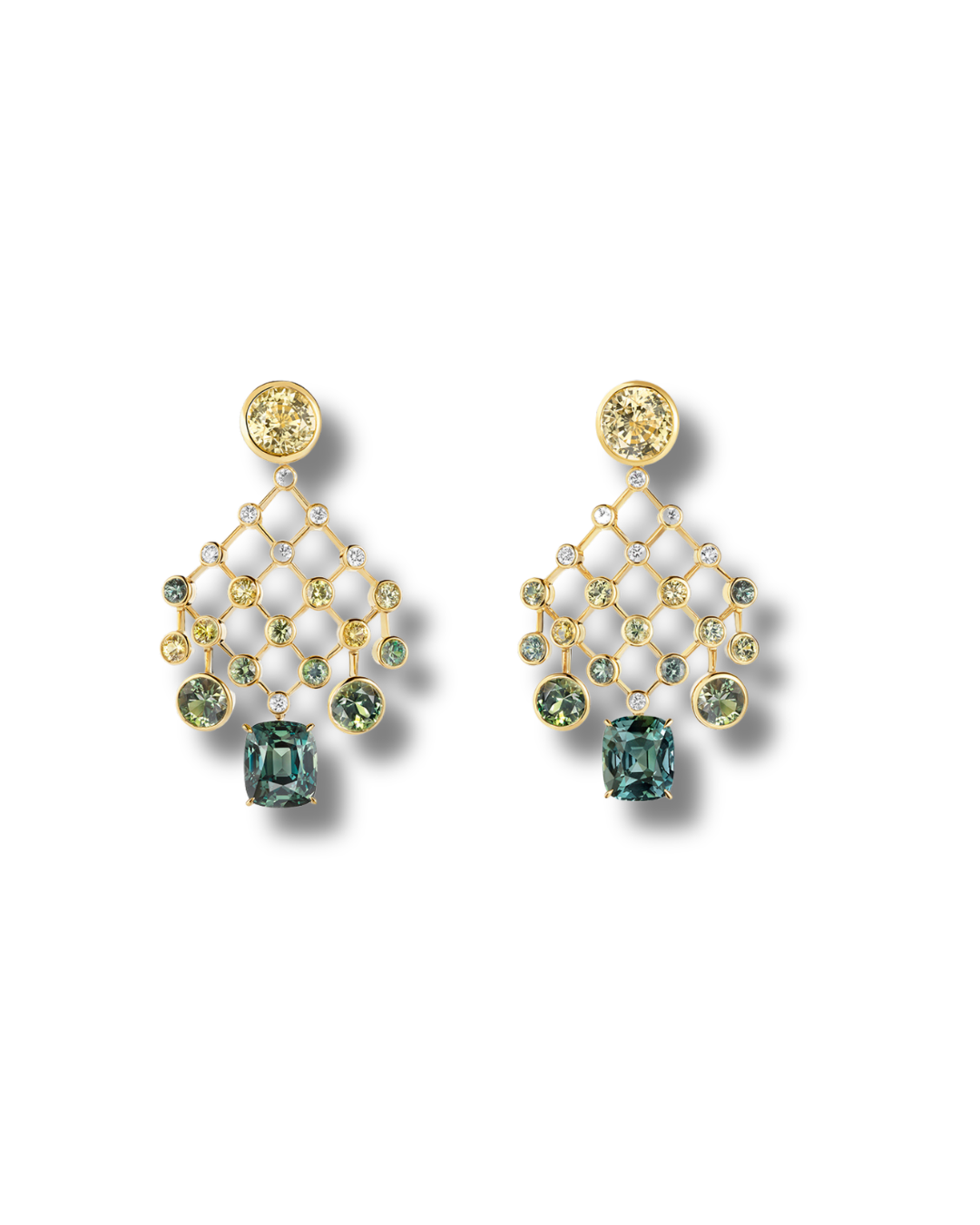
Chaumet Journey Through Nature high jewellery Verbena Bouquet earrings, diamonds, varied colour green and yellow sapphires, 18ct yellow gold.
Her assertion that “beauty often lies in the precision of balance, and emptiness contributes to this success” lies at the heart of modern versions of this ancient technique. Van Cleef and Arpels’ new Fascinating Egypt high jewellery references both the 1920s Tutankhamun obsession, in which it fully participated, and Ettore Sostass’s 1980s Memphis group work — though in a bolder, more colourful version than either, capitalising on negative space like soft geometry. This is evident in pieces such as the snake-like meanders of a diamond and pink sapphire necklace, or the concentric rings of a hardstone brooch with a central void that emphasises two mismatched coral cabochons. Most strikingly, a trompe l’oeil necklace appears as more air than metal, resembling interwoven, draped ribbons of ribbed gold and diamonds.
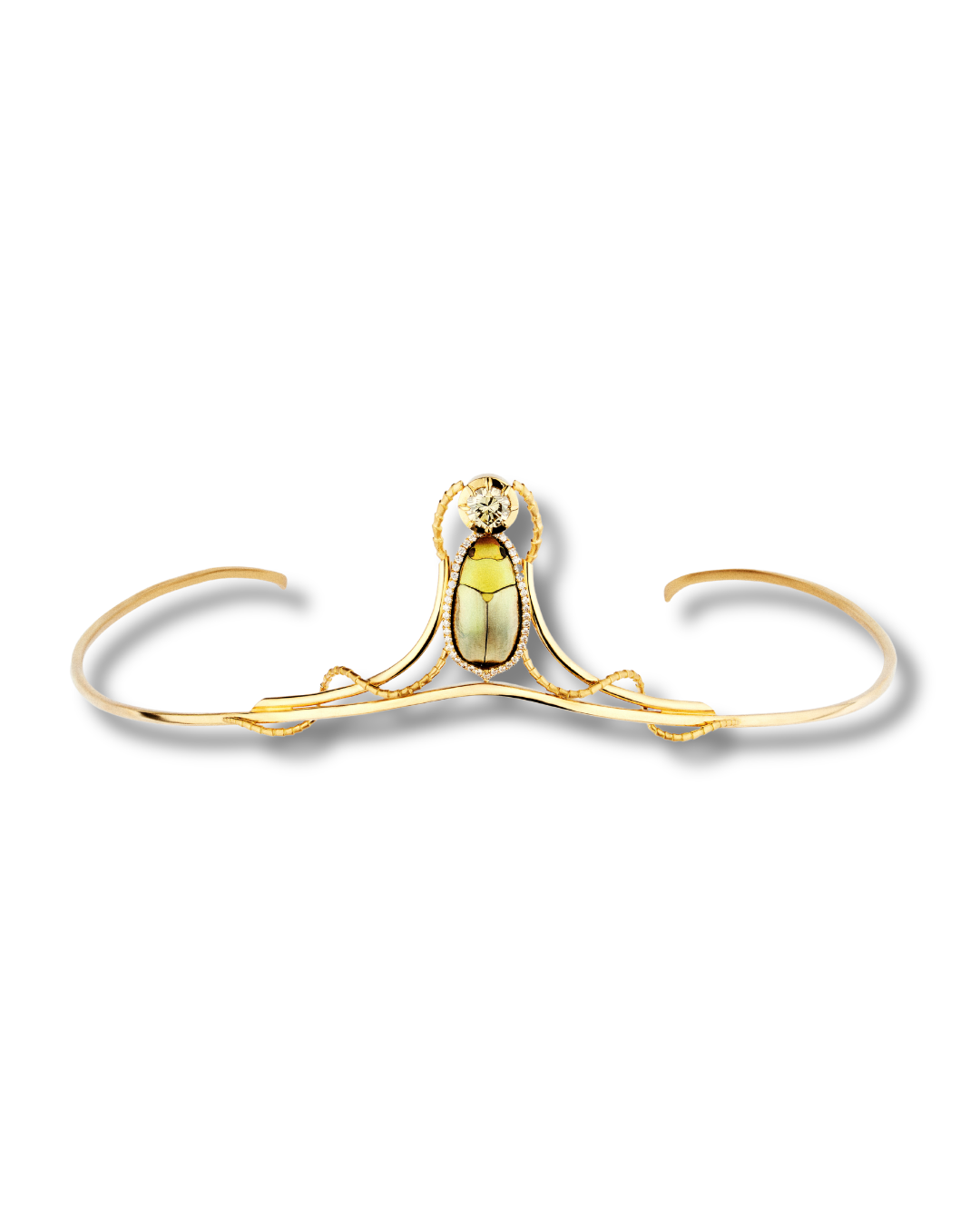
Lito Chrysina Strasseri Tiara, diamonds, natural taxidermied scarab, 18ct and 14ct yellow gold.
With a shorter heritage but similar principles is De Beers’ all-diamond Lotus collection, where chevron voids separate and help to articulate the geometry of high jewellery drop earrings and, as diamond-edged void petals, help make fine jewellery bangles more accessible. Graff’s 12 new high jewellery butterfly brooches-cum-hair decorations, based on one design but each unique, create a layered effect with space between the elements that, says Geffroy,“allows the composition to breathe, ensuring clarity and balance.”
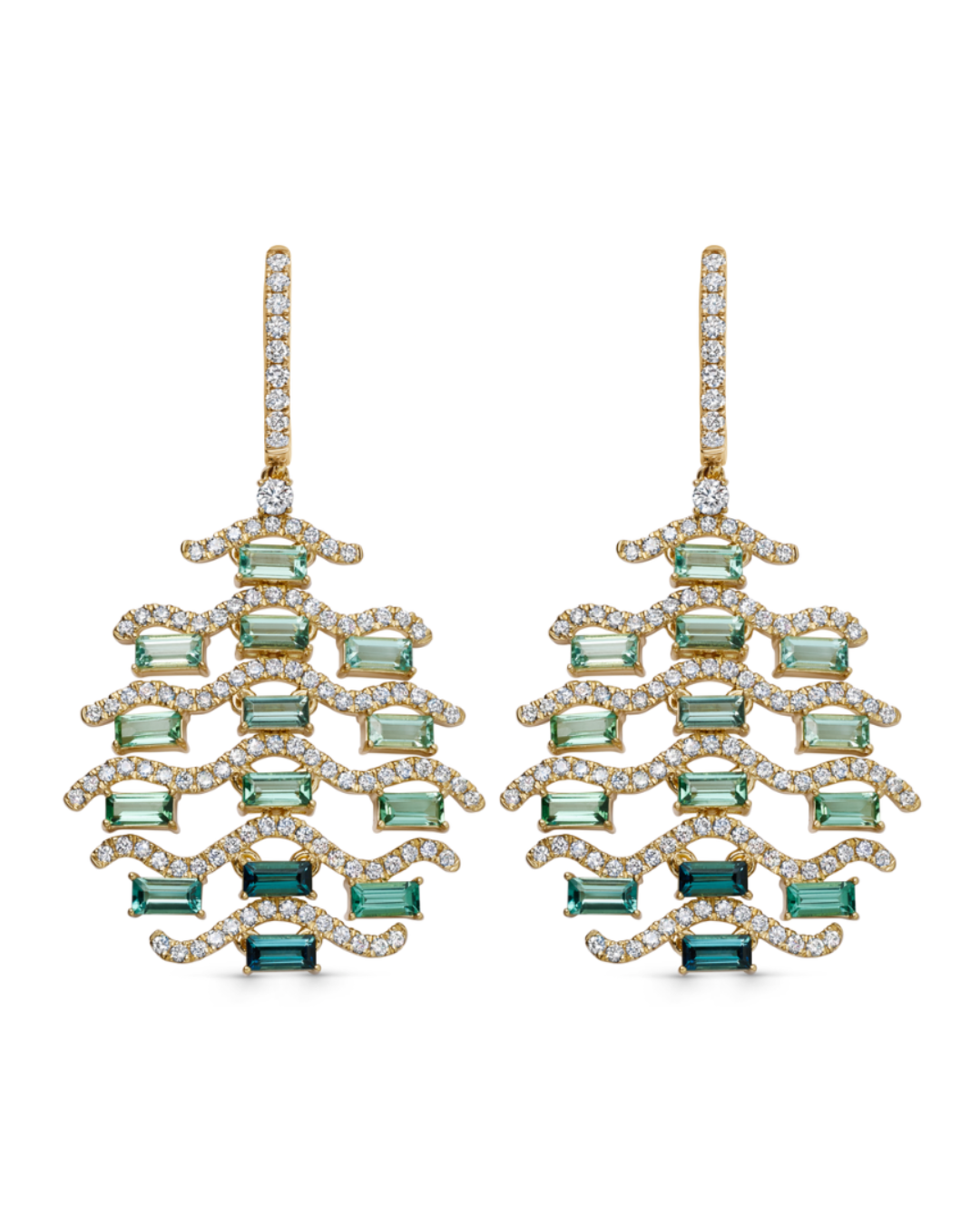
Kiki McDonough Wings Over Water collection earrings, diamonds, graduated tanzanite and aquamarine baguettes, 18ct yellow gold.
Founded in the 1960s, Pomellato helped define contemporary Italian goldwork, rooted in traditional craft. Today, expressed through the delicate precision of gold openwork, says creative director Vincenzo Castaldo, “it allows light and shadow to move through the jewel, bringing lightness, depth and rhythm to our rounded volumes.” This includes both fine gold lacework, interspersed with large, bezel-set diamonds through which light streams, and a freer interpretation which is, says Castaldo, “inspired by chain falling into a spontaneous, unruly composition” and almost abstract, in gold or lightweight black titanium, both overlaid with signature diamond pavé chain.
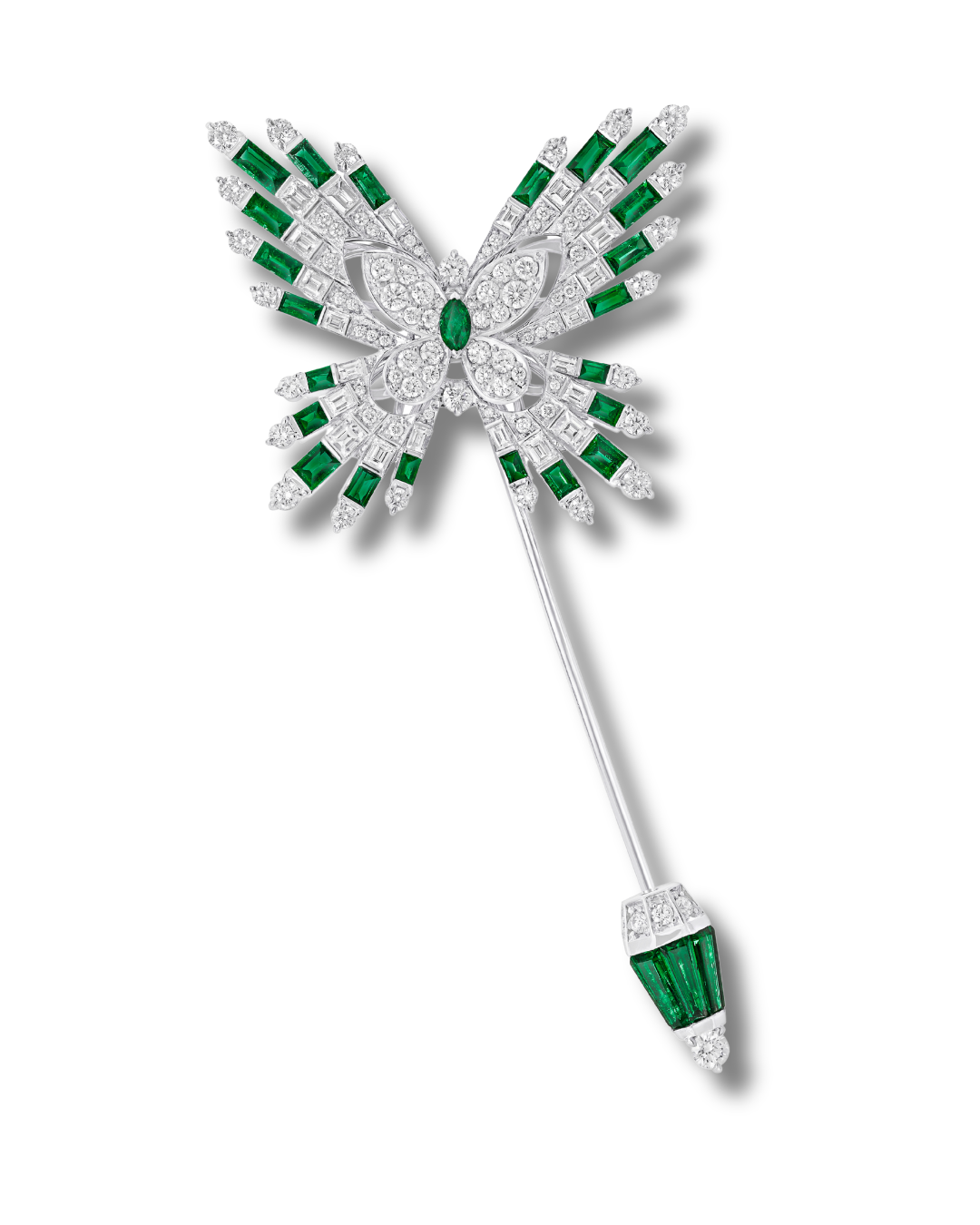
Graff Butterflies high jewellery pin/ hair jewel, baguette, oval and geometric emeralds, diamonds, 18ct white gold.
Contemporary Paris brand Messika’s Groove sautoir has the look of modern Art Deco, with diamond open ovals “that allow light to circulate and enhance the stones’ vibrancy”, explains founder Valérie Messika. “Negative space requires exceptional craft and brings modernity and sophistication.”
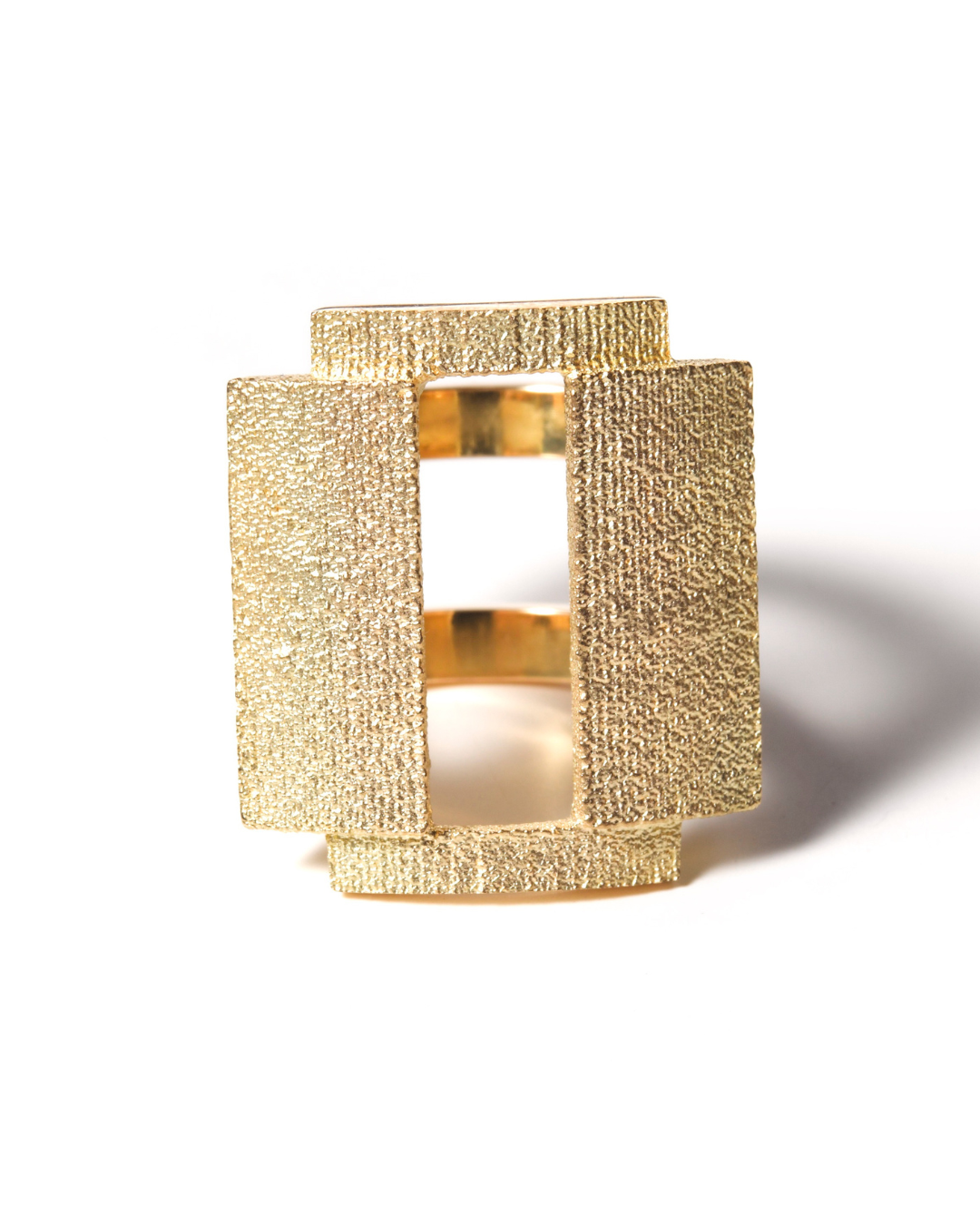
Fonts series Oakland ring, textured 18ct yellow gold, Alexandra Jefford.
These high-end examples naturally inspire both new clients with access to limitless information sources and independent jewellers. As a result, the negative space principle becomes integral across the board — some designers aspiring to high jewellery status, others aiming to deliver high-quality, more accessible pieces to a younger clientele.
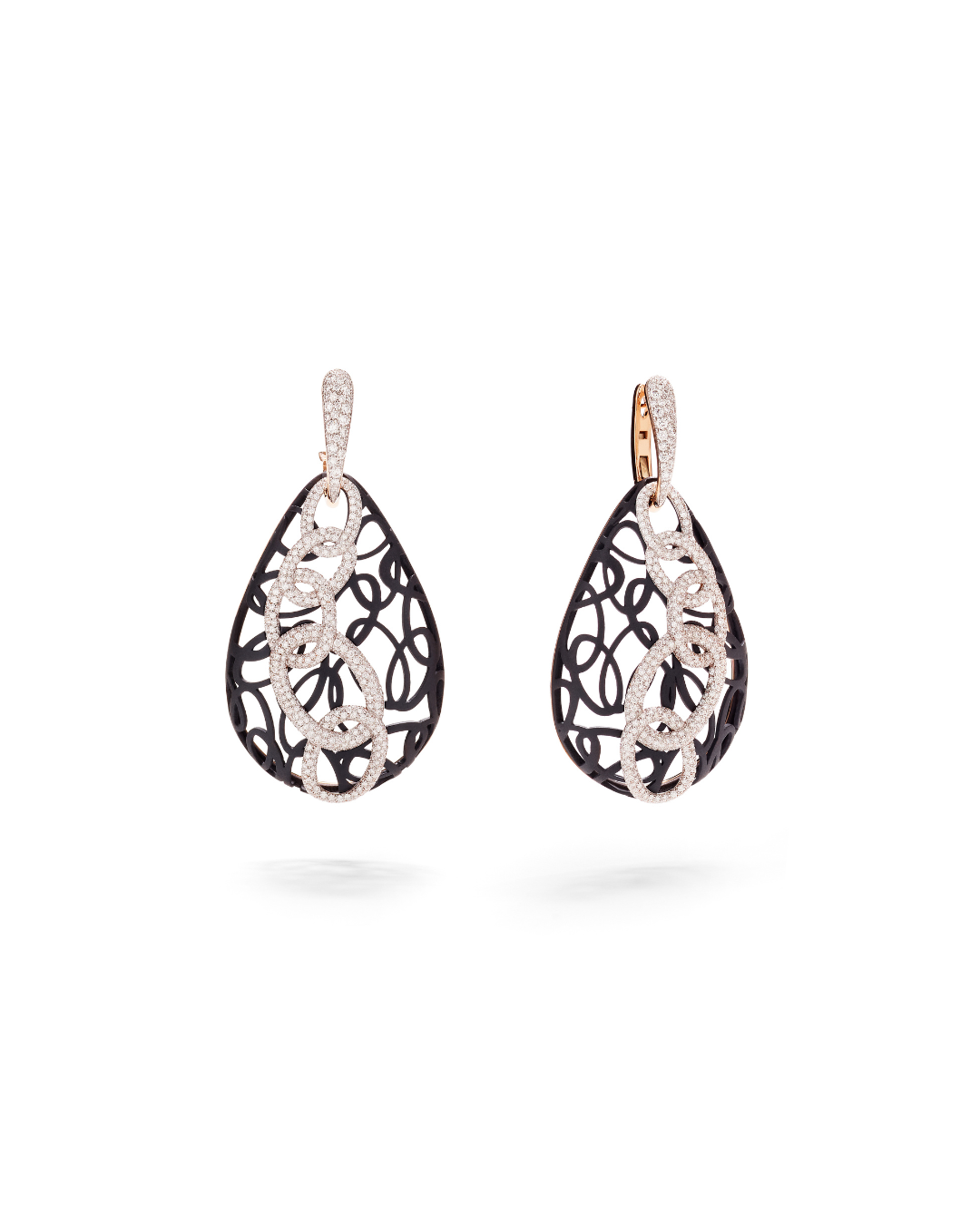
Pomellato Stile Libero high jewellery Ipnotica earrings, diamonds, black titanium, 18ct rose gold.
Thai duo Kavant and Sharart bring modern design to traditional technique in their use of space. Co-founder Shar-linn Liew explains that “it gives a feeling of continuous flow and motion, allowing light, movement, and the wearer’s own skin to become part of the design, bringing it alive.” An example is a bi-colour gold ring where space emphasises both a feature pear-shaped gem and finely set baguette and brilliant diamond pavé. Well- known London jeweller and balletomane Kiki McDonough also favours tradition with a twist for her Wings Over Water collection, inspired by Swan Lake. Gracefully arcing swan necks or openwork ring-shoulders create abstract designs around limpid, portrait-cut stones, and separating graduated blue baguettes from pavé waves creates a shimmering water effect.
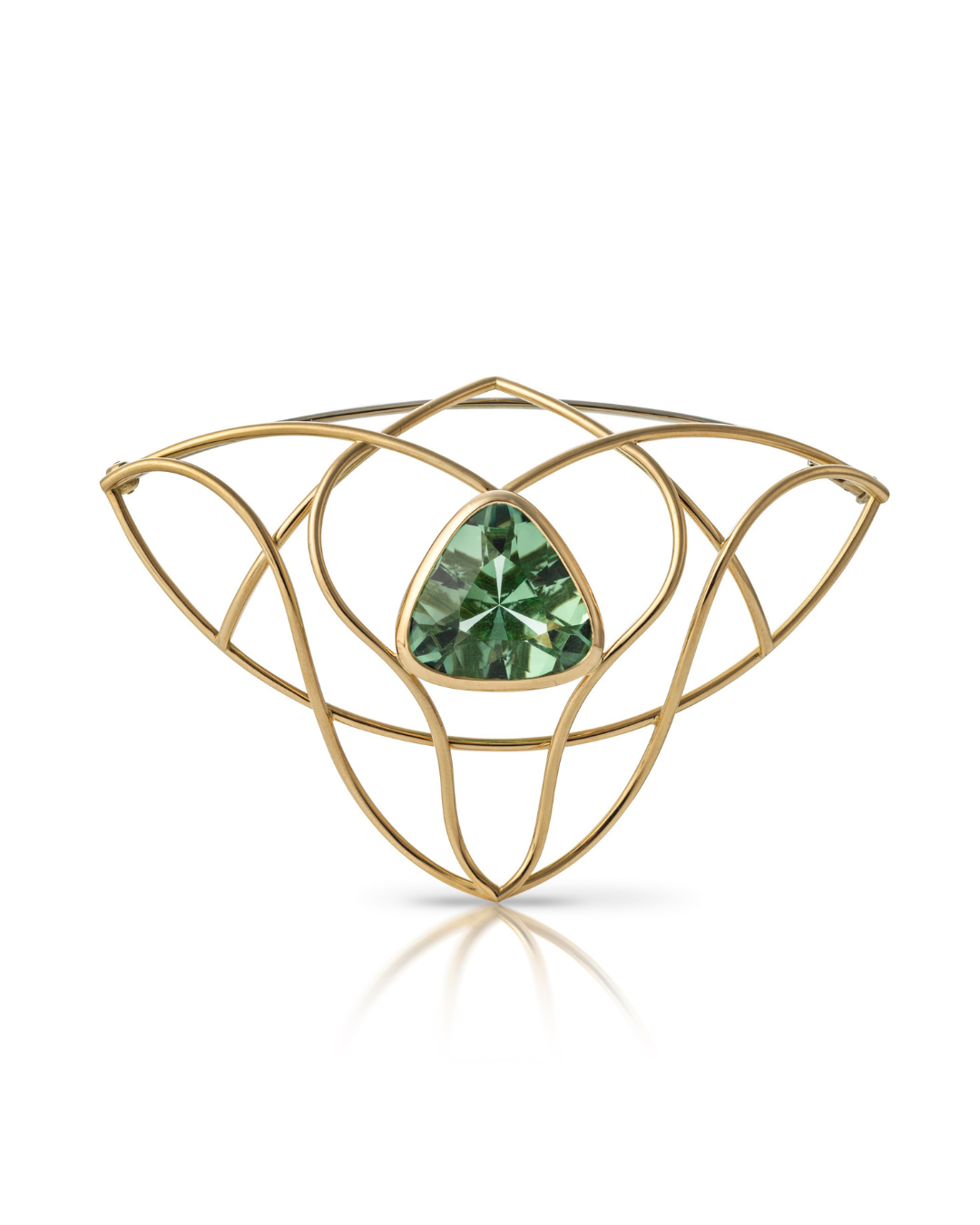
Cora Sheibani Moth Brooch, triangular green tourmaline, 18ct yellow gold.
Other art media provide ideas for today’s free-thinking jewellers. Alexandra Jefford, who works from a Chelsea studio once occupied by Pre-Raphaelite leader Dante Gabriel Rossetti, is also a sculptor. She says she is inspired “more by the enigmatic voids in works by Eduardo Chillida, Henry Moore and Barbara Hepworth than other jewellery”. Her best-known pieces include large rings giving the impression of a frame around an empty centre, based on letter fonts. “The frame is an ‘O’, based on a 1980s dot-matrix font,” she says. “I create quite large pieces and am very aware of the weight of gold, so negative space is my friend.” London-based Swiss designer Cora Sheibani sets top-quality, unusual stones into airy frameworks of gold wire. “I love empty space because it creates a 3D effect when looked at from all angles — and that’s very exciting,” she says. Greek designer Lito Karakostanoglou creates an equally lightweight gold headband with a natural scarab centrepiece, as part of her new Cosmic Guardians collection.
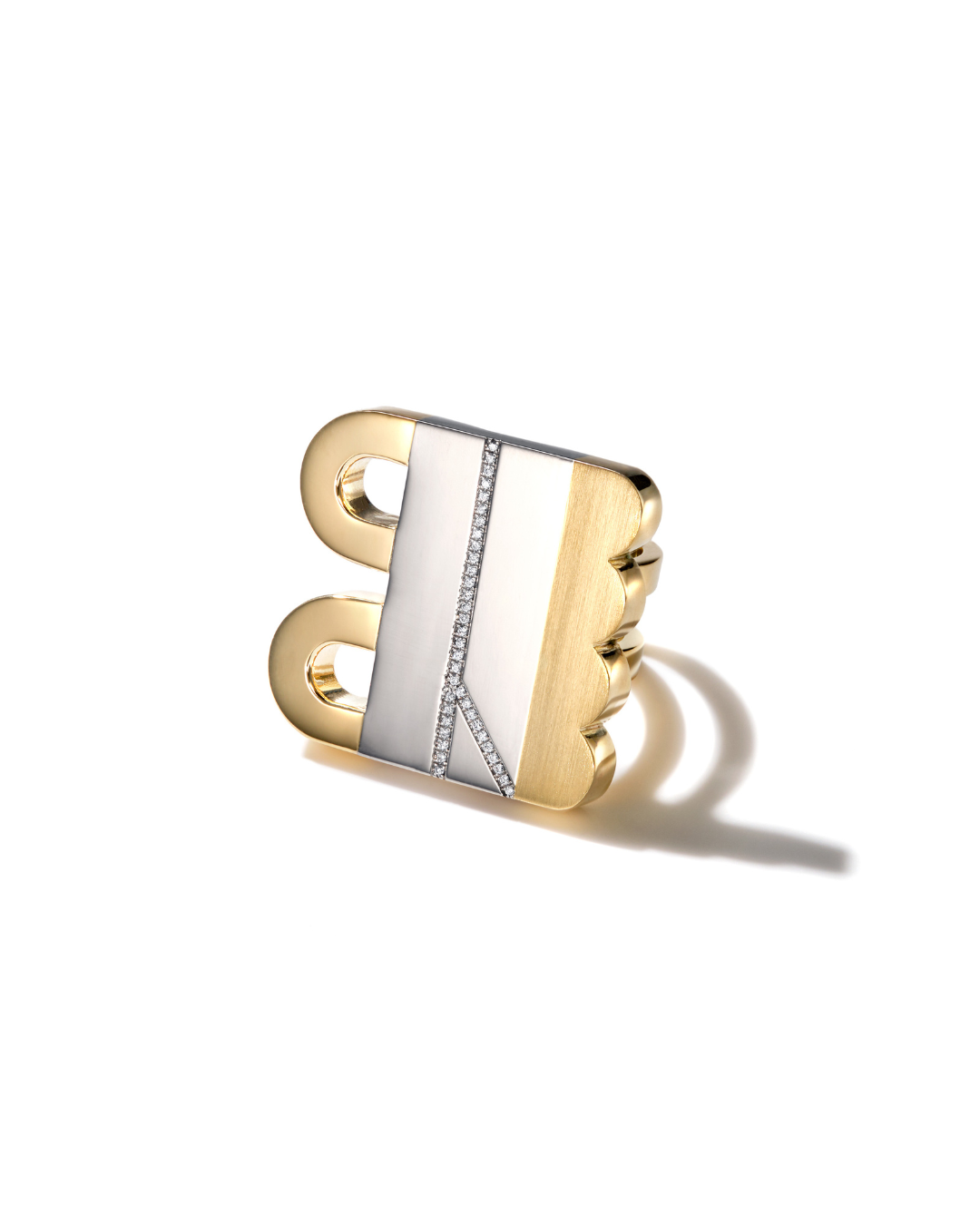
Susan’s Five Moillebeau ring, diamonds, 18ct yellow and white gold, Alexandra Jefford.
Finally, clever traditional houses are giving negative space a contemporary twist. Pierre Hardy, Hermès’ jewellery genius, represents all aspects of equine paraphernalia in his Into the Horsescape high jewellery. He uses the spacious circles of horsebit rings tangled together or the enclosing coils of a whip — both heavily paved — to outsize effect, while Japanese pearl experts Tasaki’s most recent collaboration, with modernist Italian fashion designer Niccolò Pasqualetti, sees minimal, fluid shapes based around pearls and rutilated quartz. Yet another sign of the growing influence on jewellery of what we should surely now call positive space.
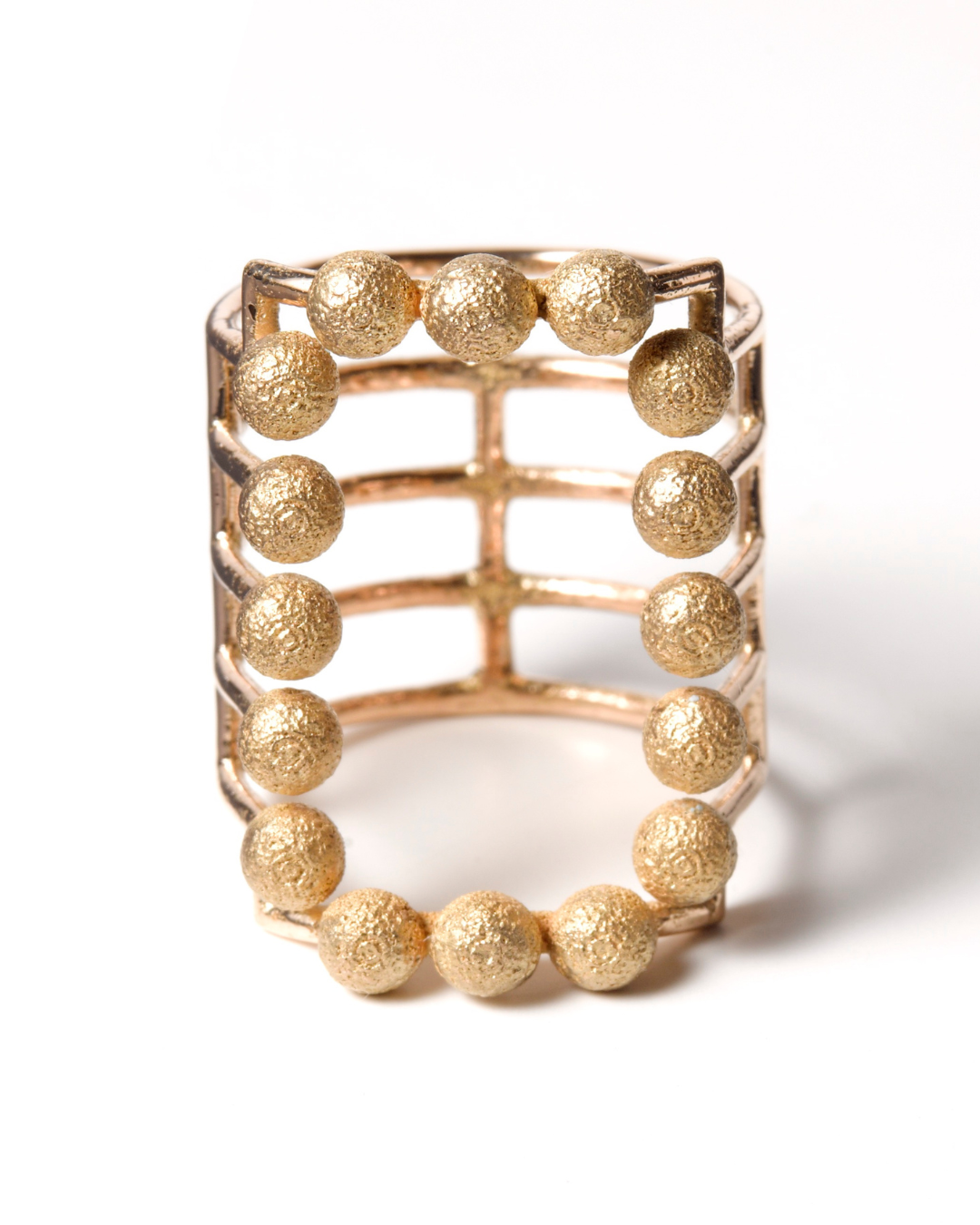
Fonts series Dot Matrix ring, hammered 18ct rose gold, Alexandra Jefford.