There’s an unlikely affinity between a couture house and a science lab. Not only due to the sporting of white cotton work coats in both environments — a blouse blanche or lab coat — but primarily because of a sanctified devotion to detail. Where pipettes dispense precise droplets, beads are meticulously strung; where microscopes bring molecular structures into focus, patterns are painstakingly sketched. In both realms, greatness is achieved through the patient accumulation of minute refinements.
How London Became the Demi-Couture Capital of the World
Words by
Clara Taylor
16th September 2026
Ahead of London Fashion Week, Clara Taylor investigates how the capital became the sartorial home for demi-couture design.
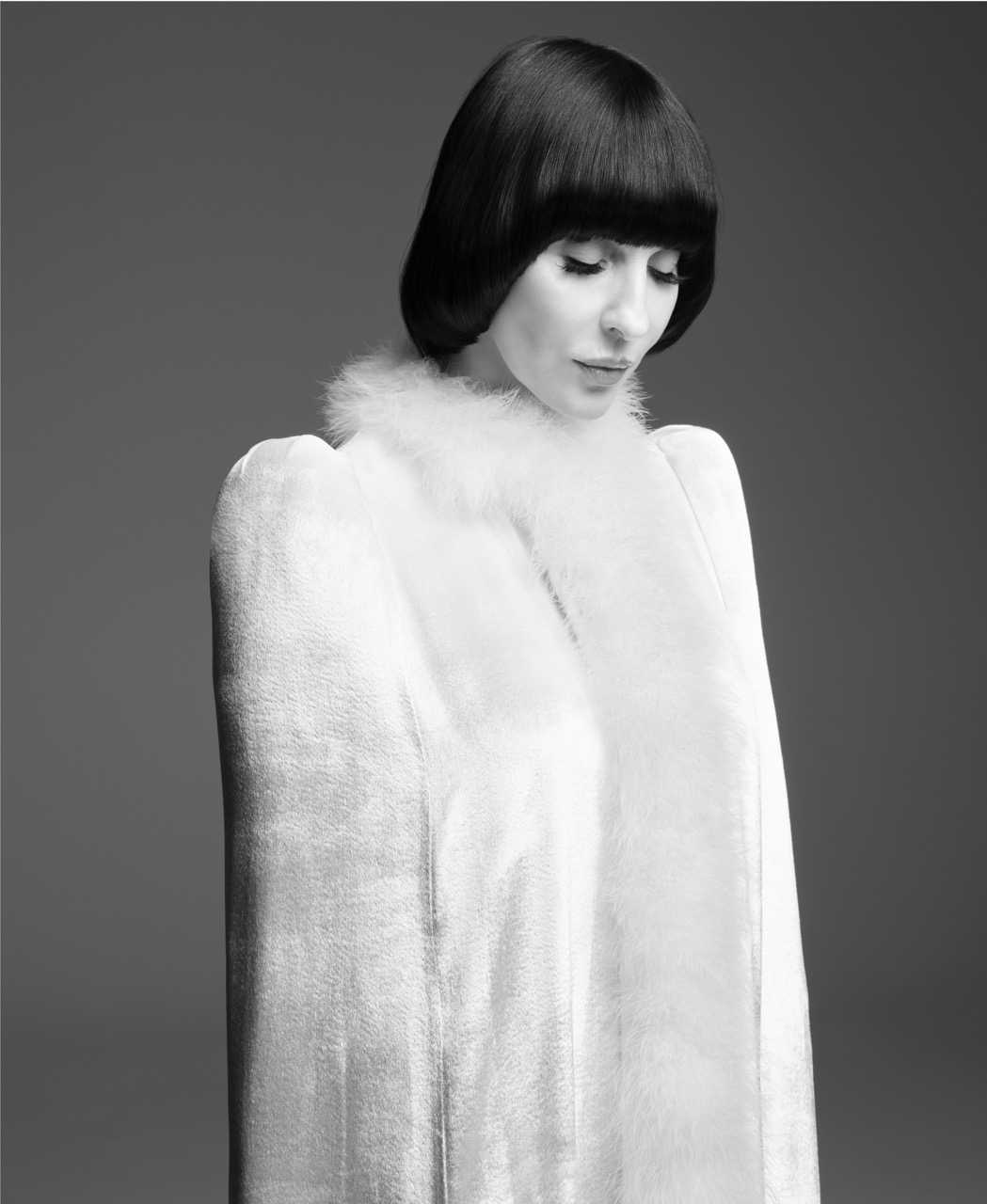
Susie Cave in one of her ethereal creations from her demi-couture brand Susie Cave Weddings & Funerals. ©Sølve Sundsbø.
The true challenge has always been translating this meticulous discipline into the real world. With fashion specifically, unless you have the gravitas of Isabella Blow, integrating couture into the everyday can be as complex as solving a chemical equation. Here lies the entry point for demi-couture.
Demi-couture is not a new phenomenon. To the surprise of designer Harris Reed, former creative director of Nina Ricci and founder of his eponymous brand, the term can be traced back almost three decades: “I thought I made it up,” he says, “then quickly realised it was something that was used in Vogue in the 90s.” Essentially, it’s a catch-all phrase for everything that lies between ready-to-wear and the strict criteria set by the Fédération de la Haute Couture et de la Mode (FHCM), which includes the requirement that the atelier have a Parisian base.
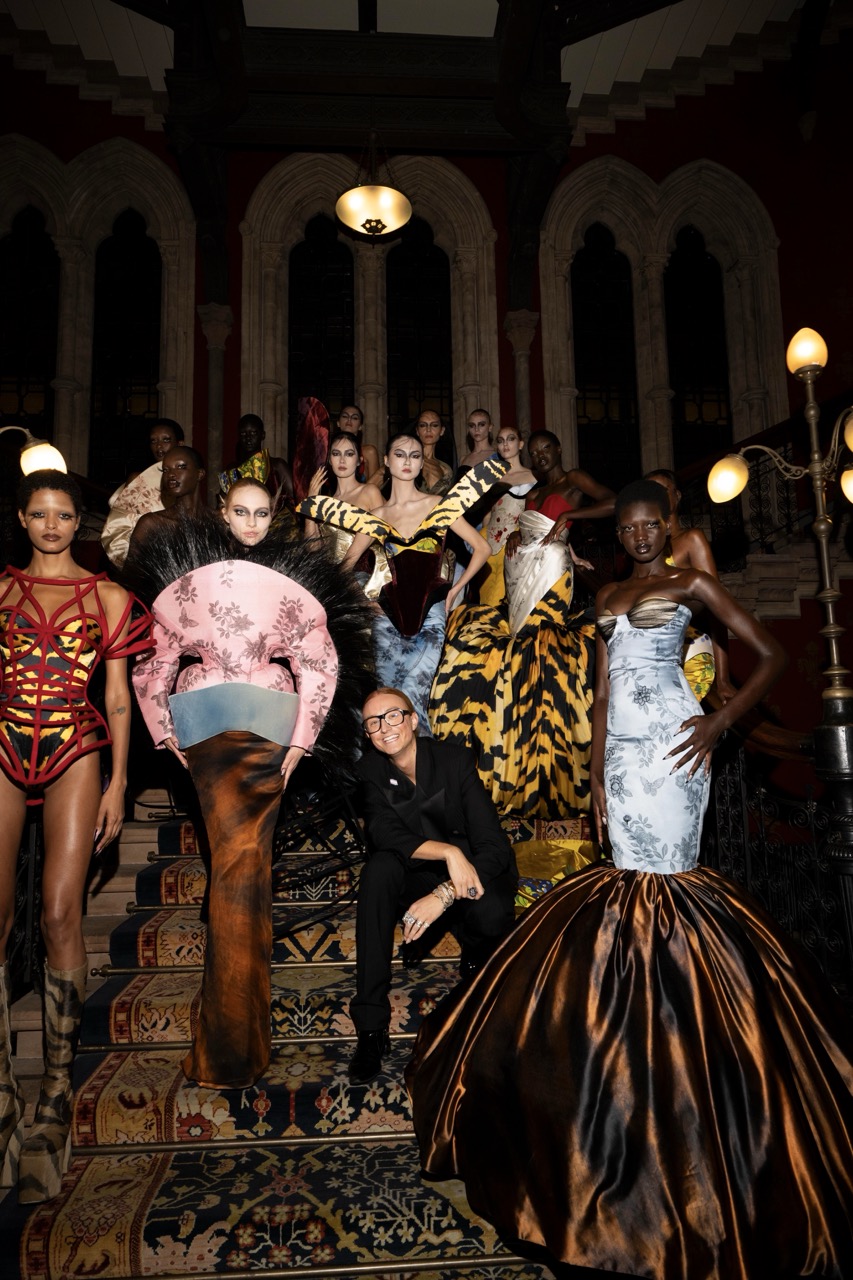
Designer Harris Reed flanked by models wearing his striking maximalist demi-couture creations from The Aviary, his S/S 26 Collection.©Jason Lloyd-Evans.
While Paris may, by virtue, retain a near-monopoly on couture, London is emerging as the sartorial home of demi-couture. The most recent addition to this growing subset is none other than Susie Cave, with the launch of Susie Cave Weddings & Funerals. Her monochromatic, gothic-romantic new line comprises 25 pieces that echo much of what fans loved about her Vampire’s Wife brand — a heady blend of Victorian silhouettes, dark, spectral elegance, spun together with hand- finished details.
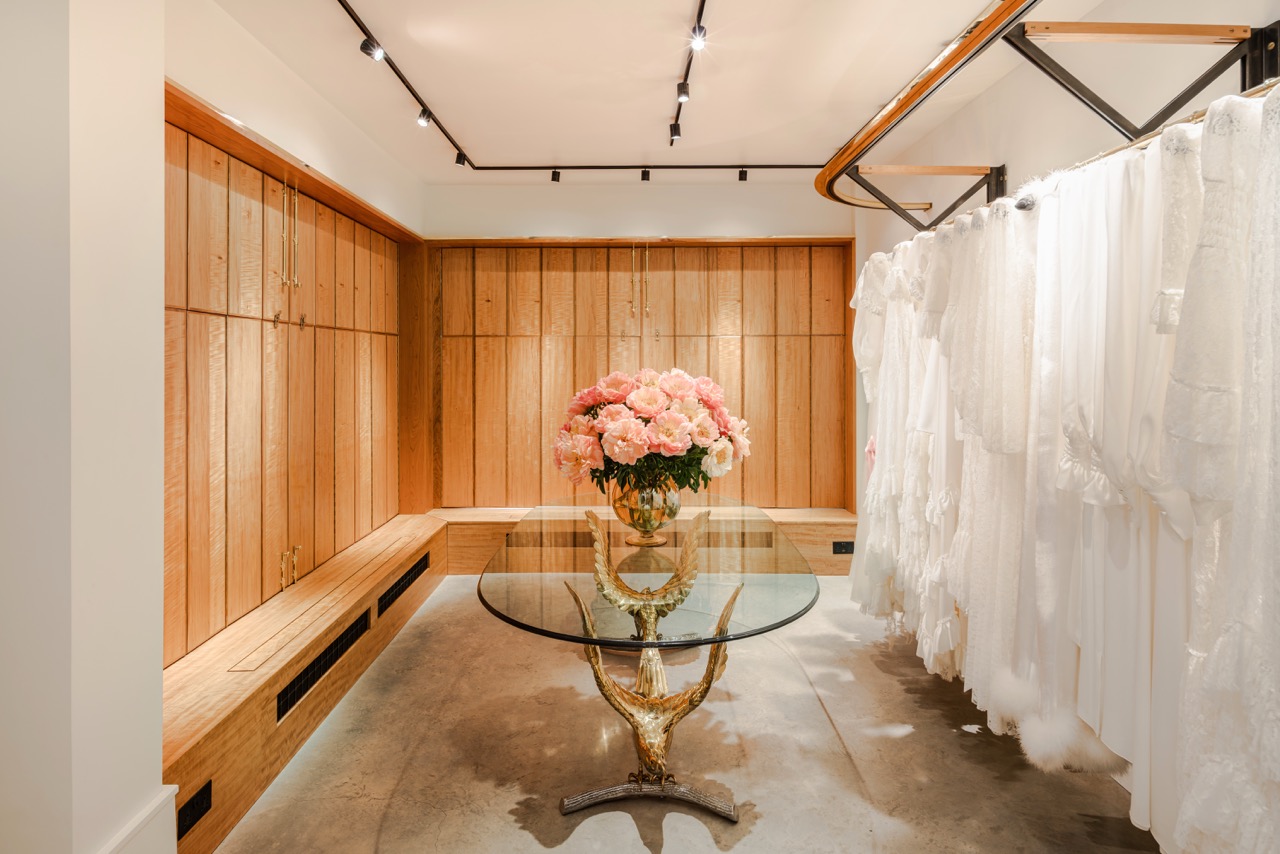
Susie Cave’s Kensington atelier. ©James Tarry.
Occupying this space, which Cave sees as “a place where things are made slowly, by hand, with care and with purpose”, she joins a growing cohort of designers choosing to sit in the in-between. Her debut is the latest signal that demi-couture may no longer be a niche proposition but a defining feature of London’s fashion landscape. So, what makes our city such fertile ground for demi-couture? Many designers speak to a rebellious creative undercurrent that charges through the capital. As fellow London-based designer Bora Aksu, also known for a dark fairy-tale aesthetic, frames it: “London encourages you to build your own identity instead of fitting into an established mould.” Of course, we have a long, storied history of producing designers who revel in the unexpected, something which Reed recognises even today: “London still has the theatricality and the prestige of Westwood, McQueen, Galliano.”
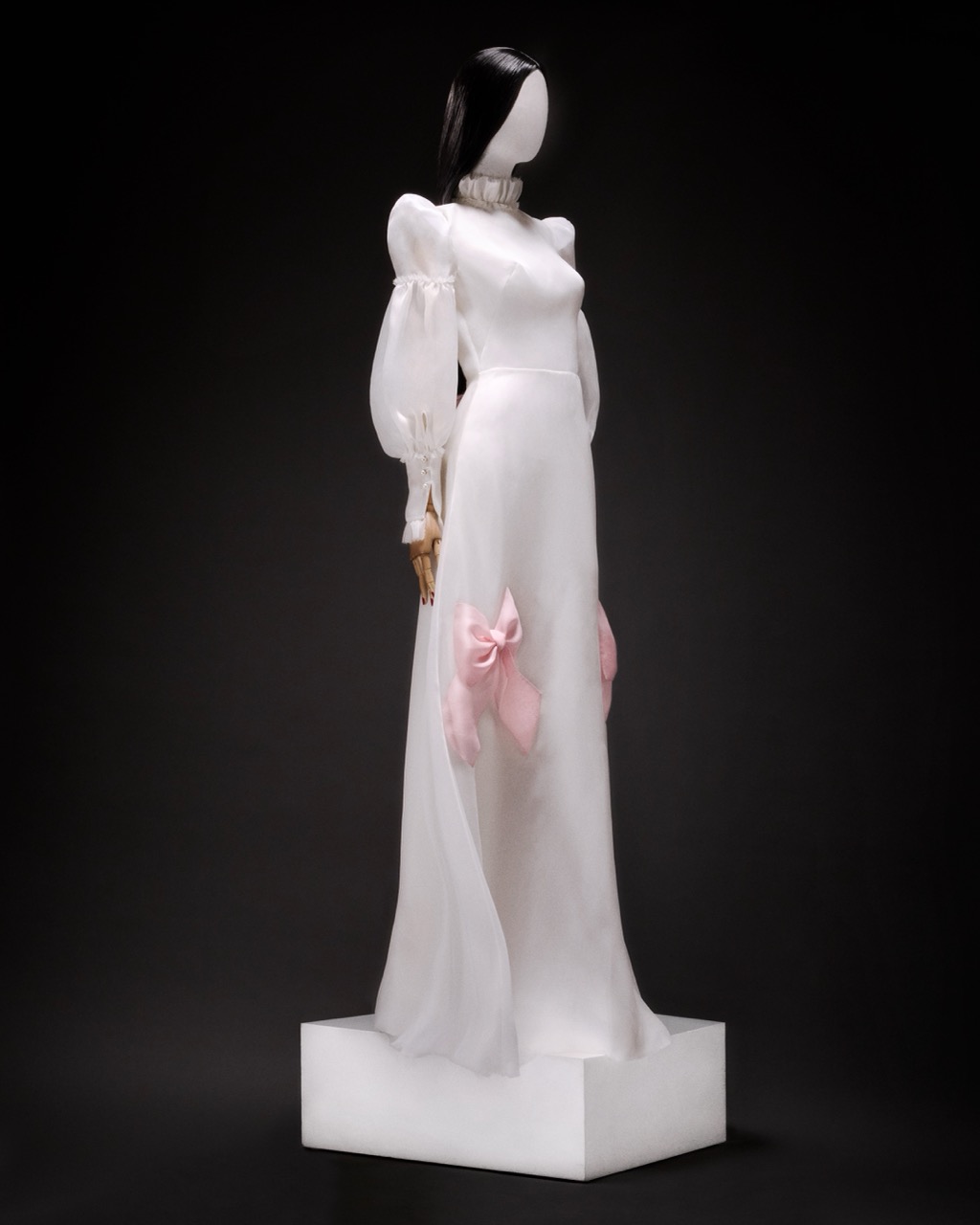
One of the 25-strong Susie Cave Weddings & Funerals collection, featuring her signature Victorian silhouette aesthetic. ©£POA, Susie Cave, Weddings & Funerals.
That spirit of creative independence does not emerge in a vacuum. Going back to the start of their creative journeys, McQueen and Galliano share an alma mater for their training — Central Saint Martins (CSM). It no doubt played a key role in shaping their respective design identities and continues to be a critical component in the formula for demi-couture.
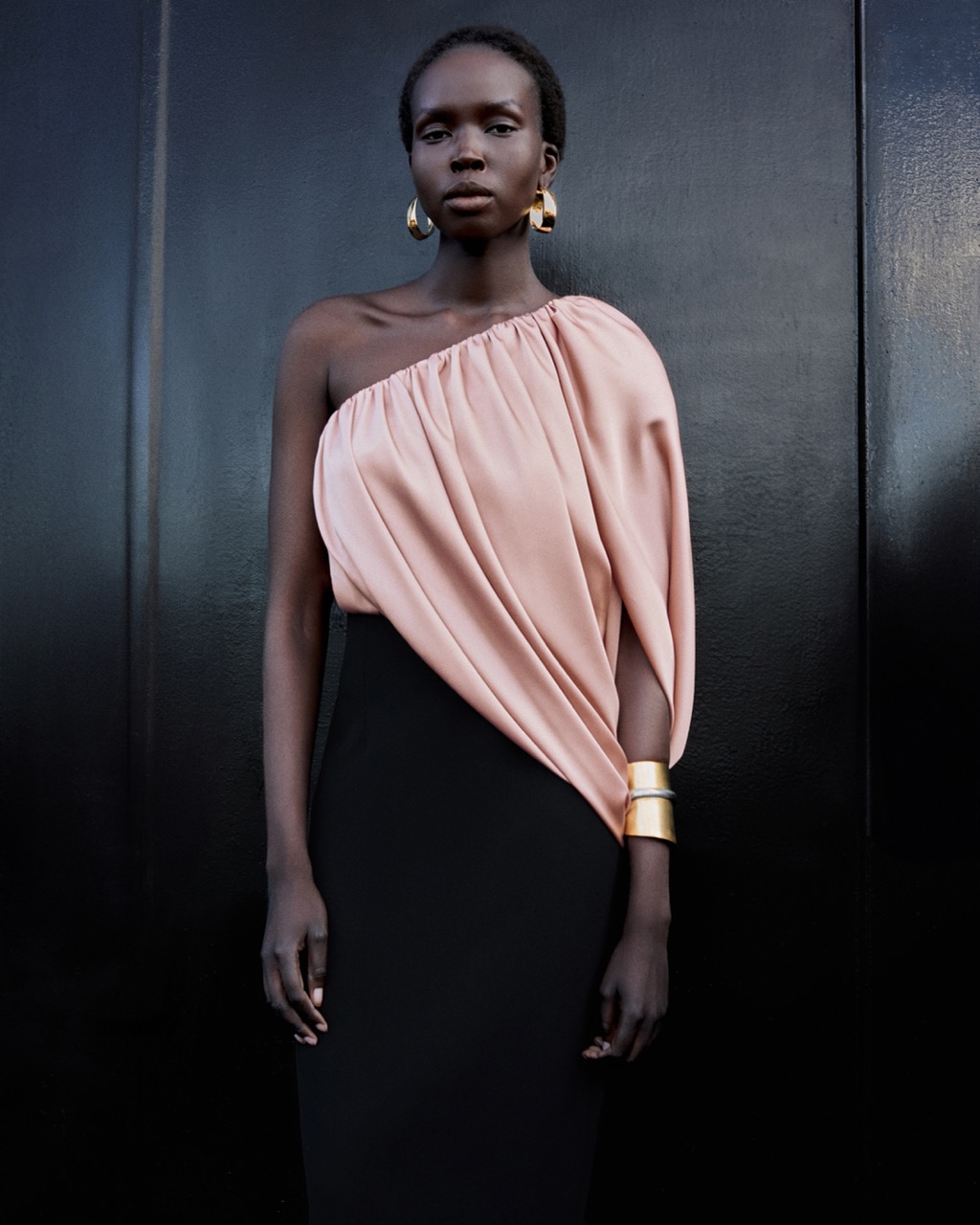
Safiyaa is helmed by a woman, Daniela Karnuts, and is renowned for its architectural-meets-organic design ethos. ©Frederick Horn.
Speaking on why this is, Daniela Karnuts, founder and creative director of Safiyaa, explains that the school “teaches designers to develop a point of view before developing a product.” That distinction is important. “Demi-couture requires a designer to think beyond seasonal product. It demands an understanding of silhouette, identity and the relationship between a garment and the individual wearing it.” Aksu echoes this sentiment, detailing how his CSM training “fundamentally shaped the way I think about design”, teaching him to “question conventions, develop a strong point of view, and see fashion as a form of cultural expression rather than simply a commercial product.” When creating pieces that employ such rich artisanal techniques, a truly unique perspective is an absolute pre-requisite.
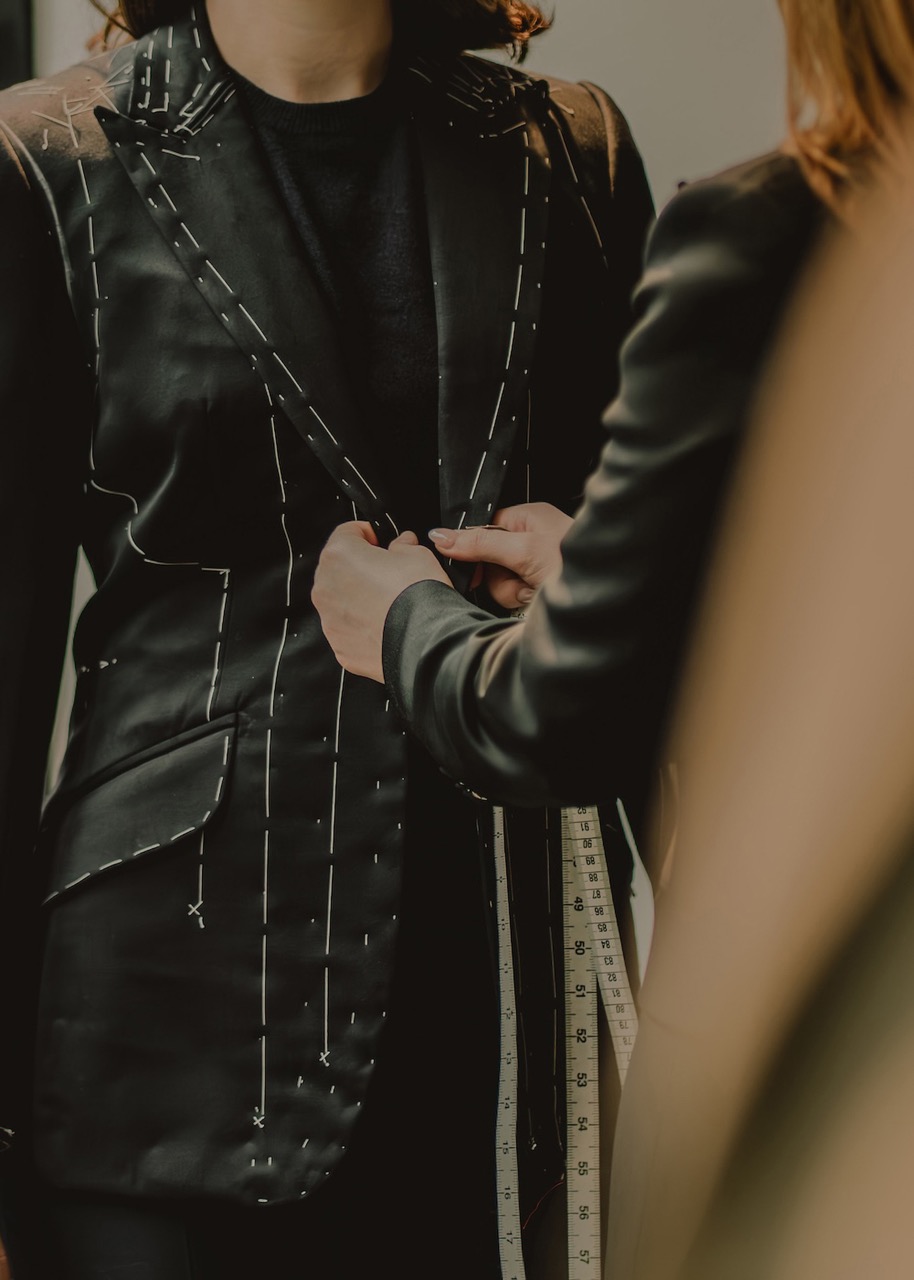
Captured moments at Knatchbull, which made history as the first women’s-only tailoring house on Savile Row.
Arguably more ingrained in the fabric of London’s fashion heritage is Savile Row. Since the late 18th century, this small street in Mayfair has produced some of the world’s finest tailoring, much of which, says the Savile Row Bespoke Association, must be handcrafted. There’s certainly a consensus between tailors and designers that this heritage has shaped the demi-couture approach. Daisy Knatchbull, founder and CEO of Knatchbull — the first women’s-only tailoring house with a shopfront on Savile Row — believes the parallels are implicit: “Savile Row has always been synonymous with craftsmanship, precision and garments that are made to last. Those values are very much at the heart of demi-couture. Traditional tailoring techniques, hand-finishing and an obsession with fit all influence the process.”
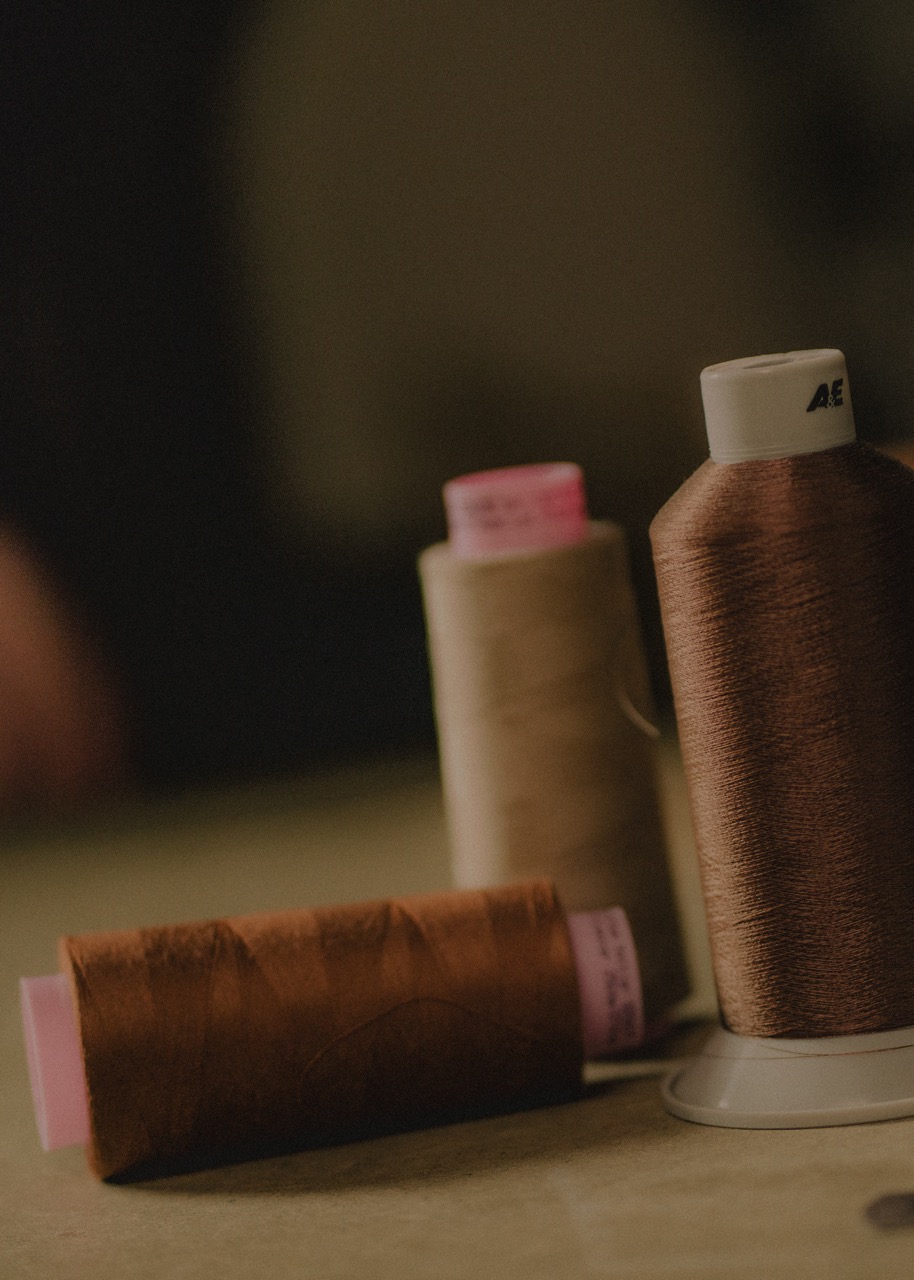
Inside the creative process at Knatchbull.
There are also similarities in the logistics of the process, too, in that the customer has sway over what goes into the garment. Sean Dixon, managing director and founder of Savile Row tailor Richard James, notes: “Both bespoke and made-to-measure tailoring involve fittings and the customer deciding on the cloth and fine details of their garment, such as lapel width and the colour and style of the buttons and the lining.” This collaborative process is fundamental to the demi-couture design process and can be as involved as customers like. Should clients want to customise colour or measurements, designer Kanyinsola Onalaja says that requests can be made online. “We’ll also travel to our clients for consultations, or we’ve had them at our trunk shows,” she adds.
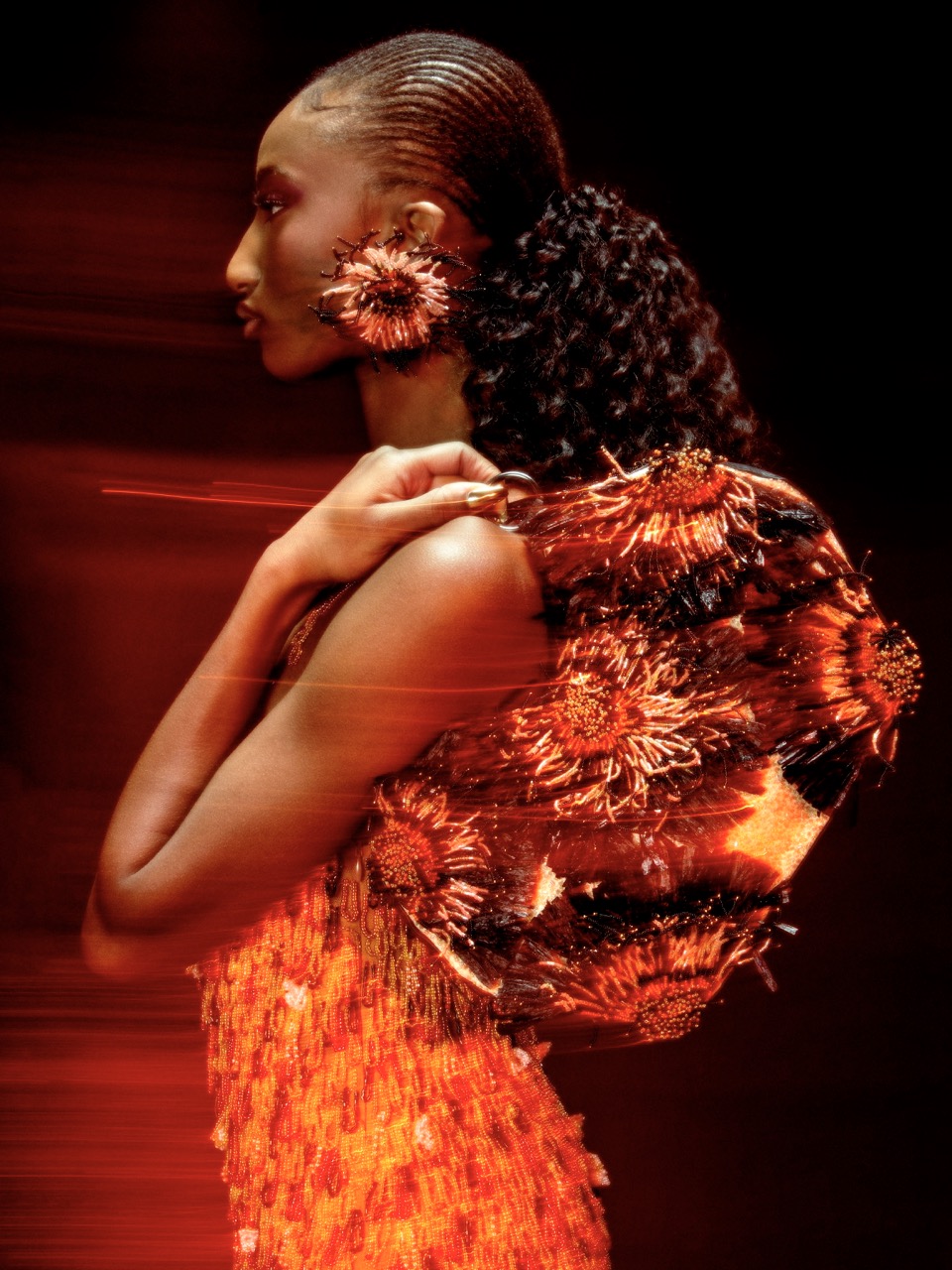
Zahara dress and Solara bag from Onalaja’s S/S26 Marked Collection. © Frederick Horn.
It’s precisely this access to bespoke garments that’s helping propel demi-couture further into the mainstream — in London and beyond. In an age of algorithmic sameness, or as Reed sees it, “where everything can be scrolled past,” demi-couture provides an easier opportunity to own something largely irreplicable. “Even if it’s the same print or the same dress, each item is actually individual,” says Onalaja. “We can get it similar, but it would still be slightly different.” Paradoxically, demi-couture’s rise may be rooted in one of luxury’s oldest principles. At a time when fashion has never been more visible, it promises rarity and individuality.
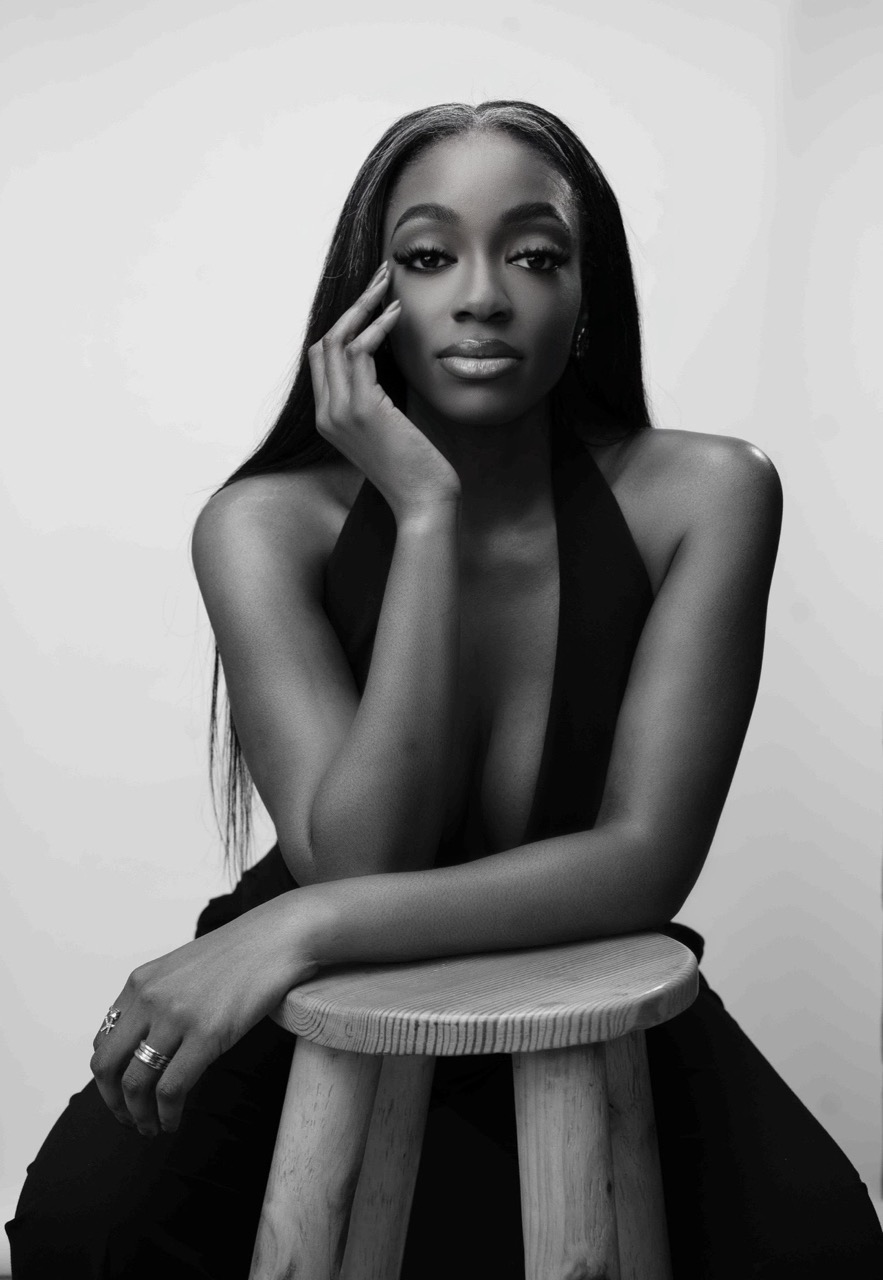
Designer Kanyinsola Onalaja. ©Onalaja.
Moreover, the appeal of something that is designed to suit the singular contours of our bodies is undeniable. People are tired of luxury garments that are indisputably works of art yet fail to fit properly. Where a local tailor was previously used to address these issues, demi-couture cuts out the middleman. When women enter Cave’s Kensington atelier, she wants them to “feel seen, to feel transformed, and then to leave with something that somehow feels as though it has always belonged to them.” She aims to create the Goldilocks of garments — “nothing uncomfortable or too tight or too long — just perfect in every way.” For Harris Reed, it’s an outlet that allows him to create a genuine “sculpture for the body”. Clothing that moves beyond being a possession or status symbol and becomes an extension of the wearer.
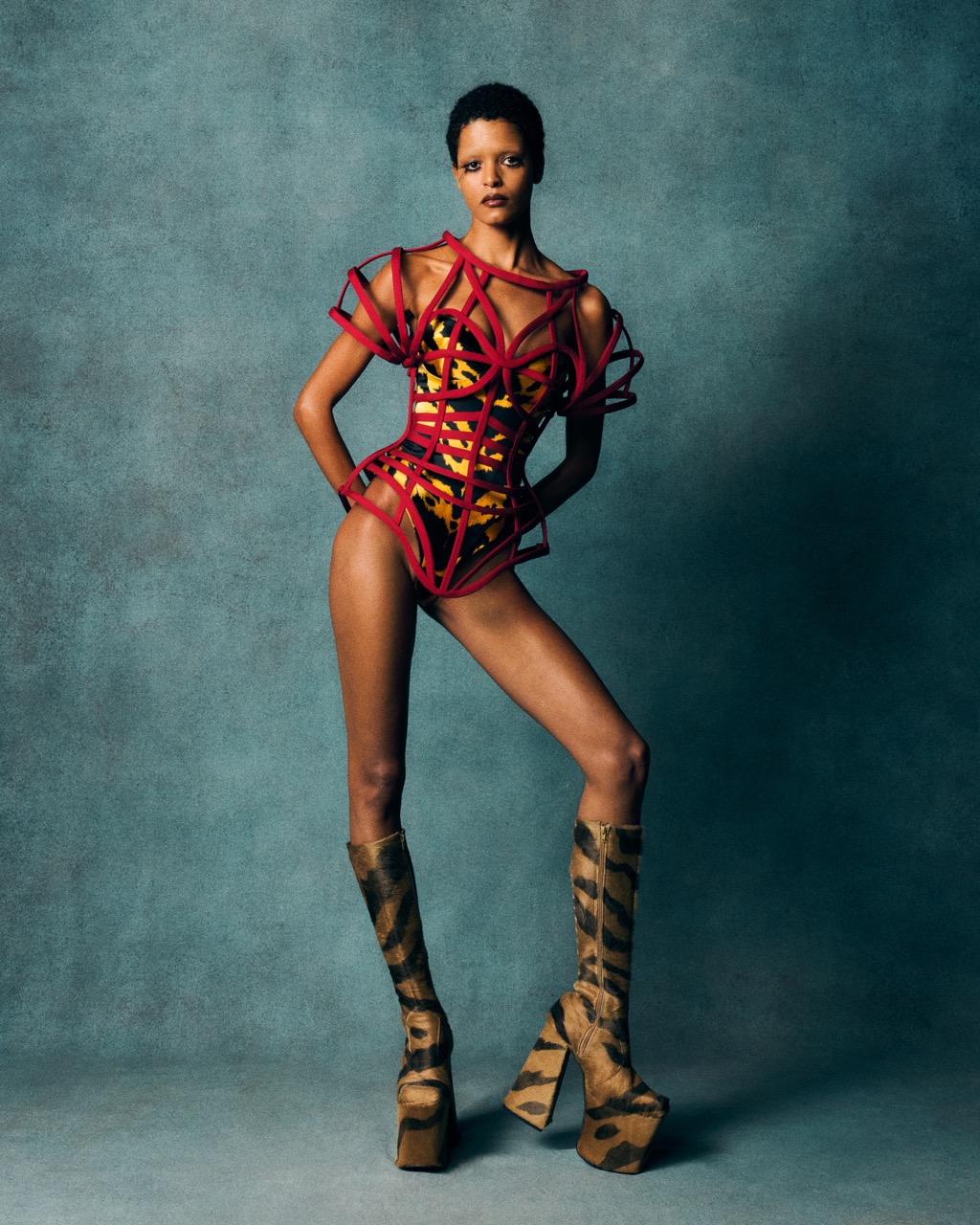
The Aviary, Harris Reed's S/S 26 Collection. The pieces have a bird-like beauty with a nod to the gothic. ©Suleika Mueller.
As London is often touted as a cultural mosaic — a tapestry of traditions where individualism can thrive — it’s perhaps only natural that the city has wholeheartedly embraced demi-couture and its homegrown designers. In a city shaped by diversity, a form of luxury dressing that caters to the individual rather than the masses was always going to find an audience.