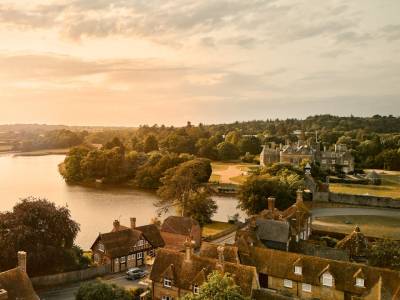
At daybreak on a brisk autumn morning, a man takes his dog for a walk. A wholly unsuspecting scene, the labrador vociferously paces through fallen amber leaves, weaving between raised tree roots, eyes darting. The hunt is on. And not for the usual squirrels you or I would expect. The stakes here are much higher. An eager bark pierces the morning silence and frantic paws tear the earth beneath. A truffle has been found.
Taste Masters: The UK's Best Truffle Dealer
Words by
Clara Taylor
19th November 2026
For SPHERE's latest Taste Master, we speak with Zak Frost, the former DJ turned Wiltshire entrepreneur supplying Michelin-starred chefs worldwide, helping to revive Britain's once-forgotten truffle-hunting industry.
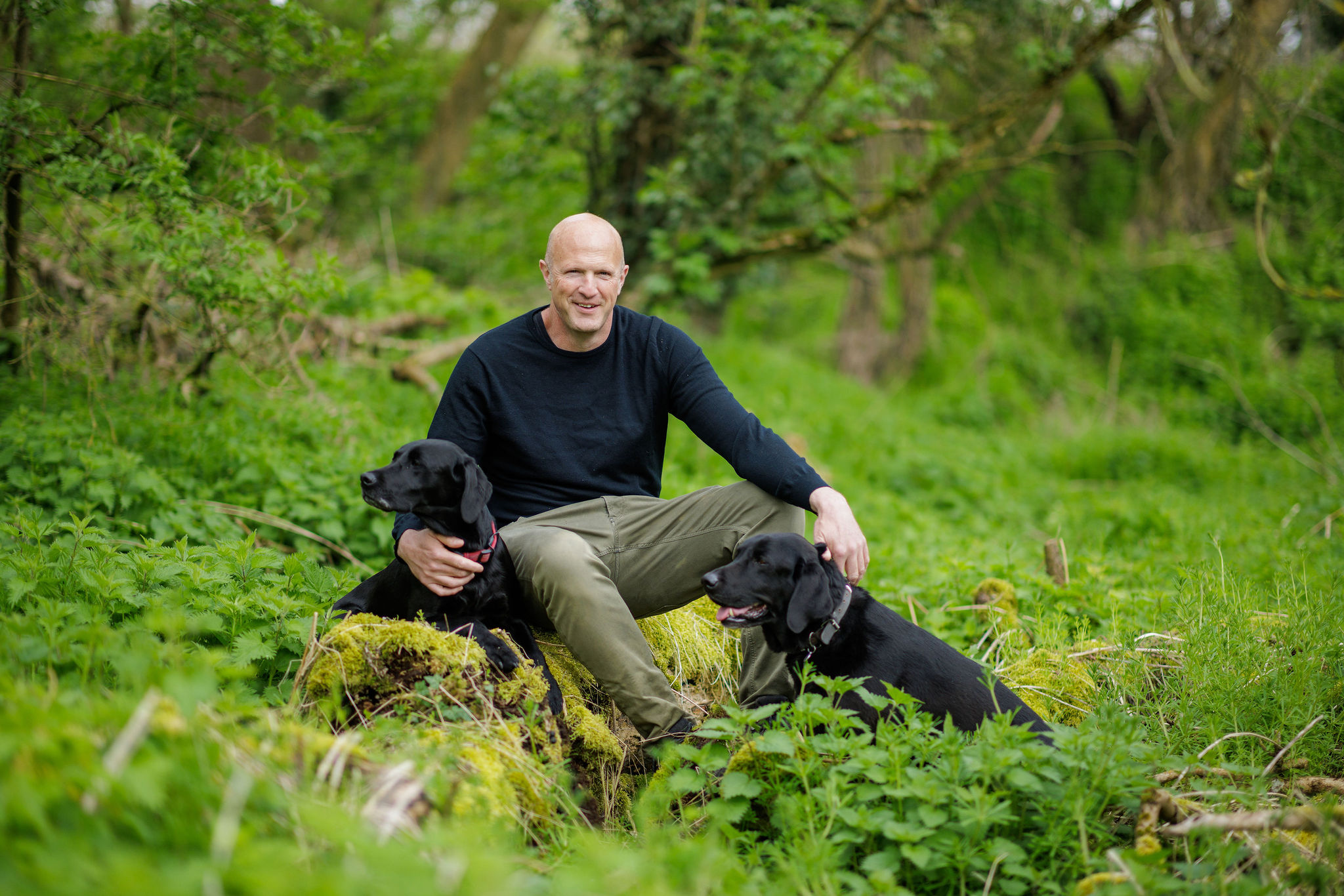
Zak Frost and his two truffle-hunting labradors. ©Wiltshire Truffles.
At this point, you may well have envisaged a Tuscan woodland or perhaps even a French forest. Yet every autumn this can just as easily be found in England's chalky heartlands. In fact, dating back to the 18th Century, "There was a thriving truffle industry, centred around a few families in Wiltshire," Zak Frost, Owner of Wiltshire Truffles, tells me. "They even supplied Queen Victoria."
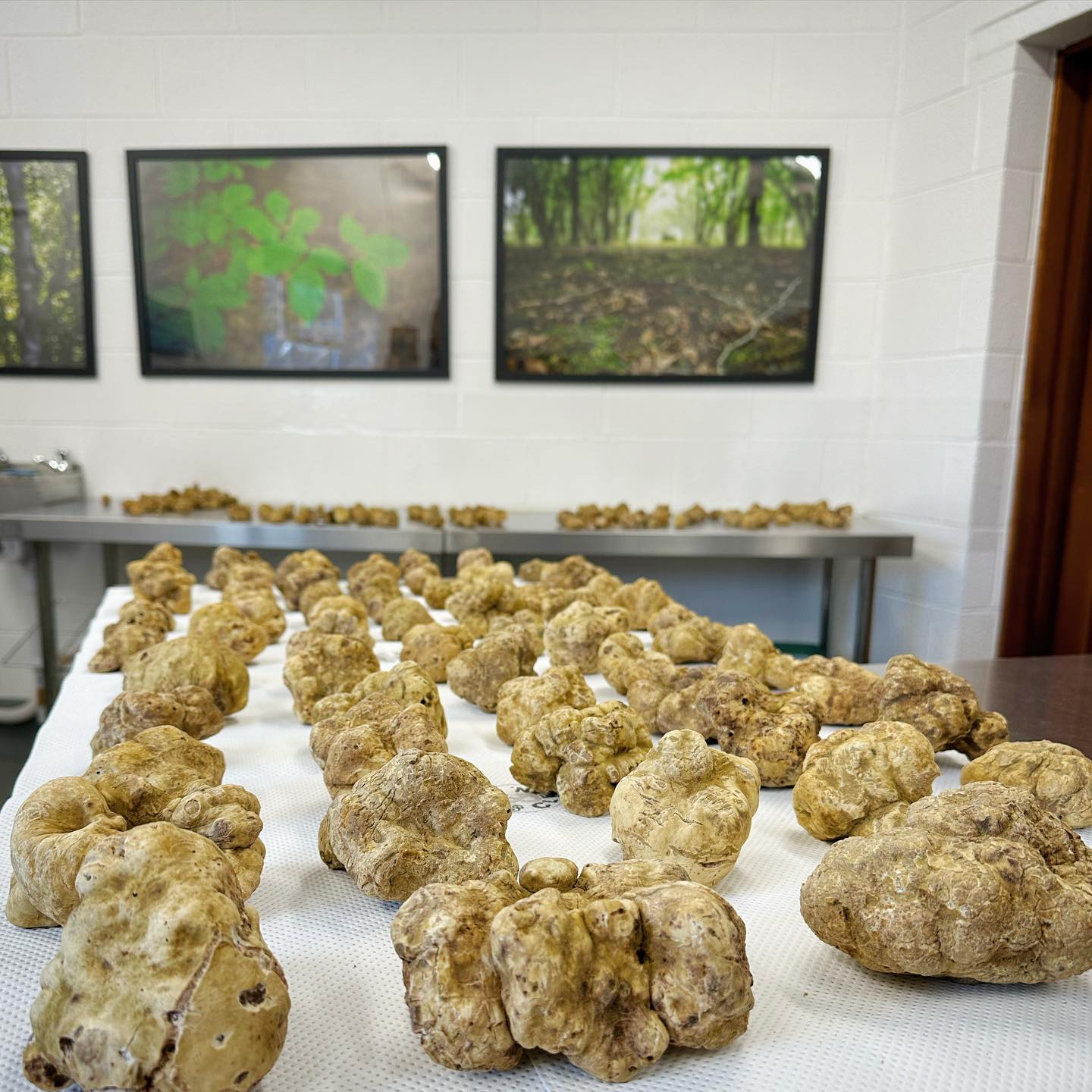
A bulk shipment of white truffles, worth thousands of pounds. ©Wiltshire Truffles.
But after a dog tax and two world wars, such frivolities petered out in the UK. That is, of course, until the former DJ and electronic music producer discovered tartufo. "I was living in Italy around the millennium and just fell in love with them. When I moved back to Wiltshire, I started hunting truffles – literally just for the fun of it and because I wanted to eat them," Frost explains. While there was no grand plan, so to speak, what started as a hobby has since turned into a global operation – one that supplies over 500 restaurants in the UK and plenty more in 8 other countries.
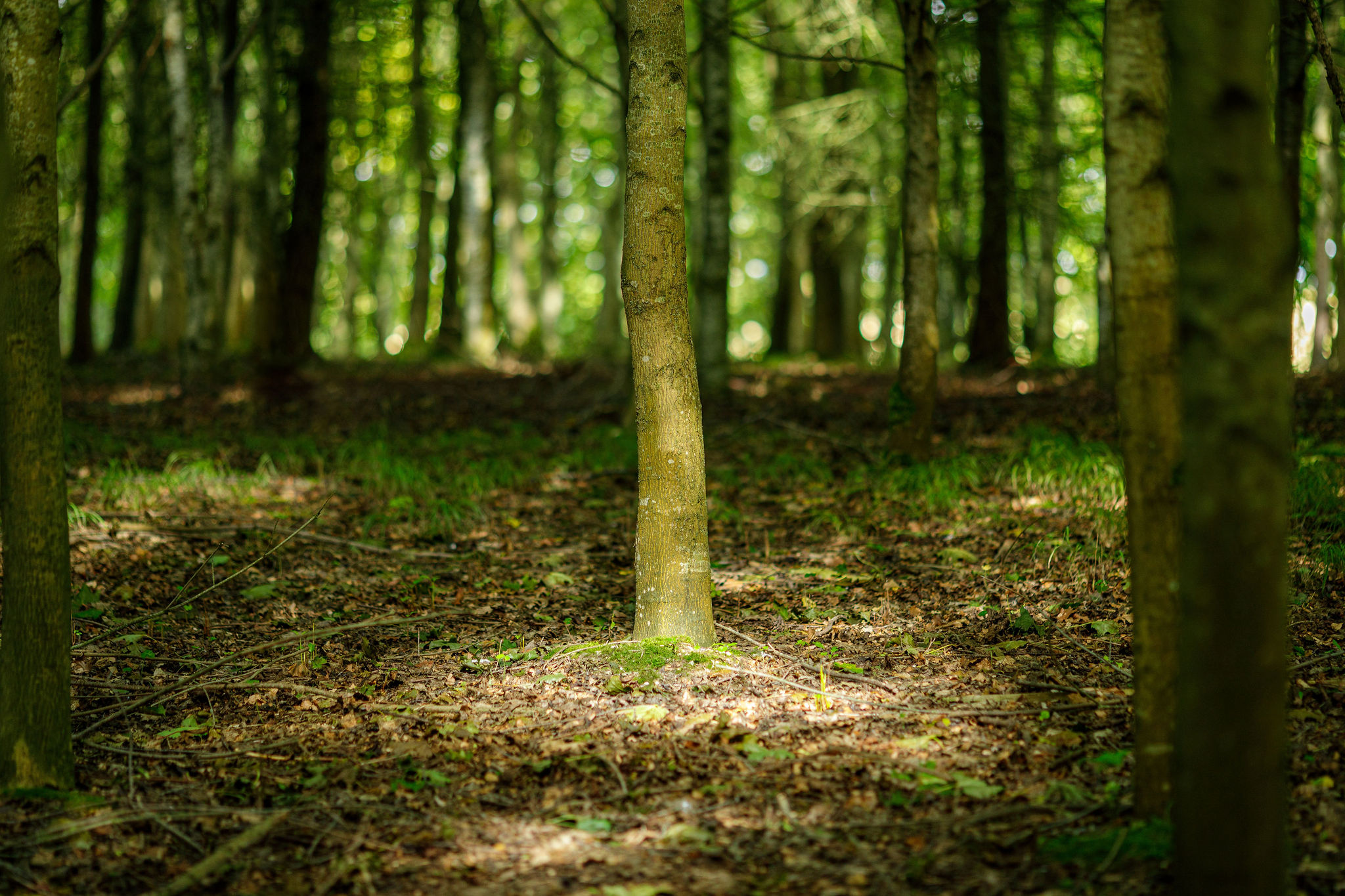
Wiltshire's chalky lands are ripe grounds for truffles. ©Wiltshire Truffles.
Upon meeting Zak, you wouldn't necessarily assume he's the "planet's top truffle dealer", to poach author of Truffle Hound, Rowan Jacobson's words. At around 6"4 (I always lose count after six feet), he's certainly a presence despite the undeniably understated demeanour. Dressed in jeans and a black jumper, hands in pockets, he's softly spoken with a mischievous sense of humour. The unusual nature of his job, and the glamour often attached to it, is not lost on him: "You wouldn't believe the number of times I've got weird looks for taking a call and saying, 'I've got four kilos of white'!"
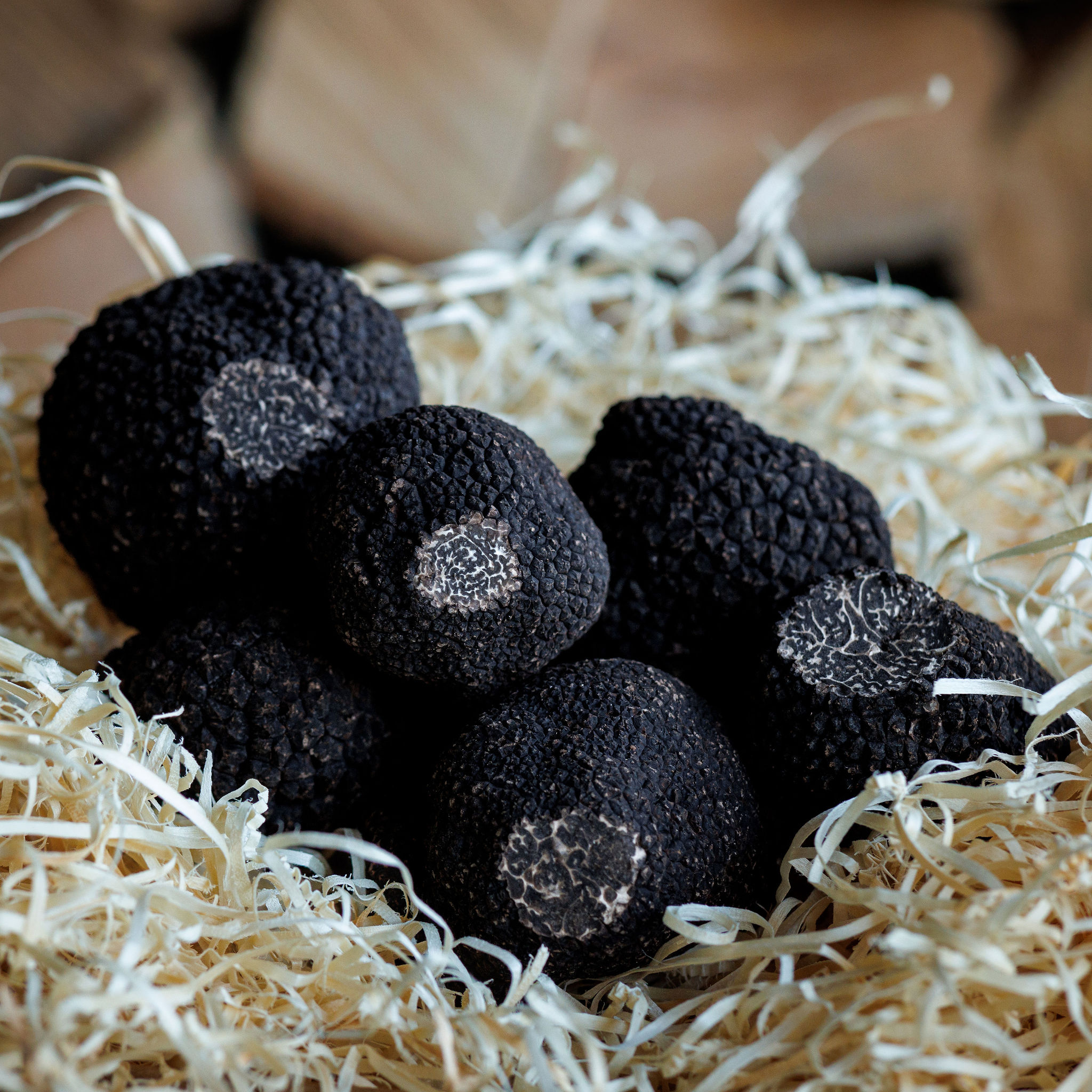
A selection of black winter truffles. ©Wiltshire truffles.
The analogy, while hyperbolic, somewhat stands. In the world of truffles, the stakes are high. Wiltshire Truffles' fresh whites go for £575 per 100g (that's a little less than £6,000/kg). Let's also not forget that Frost supplies all the major Michelin star holders (Gordon Ramsey, Heston Blumenthal, to name a few), chefs not always known for their patience, and the company's Instagram denotes a VIP 10kg delivery to Marco Pierre White – definitely not known for his patience.
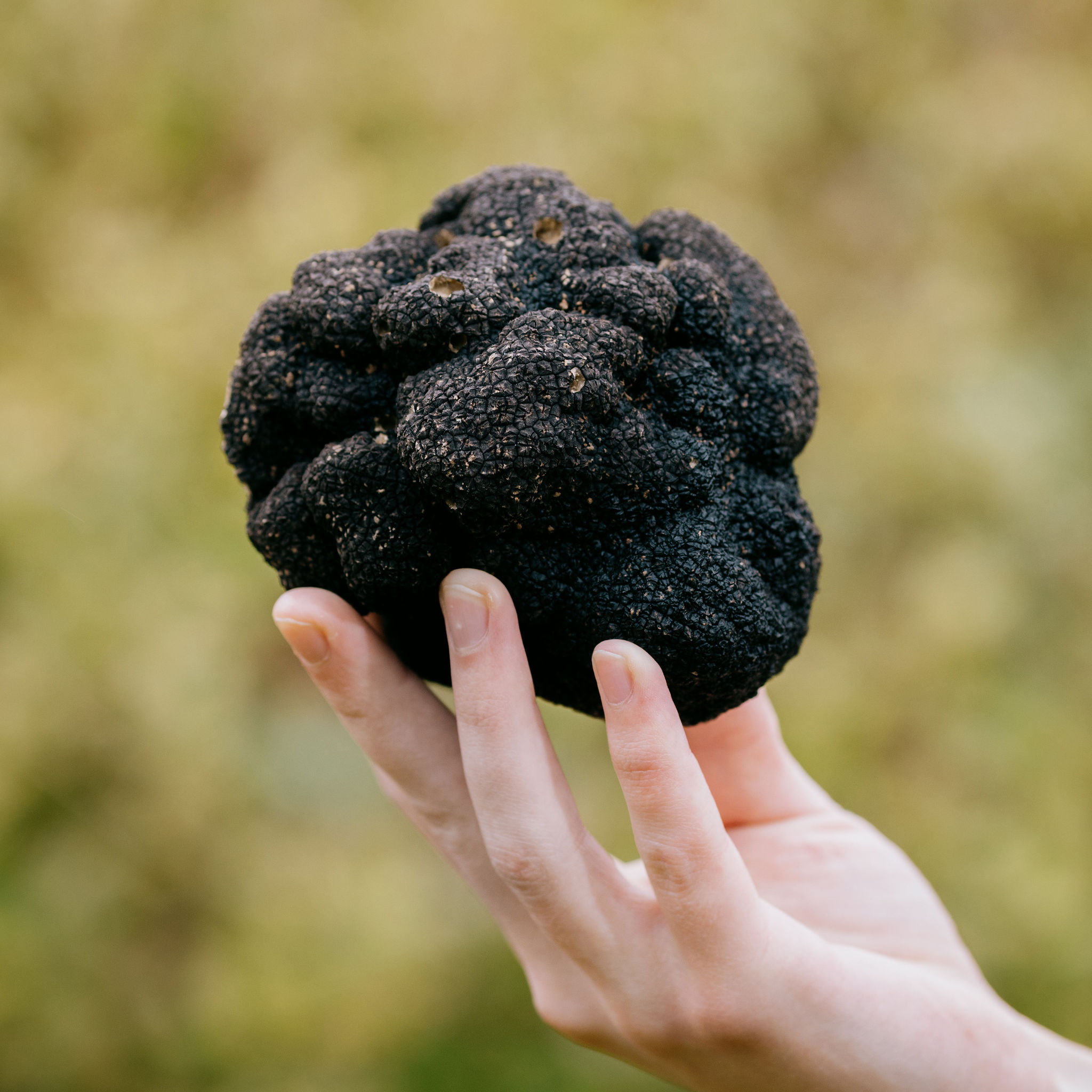
Black truffles are often mislabeled as French, Zak Frost warns. ©Wiltshire Truffles.
Surprisingly, the pressure has less to do with the price tag and more to do with the timing. White truffles are "incredibly perishable" and "shrink in weight the minute they're picked from the ground. They lose value straight away."
With so much on the line, there's an undoubted nefariousness to the truffle industry, Frost warns. Fake truffle products are rife, and while not strictly fraudulent, Frost views it as a dishonest practice: "You're basically implying that the product tastes good because of the real truffle, when in fact it's chemicals." Similarly, there seems to be this odd consensus within the truffle industry that all white truffles come from Italy, and all black truffles come from France. In truth, that's just marketing, and Frost reveals there's a bounty to be had in Hungary, Australia and even Chile.

The former DJ and music producer turned truffle hunter. ©Wiltshire Truffles.
Putting aside the element of subterfuge, I wonder whether, beyond any issues around authenticity, truffles are facing a scarcity challenge. As ever, the luxury industry on all fronts is built on scarcity and accessibility, yet you can walk into any old pub now and order a hearty plate of truffle risotto or a cheeky portion of truffle chips. Any concern is unfounded, at least for Frost, who gently bats away my apprehension by reminding me that, "It's been a popular food product since Ancient Greece." Demand is only going in one direction, up, which Frost explains is because, "It's such an exciting, mysterious, delicious ingredient." It's true: no matter how many London menus feature the stuff, nothing ever feels as decadent as silky ribbons of pasta, lashings of cheese and a generous heap of truffle shavings.
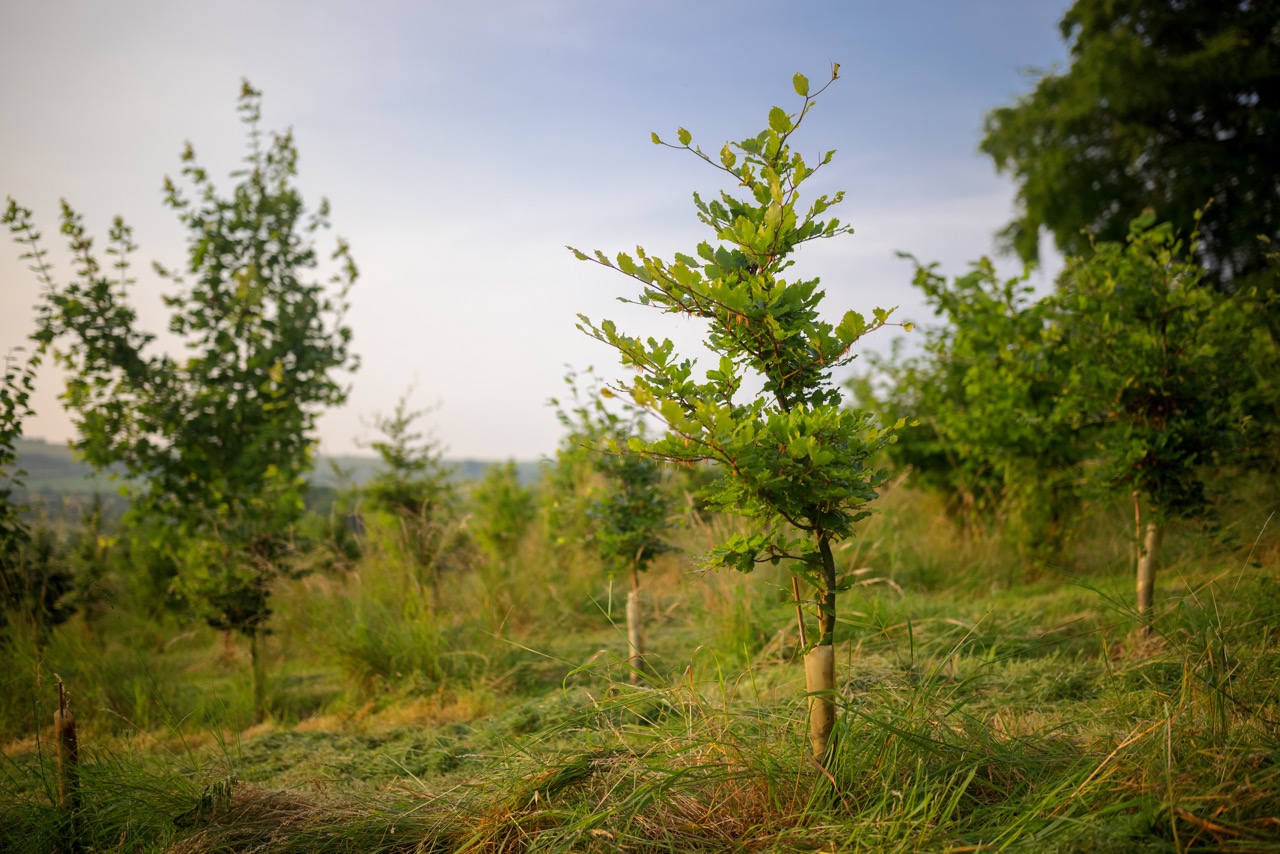
The truffle industry in the UK once served the tables of Queen Victoria. ©Wiltshire Truffles.
There's no doubt, in my mind anyway, that Zak's isn't one of the best jobs in the world. Beyond larking about his Wiltshire woods with his dogs, he's reached business mecca: a company so successful, he has no desire, or more importantly, no need to grow. It's almost entirely a family operation – "My wife is a company director, my three sons are on the payroll, my brother's our photographer, and we rent our barns from my dad," - and as he's already mentioned, he supplies the best restaurants and private homes. There are no grand expansion plans here, accompanying product launches on the horizon or private equity ambitions. Frost has his truffle empire already.
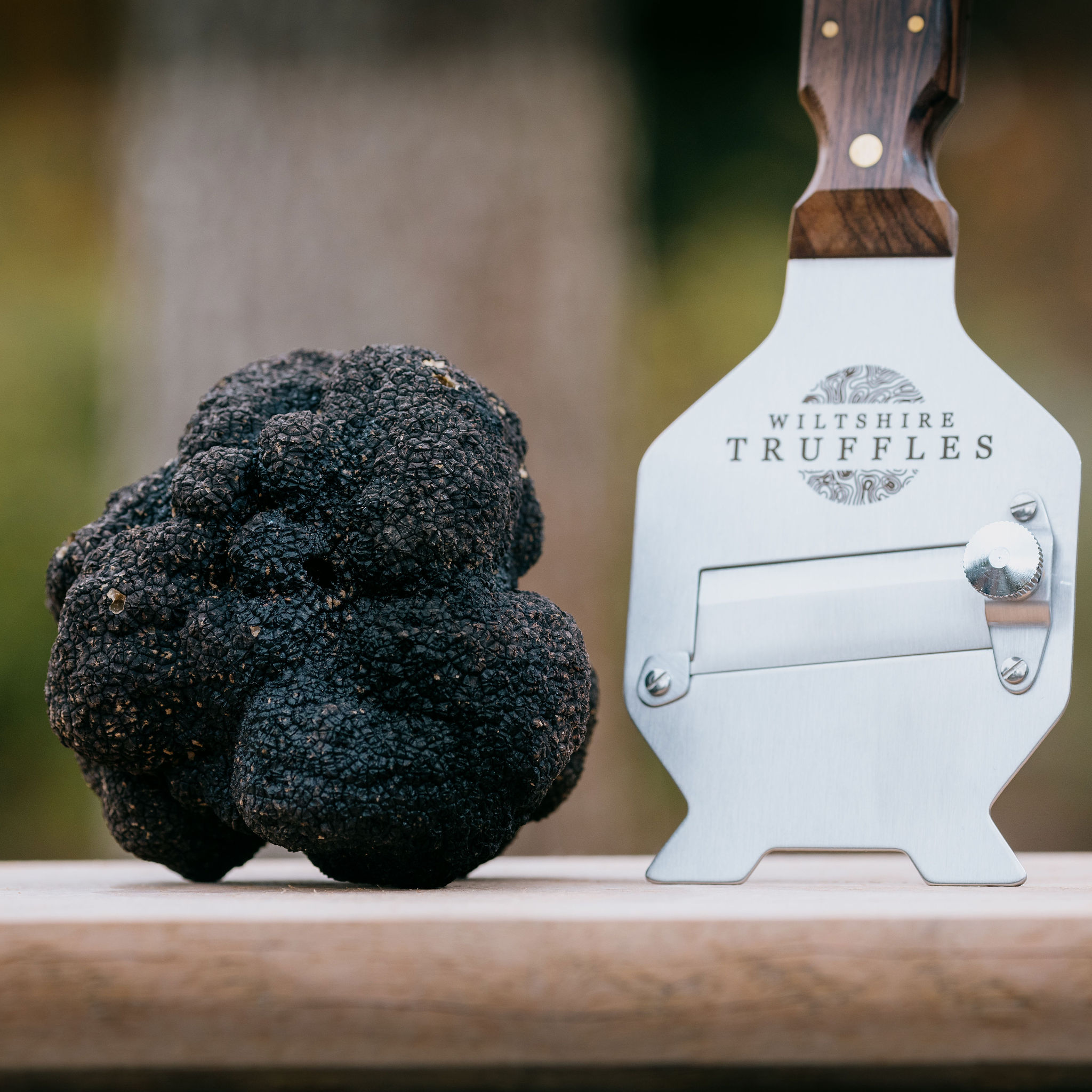
A giant autumn truffle and slicer. ©Wiltshire Truffles.
Which is why, this autumn, you'll still find him out at dawn with his trusty black lab rooting through fallen leaves for a truffle that could one day end up on a Michelin-starred table. Perhaps the thrill of the hunt never wanes, and he still feels that same rush as when he first discovered truffles in Italy all those years ago. Then again, when your entire livelihood is a treasure hunt, why would it?
Zak Frost’s Insider Truffle Tips
- Never buy truffle products if you're looking for the real thing. Anything like truffle oil is chemically flavoured.
- Ignore antiquated food rules. Italian's will tell you it's sacrosanct to add parmesan to truffle. They're wrong.
- Only buy Italian and French truffles when you can prove their provenance. For a long time, the industry has marketed any white truffle as Italian or black truffle as French.
- If you live in a chalky soil area, buy an inoculated tree and see if your truffle spores flourish.