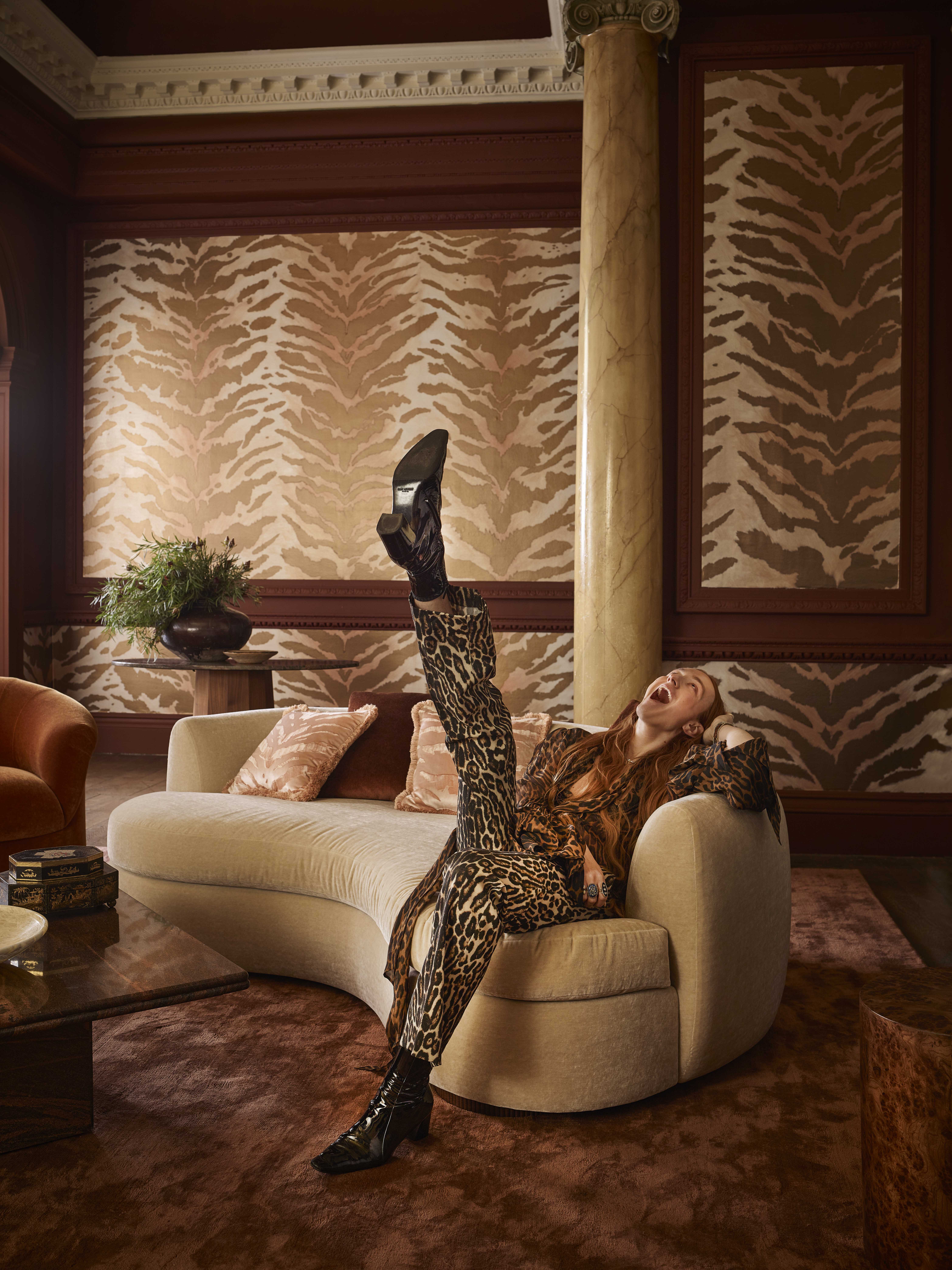
Harris Reed is all hands and hair. Sitting cross-legged in the gilded living room of his London home, his waist-length red hair delicately tucked into a bun and his hands waving away as he tells me about his latest project: “It’s couture for your walls.”
Harris Reed Wants to Dress Your Walls
Words by
Clara Taylor
8th April 2026
Following his recent departure from Nina Ricci, Harris Reed chats to Clara Taylor about his foray into interiors, what it takes to create a Met Gala look and the secret behind his iconic hair.
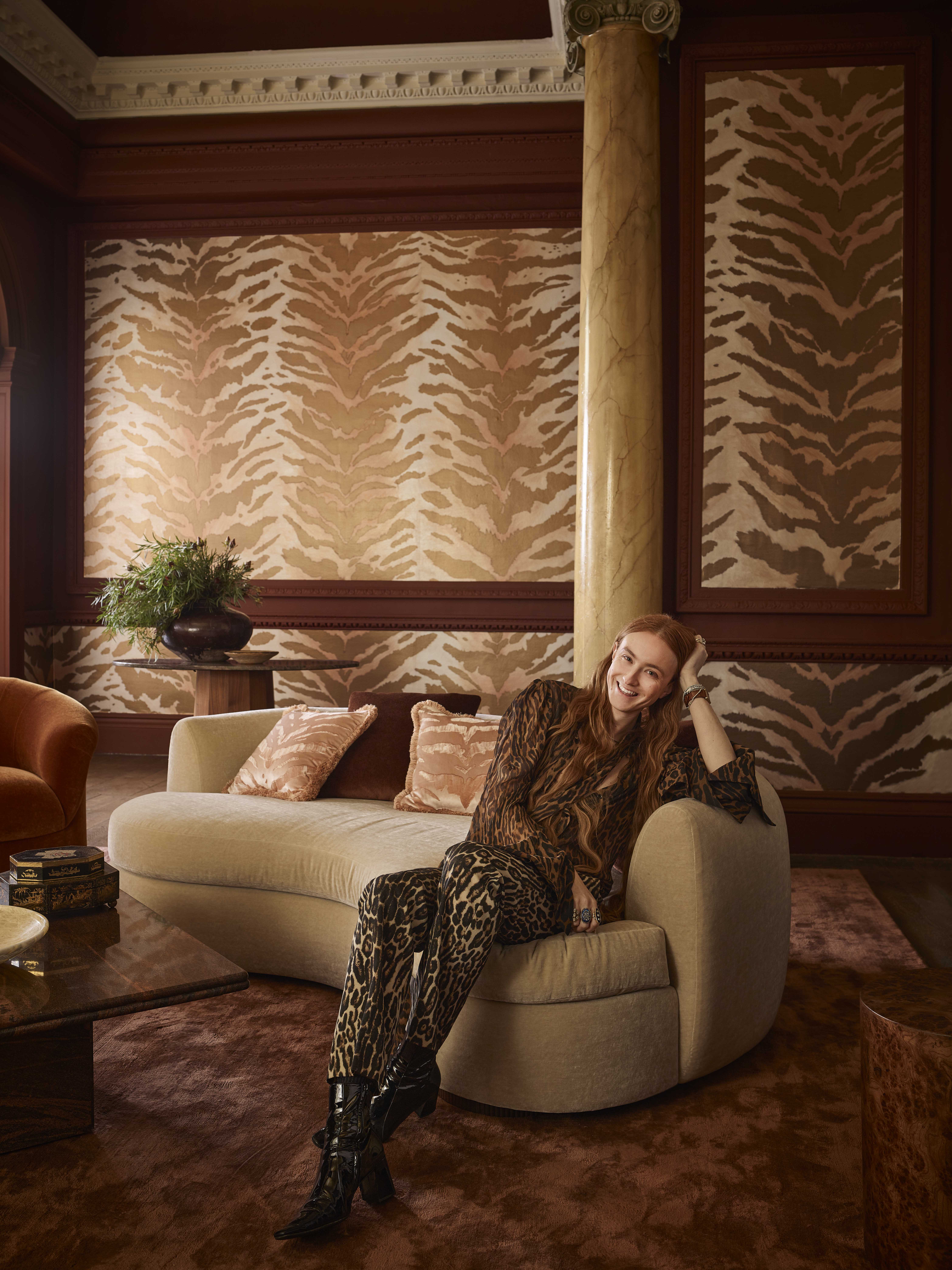
Harris Reed with the Ambiguous Tiger design. @Chris Everard
The connection between fashion’s demi-couture demi-god and wallpaper may not be immediately obvious. Until very recently, Harris was at the helm of Nina Ricci as Creative Director, as well as steering the ship of his eponymous brand – a role he continues to hold. He leaves Nina Ricci on a high, with his last show being his best-received. “It was the embodiment of my time at the brand. It was playful. It was fun. We really leaned into Marie Antoinette and Glastonbury.” Throughout his tenure at Nina Ricci, Harris beautifully walked the tightrope of honouring the heritage of the house while still bringing flair. Harris estimates roughly 30% of the collection was taken directly from archival silhouettes, in a nod to the history of the house, but fashioned them in a much more contemporary way. The result? “In response to the playfulness and fun in the clothes,” he details, “at Nina Ricci went from being someone who's maybe a little bit more mature to someone younger.”
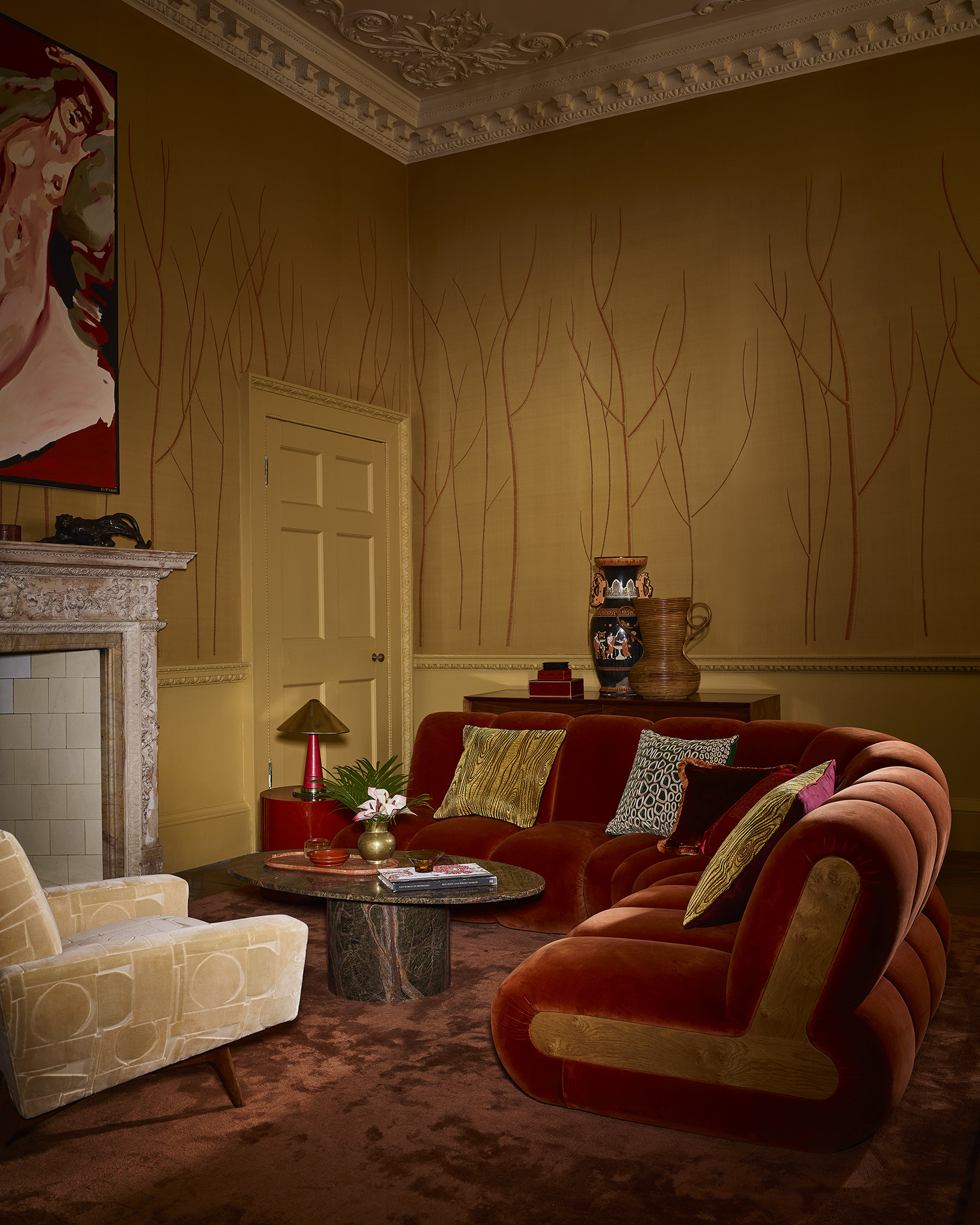
The Fluid Meadow design. ©Chris Everard.
Who would’ve guessed that his first move post-Nina Ricci would be a collaboration with Fromental – creators of luxury wall coverings? The collaboration, in fact, dates back to the 2024 Met Gala, when the 29-year-old designer dressed Demi Moore. The duo took to the Met steps on the first Monday in May, hand-in-hand and dressed in Harris’ signature louder than loud, maximalist designs – structured masterpieces fashioned using archival Fromental wallcoverings that took over 500 hours to make.
“There’s renewed yearning for going out, peacocking and being proud of yourself in gloomy times”
Fast-forward two years and now “people globally want a touch of me in their space,” Harris tells me. This isn’t an exaggeration. The collection is so clearly Harris – there’s a gold zebra print design that mirrors a suit in the Nina Ricci womenswear A/W26 line, as well as some baroque florals also found in the collection. He attributes a “kind of 70s nostalgia” and renewed yearning for “going out, peacocking and being proud of yourself in dark and gloomy times” for the collection’s success. So, it’s perhaps unsurprising that his Fromental designs are proudly displayed in his own decadently decorated home. Thanks to a helpful laptop tilt from Harris, I can see the golden ‘Rays of Plumeria’ on his ceiling and the elegant blue branches from ‘Wilde Dream’ adorning his walls. It’s hard to believe that Harris’ husband, artist Eitan Senerman, whom he married in 2024, is a fan of minimalism. “He just loves that it’s so personal,” Harris teases.
“If Vogue puts out a brief, you follow it”
With this year’s Met Gala just weeks away, Harris is characteristically sanguine about what goes into pulling off one of the looks. Throwing his head back, he laughs when he reveals that the timelines are incredibly tight: “We’ve never had more than three weeks.” “It’s a massive attack of collaboration and anxiety,” he elaborates and the closest thing to a “make or break project” designers get. The pressure isn’t just to please whichever megastar you’re dressing – although Harris counts Iman, Ashley Graham and Beyoncé as happy customers – but to impress the event overlords. It’s not enough to just dress well. Interpretation of the theme is everything. “I know some people don’t follow it and a lot of times, you don’t see those people back again,” Harris coyly explains. “If Vogue puts out a brief, you need to follow it.”
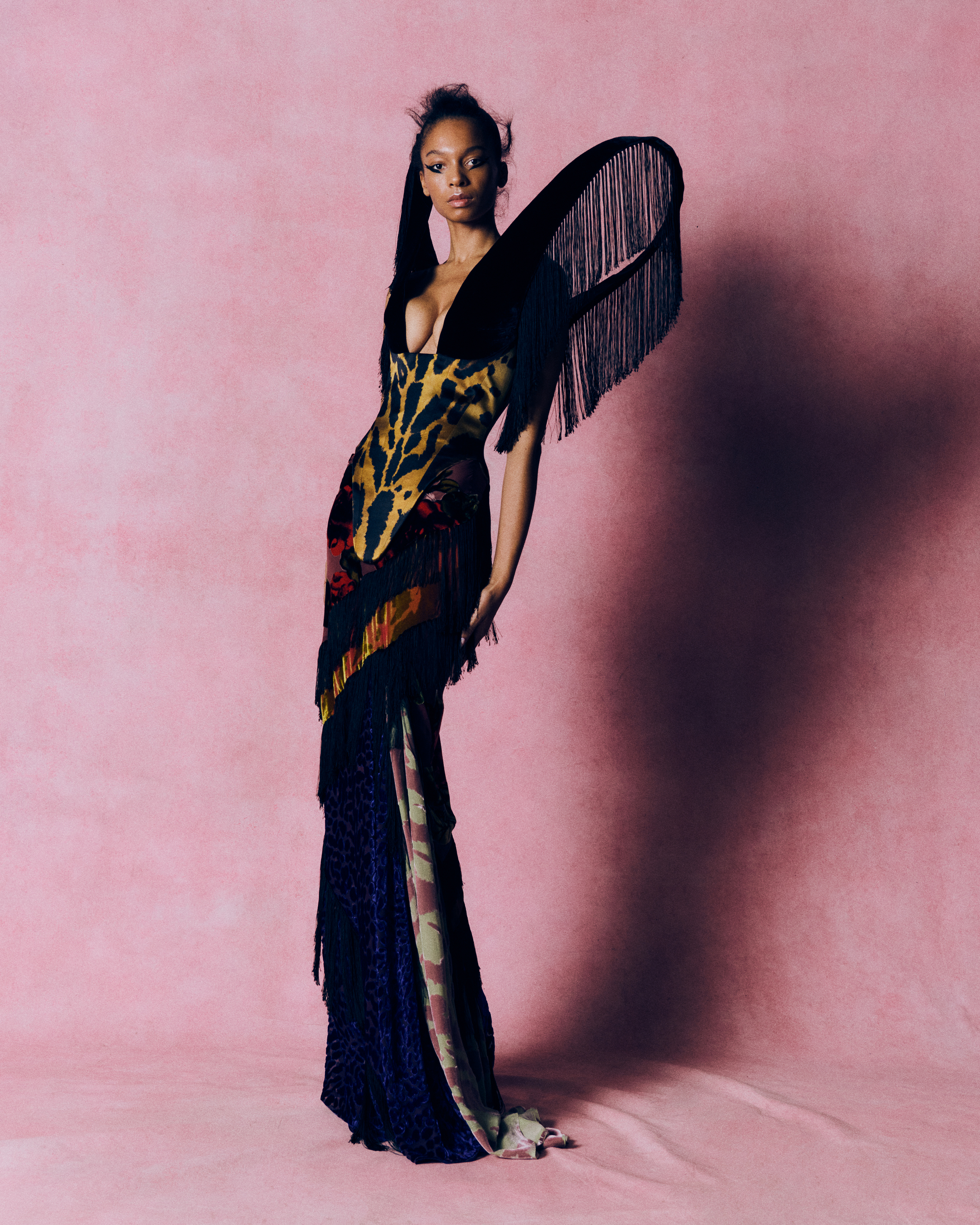
Look 2. Suleika Mueller. Harris Reed LFW AW26.
“Being a brand based on fluidity is the thing that has saved us”
Where the Met demands interpretation, Harris Reed, the label, has always been about declaration. Whilst studying at Central Saint Martins, Harris was commissioned to create custom looks for Harry Styles and Solange Knowles, so by the time he graduated, the brand was already established and internationally known. The overall DNA of the label is self-described as “Romanticism gone Nonbinary”, with fluidity at the core of everything the demi-couture business (demi-couture because it’s made outside of France). Of course, the world has drastically changed, some would argue regressed, since the brand’s mission statement was first penned. Has this impacted the brand’s ability to grow at a time when there’s a backlash against the very values it was built on? “I actually think it’s the thing that’s saved us,” Harris says. “The fact that we have this tactility, to jump between [dressing] different people, was able to keep us.” It’s true. Very few brands could count both Sam Smith, a non-binary artist with a body type less visible in mainstream fashion, and say, a more conservative client looking for a dress for their 50th birthday as customers. Let alone be able to maintain a sense of authenticity while doing it. “I got ridicule and more negative press in the beginning when people were like, ‘What is fluidity?’ But now it’s more accepted because people recognise that we’ve always done clothes for everybody, every gender.”
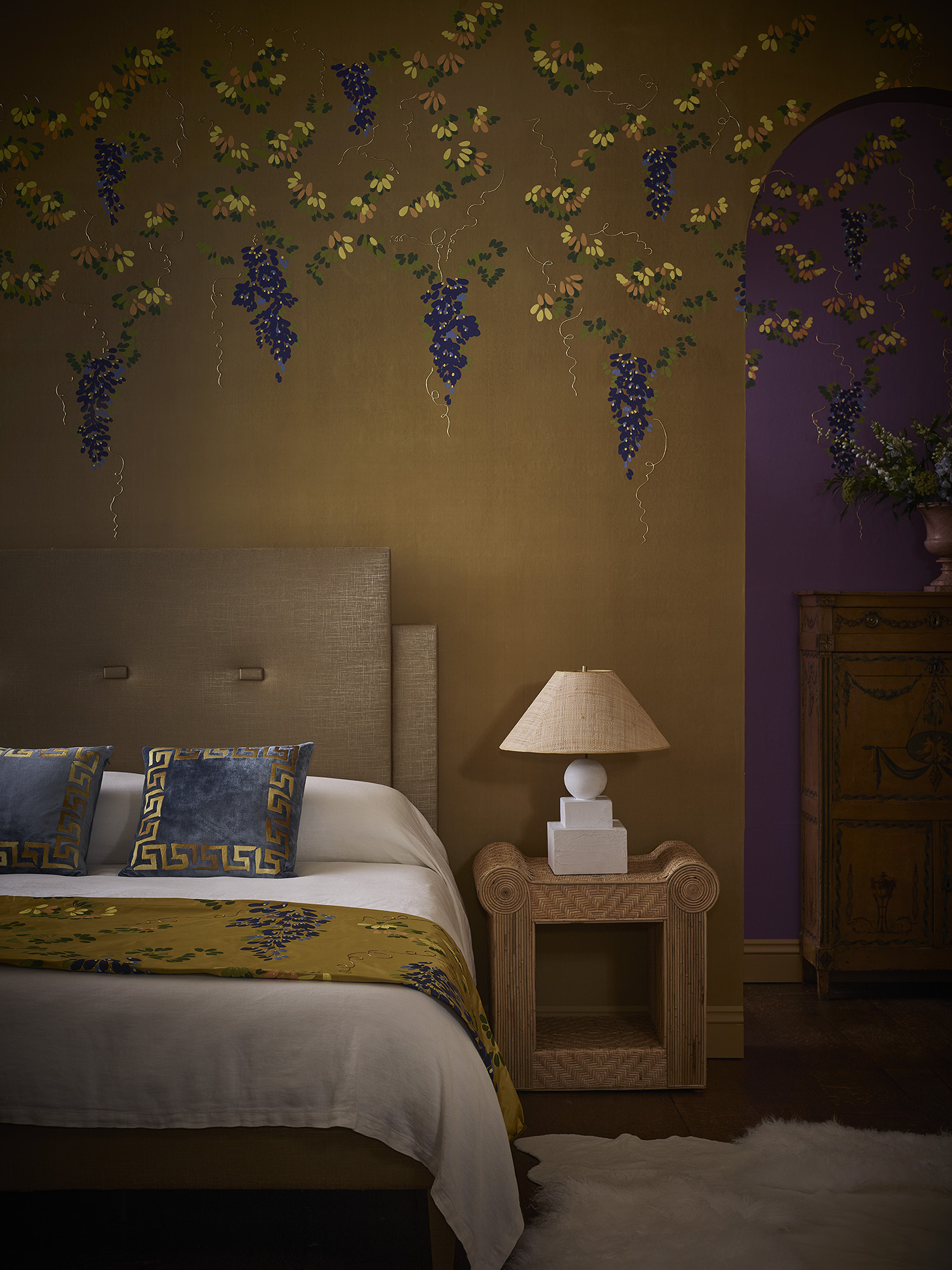
Wisteria design, Harris Reed x Fromental. ©Chris Everard.
Both Harris and the Harris Reed brand consider London home. However, with no tax-free shopping and post-Brexit complications, some believe our fair city has lost its chops as a serious shopping destination. It seems the Harris Reed customer differs in this respect: “They love that we’re in London and feel justified in spending the money because of what London brings. Plus, they can come and stay at the Savoy or Claridges.” With the business growing 20-30% each year, according to Harris, why change? If it ain’t broke.
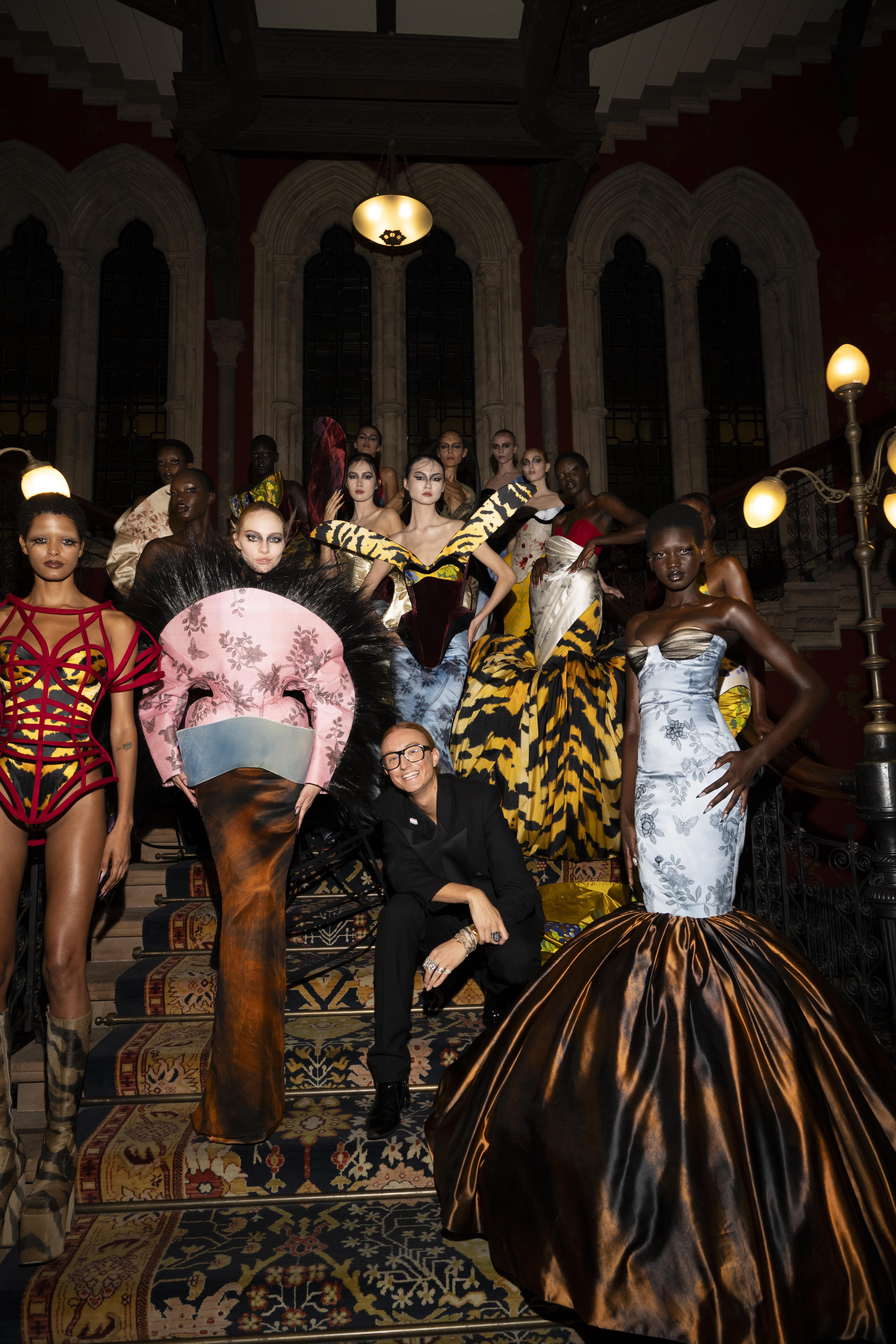
S/S26 Harris Reed collection.
Moreover, Harris’ creativity is, in part, derived from his home city. “To get out of my head, I’ll walk through Hyde Park to the Serpentine. It’s where you’ll find me thinking, annoyingly texting the team or sketching.” Despite his 11 years in London, Harris’ half-American, half-British background is still evident in the way he carries himself. He has the beaming positivity of an American in spades, yet the self-deprecation of a true Brit. That and the delusion when it comes to the weather – he confesses he’s wearing micro-shorts because the sun came out for five minutes. “It’s more Napoleon Dynamite and less chic boss,” Harris spills.
Harris Reed portrait by Chris Everard.
With the weight of a heritage house like Nina Ricci off his shoulders, Harris is relishing the freedom to go after whichever project creatively fulfils him – starting first, of course, with the Fromental collaboration. Following that, the world of interiors may still be calling his name: “I’m thinking of something like a Harris Reed space, where you have the wallpaper, furniture, lighting and candles. Obviously, a classic store isn’t working for a lot of people right now, but I think it’s how you invite people into that space.”
“My hair secret is a Hannah Montana hair crimper”
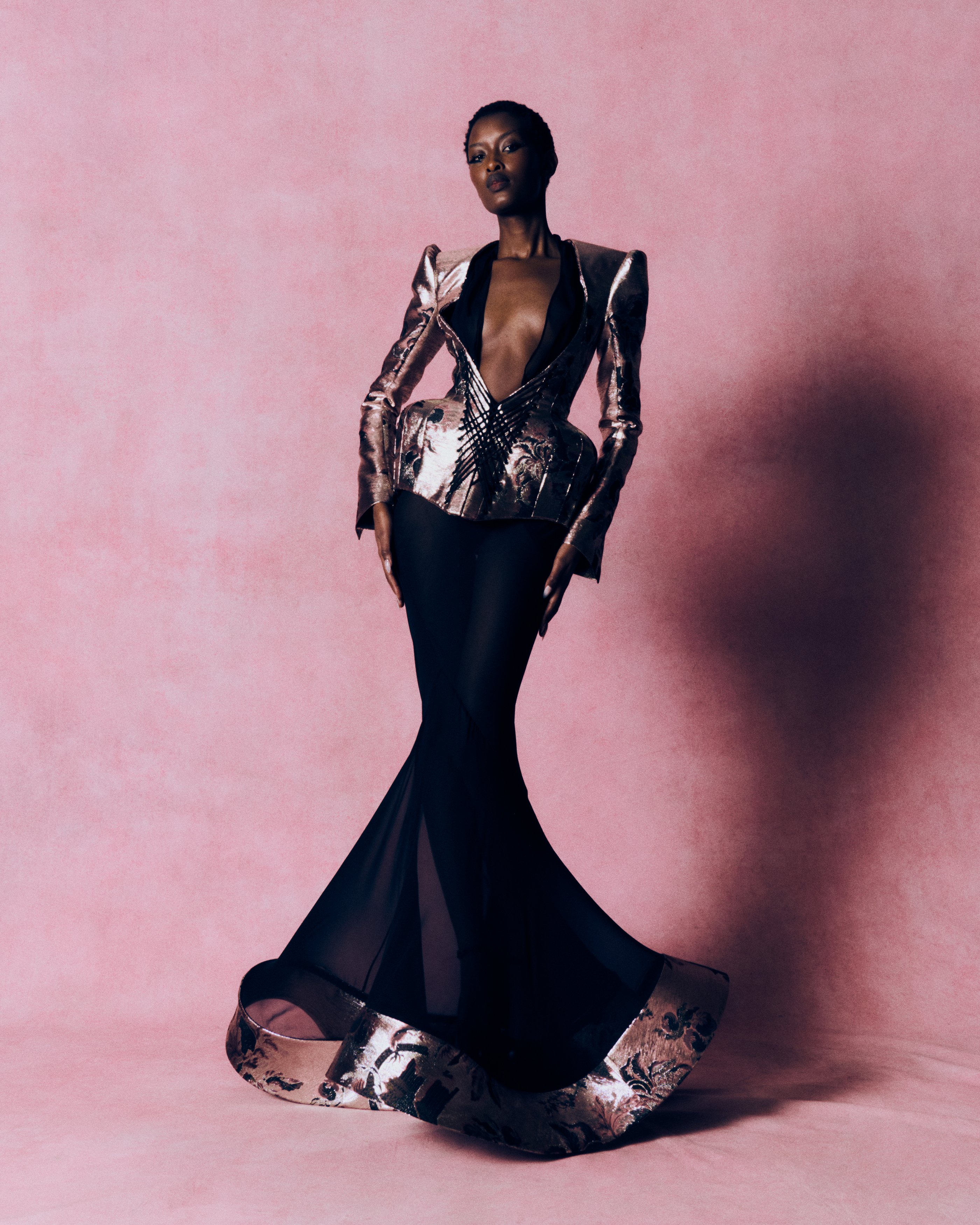
Look 4 Suleika Muella. Harris Reed. LFW AW26.
I, of course, can’t end our conversation without asking for the secret sauce behind Harris’s long, red curls – the resemblance to the birth of Venus is uncanny. “The number one question I’m asked is about my hair,” he laughs. “Every night I braid it, douse it in the Kerastase overnight serum and then in the morning I use Balmain hair silk or a little bit of natural coconut oil on the ends. My heat protector is by Oribe, which I apply before using my cheap, Amazon, Hannah Montana hair crimp. I also only wash it once a week!” It turns out, hair worthy of Botticelli’s muse is surprisingly low-maintenance.
Articles may contain affiliate links; all selections are independent and at no additional cost to you.