Marisa Poster on how PerfectTed Matcha Went Viral

Words by
Pippa Lowe

14th May 2026

Marisa Poster, Co-Founder of PerfectTed, spills the tea on how she brewed up a matcha marvel that has the nation hooked. 

It's safe to say that matcha is everywhere, I'd go so far as to say it's become an obsession. Pools of twenty-somethings find themselves sprinting straight from Pilates to Blank Street for a sip of the new seasonal flavour. I can't talk; I'll admit I'm a solid member of this demographic. But how did this green-hued latte go from Japanese tradition to complete virality?

As the supplier for cafes from Blank Street to Joe & the Juice, PerfectTed is considered the fastest growing matcha brand in the UK and Europe. Ahead of her nomination at the Veuve Clicquot Bold Awards next week, we speak with Marisa Poster, Co-Founder of PerfectTed, about how her brand has driven the drink to nationwide popularity – and how, unlike other microtrends, matcha and its benefits are here to stay.


PerfectTed Matcha – Marisa Poster.
Marisa Poster, Co-Founder of PerfectTed ©Veuve Clicquot

How transformative was the partnership with Blank Street for PerfectTed’s growth and visibility?

Blank Street was one of our first major café chain partners. For us, awareness alone isn’t enough. The real barrier to matcha adoption is trial. Once someone’s tried a properly made matcha latte, the lightbulb goes on.

Café partnerships allow us to create that first experience at scale, which feeds what we call our “trial flywheel”: someone tries a matcha latte in a café, becomes curious about matcha, and then starts buying PerfectTed in retail or online.

With Blank Street specifically, we co-created the Blueberry Matcha together, which became one of the UK’s most iconic matcha drinks. That drink genuinely helped put matcha on the map. Blank Street reportedly sold so much matcha that they even dropped “coffee” from their name, which I like to think we played a small role in.

What are your tips for making a matcha at home?

The biggest mistake people make is overcomplicating it, it can actually be very simple!

A few tips:

  • Use hot water, not boiling water. Ideally around 70-80°C (158-176°F). Boiling water (100°C) can burn the matcha and make it taste bitter.
  • Whisk in a zig-zag motion, not a circular stir, that’s how you get that nice foam.

And importantly, do NOT try to mix matcha with a fork or spoon! It won’t whisk properly and you won’t get the right texture.

PerfectTed Matcha - strawberry matcha.
PerfectTed have partnered with a selection of cafe chains, creating fun flavoured drinks that have put the nation onto matcha. ©PerfectTed

Matcha is sometimes stereotyped as the drink of the “Pilates, clean-girl Instagram” crowd. Have you noticed a shift in who is discovering matcha?

Absolutely. A few years ago, matcha was mostly associated with wellness enthusiasts. Now we’re seeing a much broader group of people adopting it. When we were building our new office, the builders working on the space started trying our drinks while they were there, and by the end of the project they’d become some of the biggest matcha fans ever. They were literally taking cans home to share with their friends.

What I loved about that moment is that it was completely outside the stereotypical “matcha demographic.” That’s exactly why we’ve built PerfectTed the way we have, to make matcha accessible to anyone who wants to try it.

How did you come across matcha yourself?

At university, I was trying to keep up with an intense workload and was consuming ridiculous amounts of coffee and energy drinks. But because I have ADHD and anxiety, the more caffeine I drank, the worse I felt. A friend suggested I try matcha because it contains both caffeine and L-theanine, which helps to create a calmer, more sustained energy. The problem was that good matcha was almost impossible to find in the UK at the time, that frustration is what ultimately led us to create PerfectTed.

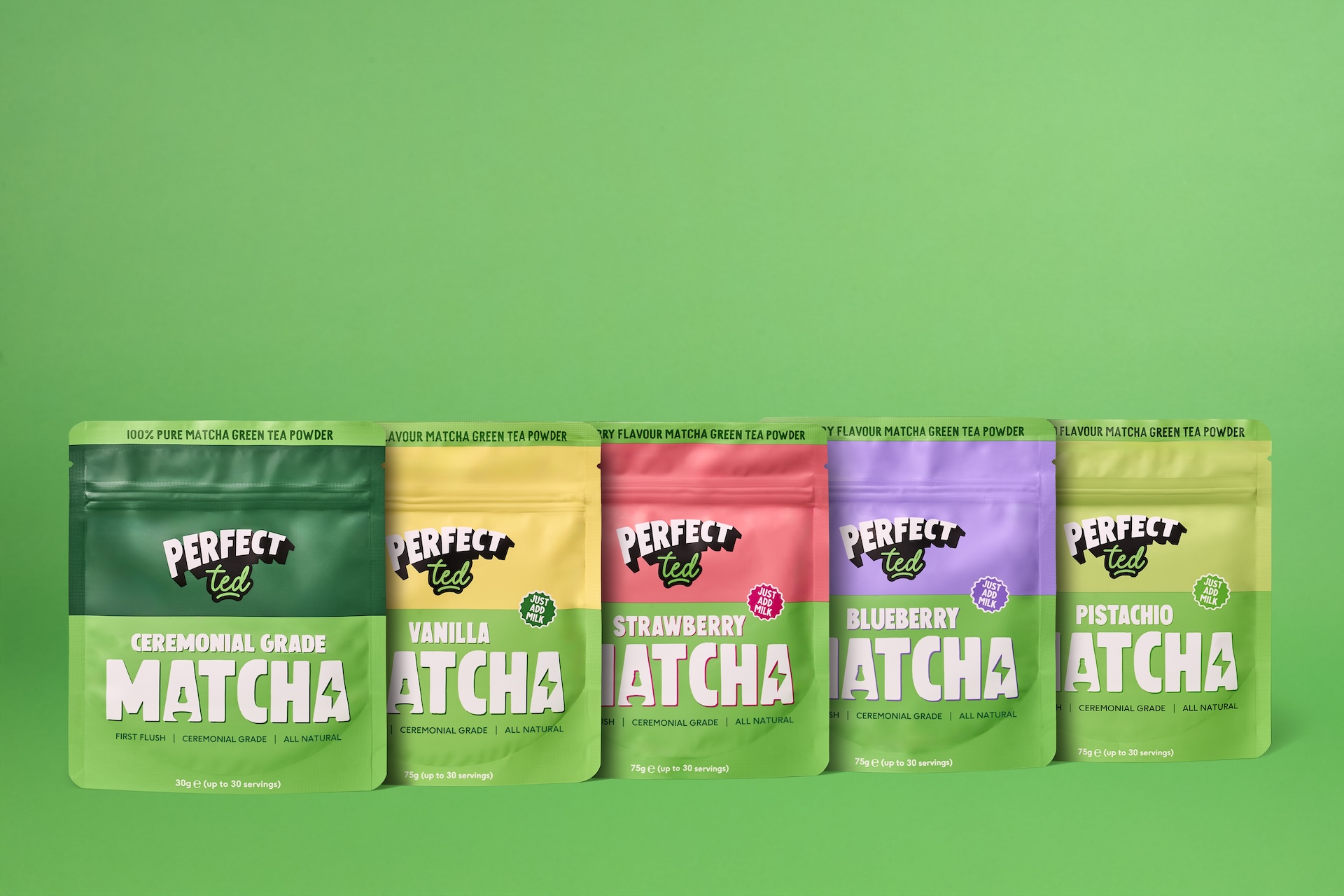
PerfectTed Matcha powder.
PerfectTed;s range of matcha powders, ready to whisk up at home. ©PerfectTed

Do you feel the driver of matcha's sudden rise in popularity has been its aesthetic?

The aesthetic has definitely helped. That vibrant green colour is instantly recognisable and very social-media friendly, so it naturally grabs people’s attention. But aesthetics alone don’t create lasting habits, matcha fits into people’s daily rhythm with a more balanced kind of energy. 

What misconceptions about matcha did you have to overcome in developing PerfectTed?

The biggest one was that matcha was a niche product. Retail buyers told us matcha was “too niche” for mainstream retail. But the truth is, the barrier wasn’t demand – it was accessibility.

Most people had either never tried matcha or had tried a badly made one that tasted bitter and chalky. Once people experience matcha prepared properly, it’s a completely different drink. That’s why we invested so heavily in barista training and café partnerships early on, because one great matcha latte can convert someone for life.

How have you balanced respect for traditional matcha culture while making it approachable for a Western audience?

Matcha has been part of Asian culture for centuries, and that heritage matters. We source our matcha directly and work closely with farmers who’ve been producing it for generations. Where we innovate is in format and accessibility.

Nominees of the the 2026 Veuve Clicquot Bold Awards.
The shortlist for the 2026 Veuve Clicquot Bold Awards, where Marisa has been nominated for the Bold Future Award ©Veuve Clicquot

You have been nominated for the Veuve Clicquot Bold Future Award. What challenges have you faced as a woman building a drinks brand?

I do think women founders face a different set of expectations. There’s often more scrutiny around how you present yourself, how you communicate, and whether you’re “serious enough” to lead a company. Then there’s the funding gap, the data clearly shows women still receive a fraction of venture capital compared to male founders.

I’ve found incredible support in communities of female entrepreneurs. Organisations like Buy Women Built are doing amazing work to create visibility and opportunities for women in business. Being surrounded by other women building ambitious companies is incredibly energising, and it reminds you that things are changing, even if there’s still a lot of progress to make.

How did you select the farms supplying PerfectTed’s matcha, and why Uji?

We started by sourcing from Uji, a region widely considered the birthplace of Japanese matcha, with centuries of expertise and some of the most ideal growing conditions in the world. The soil, climate and cultivation techniques there contribute to some of the highest-quality tea available.

At the same time, it’s important to recognise that matcha’s roots actually trace back to China before the practice evolved into the Japanese traditions we know today! For us, it was never just about geography. It was about partnership and quality. We wanted to work with farmers who care deeply about the craft and who were willing to grow with us over the long term.

PerfectTed Matcha - Dragon's Den.
Marisa and Co-Founder/Now-Husband, Levi, pitching PerfectTed on Dragon's Den

When you pitched on Dragons’ Den, were there key moments that didn’t make it on air?

Absolutely. The Dragons drilled into everything, but something that doesn’t always come across on screen is how much the energy you bring into the room matters before you even say a word. For us, the moment that really resonated was sharing the story behind the brand. That personal story helped show there was a genuine need for a product like PerfectTed, and that it wasn’t just another drink, it was solving a real problem for people.

What’s a small daily ritual (besides a matcha latte) that helps you reset during a busy day as a founder?

Honestly, sometimes it’s just having a laugh! Building a company can feel incredibly intense, so being able to step back, laugh with the team, and not take everything too seriously is really important.

Marisa Poster of PerfectTed Matcha.
Marisa developed PerfectTed as a slow-release caffeine alternative perfect for those who, like herself, struggle with ADHD and anxiety. ©Veuve Clicquot

As someone with ADHD and anxiety, what other strategies help you stay focused and calm during the workday?

Environment is everything for me. A huge part of staying focused comes down to the culture we’ve built at PerfectTed and the people I get to work with every day. 

We’ve also designed the office in a way that works with different kinds of brains. There are collaborative areas where ideas can bounce around, but also quieter spaces like acoustic booths and mute boxes where people can step away and focus without distraction. We’ve even experimented with things like rocking chairs and different types of seating that help people regulate their energy and stay engaged. For a lot of people with ADHD, movement actually helps concentration rather than distracting from it.

After planning your own wedding with a focus on alcohol-free drinks, what makes matcha ideal for celebrations over alcohol?

I wanted to make sure there were great alcohol-free options available throughout the wedding day and evening, so we had PerfectTed flowing the entire time. 

Weddings are also incredibly high-energy and, if I’m honest, stressful for couples to plan. There’s so much pressure to create an unforgettable experience for everyone you love. Seeing our guests enjoying matcha drinks throughout the night made me realise there was a real opportunity for something different in the celebration space. Matcha offers a naturally balanced source of energy which many people love for its more sustained, feel-good lift compared to traditional caffeinated drinks.