Over her 96 years, Queen Elizabeth II, amassed a wardrobe unlike any other. Her fashion archive, part of the Royal Collection, consists of more than 4,000 items and ranges from childhood cotton dresses to sumptuous ballgowns, tailored hacking jackets to Hermès headscarves. It’s not everything she owned and wore (making its scale even more staggering), but nevertheless it represents the single largest clothing archive of any British monarch in history, and serves as a lasting reminder of the essential and integral role clothes played in The late Queen’s life. This spring, fashion fans and royal enthusiasts alike will have the opportunity to see around 200 pieces from this collection, on show at The King’s Gallery at Buckingham Palace in what is, without doubt, the ultimate feast for regal fashion fans.
Queen Elizabeth's Royal Fashion
15th April 2026
A new exhibition, covering 10 decades of The late Queen’s royal fashion, reveals how the sovereign developed a signature look, while still moving with the times.
Republished from The Illustrated Royalty in Britain Magazine by Illustrated London News.
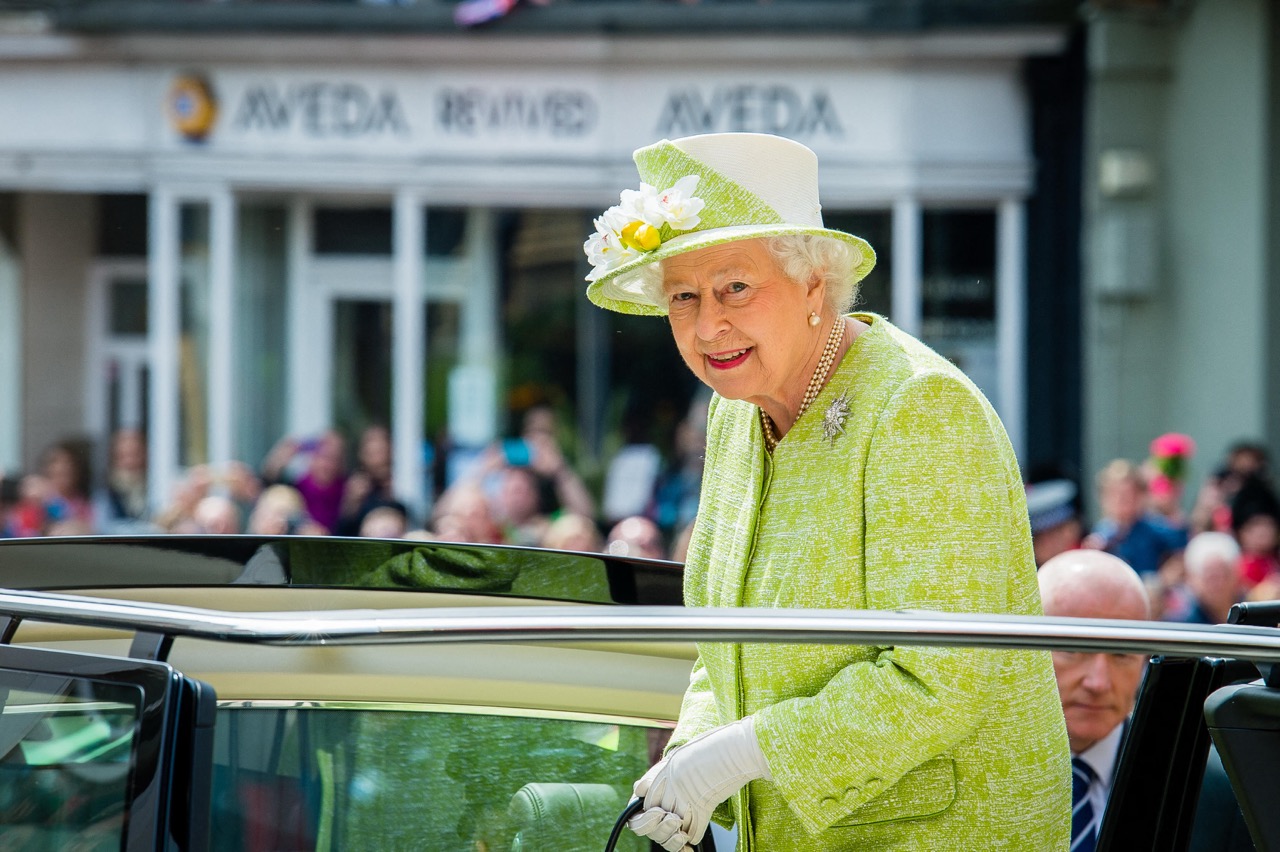
There is a common misconception that Queen Elizabeth II took an entirely businesslike approach to fashion. That she did not particularly love fashion. Perhaps that misconception stems from Marion Crawford, the Princess’s former governess who recorded in her memoirs that as a little girl, she simply wore what she was told to, and remarked, “Lilibet never took the keen interest in clothes that Margaret does”. She certainly did not consume fashion in the way most of us do. For Queen Elizabeth II, there would be no regular visits to a favourite department store, and it’s doubtful she ever scrolled through the delectable offerings of netaporter.com in her later years. Her singular role required an entirely different approach to clothes. She selected a small number of favoured couturiers, at first those who had worked with her mother Queen Elizabeth, and even her grandmother, Queen Mary. They would visit The Queen, usually twice a year, and together would discuss and select designs suitable for upcoming engagements and tours. Some sketches in the exhibition bear annotations by The Queen about colour and cut. Clearly, she was no passive clothes-horse, and through a mutual understanding with her couturiers, she achieved a look, a royal image, that set her apart from the rest of us. Quite simply, she dressed like The Queen.
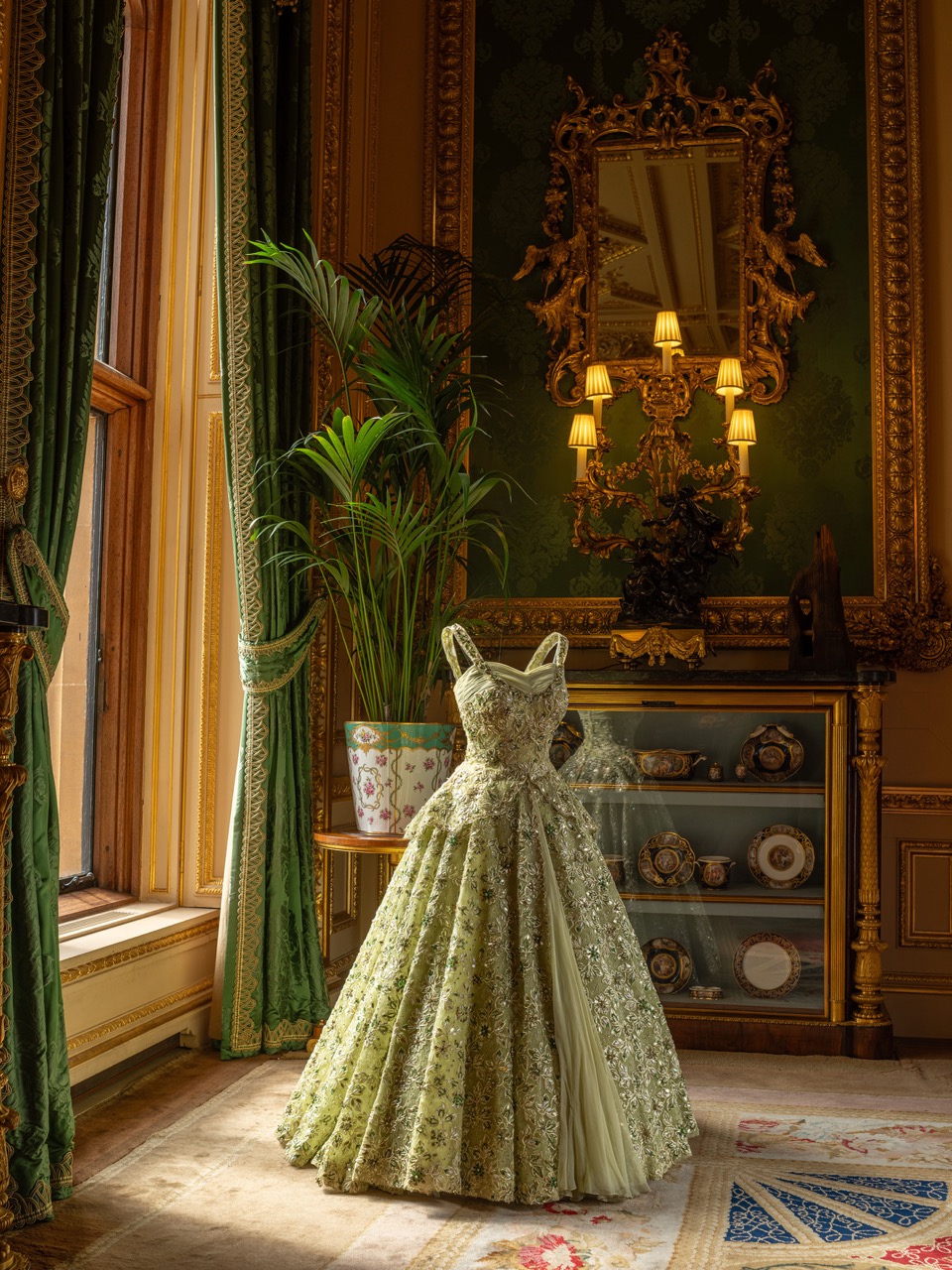
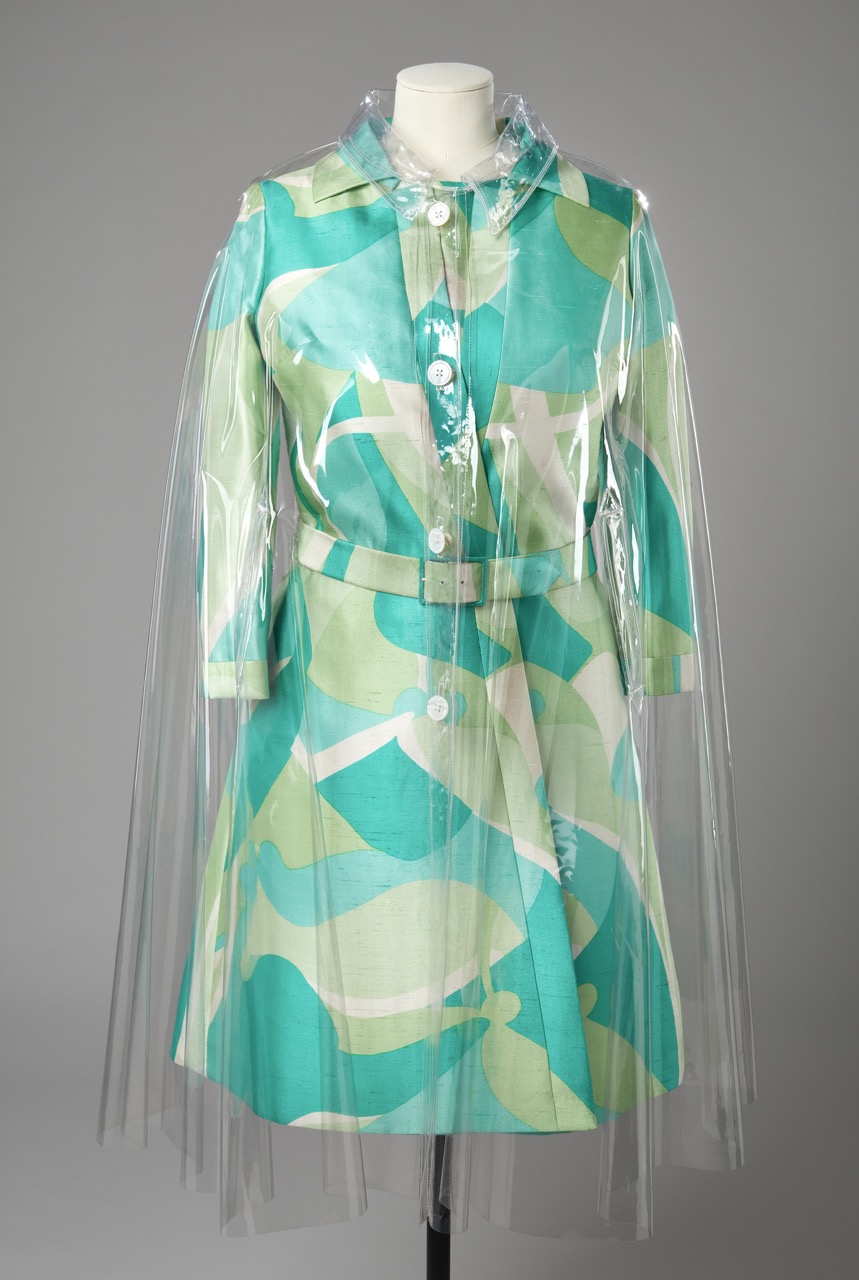
Yet she was never entirely divorced from fashion. There is evidence of this throughout the exhibition. We see it in the angel sleeves of the Molyneux bridesmaid dress she wore to the 1934 wedding of the Duke and Duchess of Kent, or the cinched waist and crinoline skirt of the apple green evening gown by Norman Hartnell, worn to a state dinner given for President Eisenhower at the British Embassy in Washington DC in 1957 (it’s revealed that Christian Dior, acknowledged originator of the New Look, greatly admired Hartnell). It’s visible in the shorter hemlines and simpler cuts of her 1960s outfits, especially in the space-age cool of a transparent Hardy Amies raincoat, or the romantic kaftan shapes and psychedelic patterns of her 1970s Ian Thomas evening dresses. The Queen wore shoulder pads during the 1980s, just like every other fashionista worth her salt. But it was all done in the best possible taste, with subtlety and class, and without ever forgetting that her clothes had to send out unspoken signals; to be visible, diplomatic, memorable, symbolic and patriotic – all with a restrained nod to current trends.
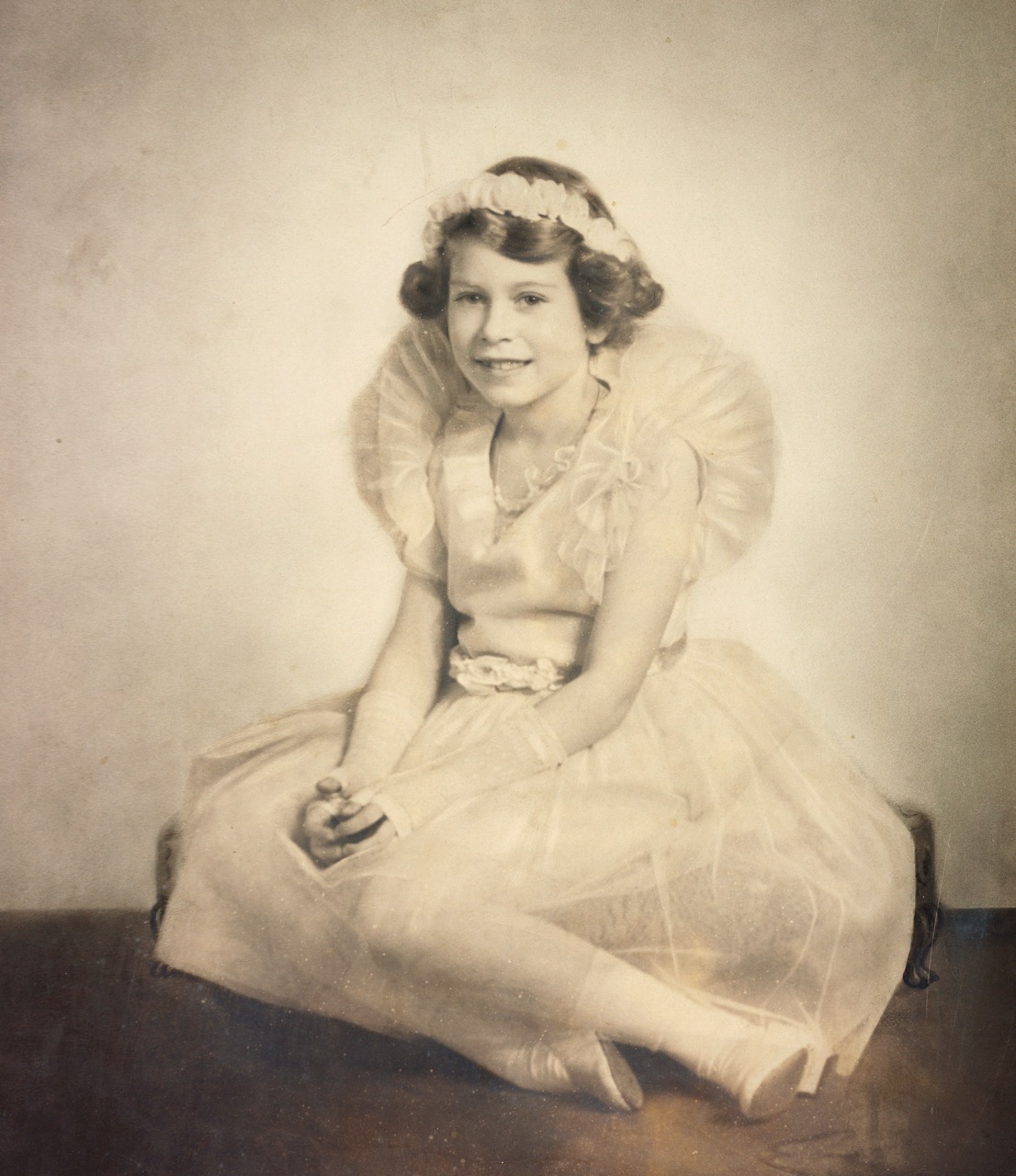
This is an exhibition that pays tribute to her unique look, but also to the designers and makers, largely British, who helped her achieve that. Norman Hartnell, who employed a cohort of expert seamstresses and embroiderers to realise his designs, features heavily. The Coronation gown, his masterpiece, is quite rightly one of the centrepieces of the exhibition, as is its forerunner, the 1947 wedding dress. But the beauty of this exhibition is its surprising depth and breadth. If you think you know all there is to know about The Queen’s clothes, think again. More than half of the items in the exhibition have never been displayed before. Visitors can gaze upon the juvenile dresses in ditsy florals that once belonged to The late Queen, so familiar from photographs. The exhibition’s catalogue tells us that most of Princess Elizabeth’s early clothes were purchased from Smith & Co, of 193 Sloane Street (later No 132), with Woollands (a fashionable clothing store in Sloane Square), Liberty and Harrods also providing garments. A pair of ballet shoes by HM Rayne is a rare footwear survival from her early years. Smith & Co supplied the white rabbit fur coat with pompom buttons worn for the 1931 wedding of Lady May Cambridge to Captain Henry Abel Smith, the five-year-old Princess’s first public appearance. The store even made miniature versions of some outfits for Princess Elizabeth’s favourite doll, Pamela. Also from this era is a full-length gold lamé evening dress by Jeanne Lanvin, clearly well-loved and re-worn several times, as evidenced by the band of lamé sewn along the hemline to allow for extra inches.
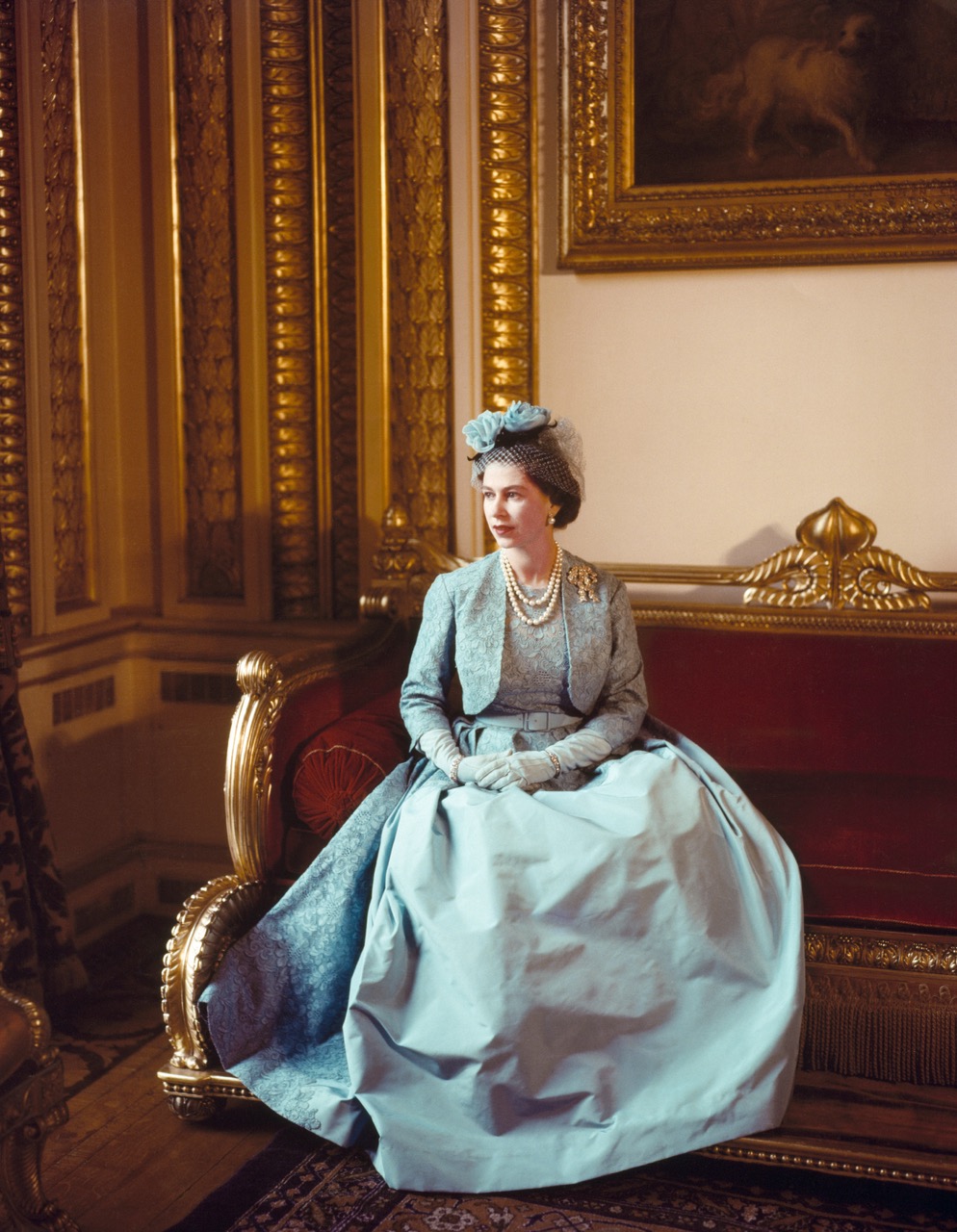
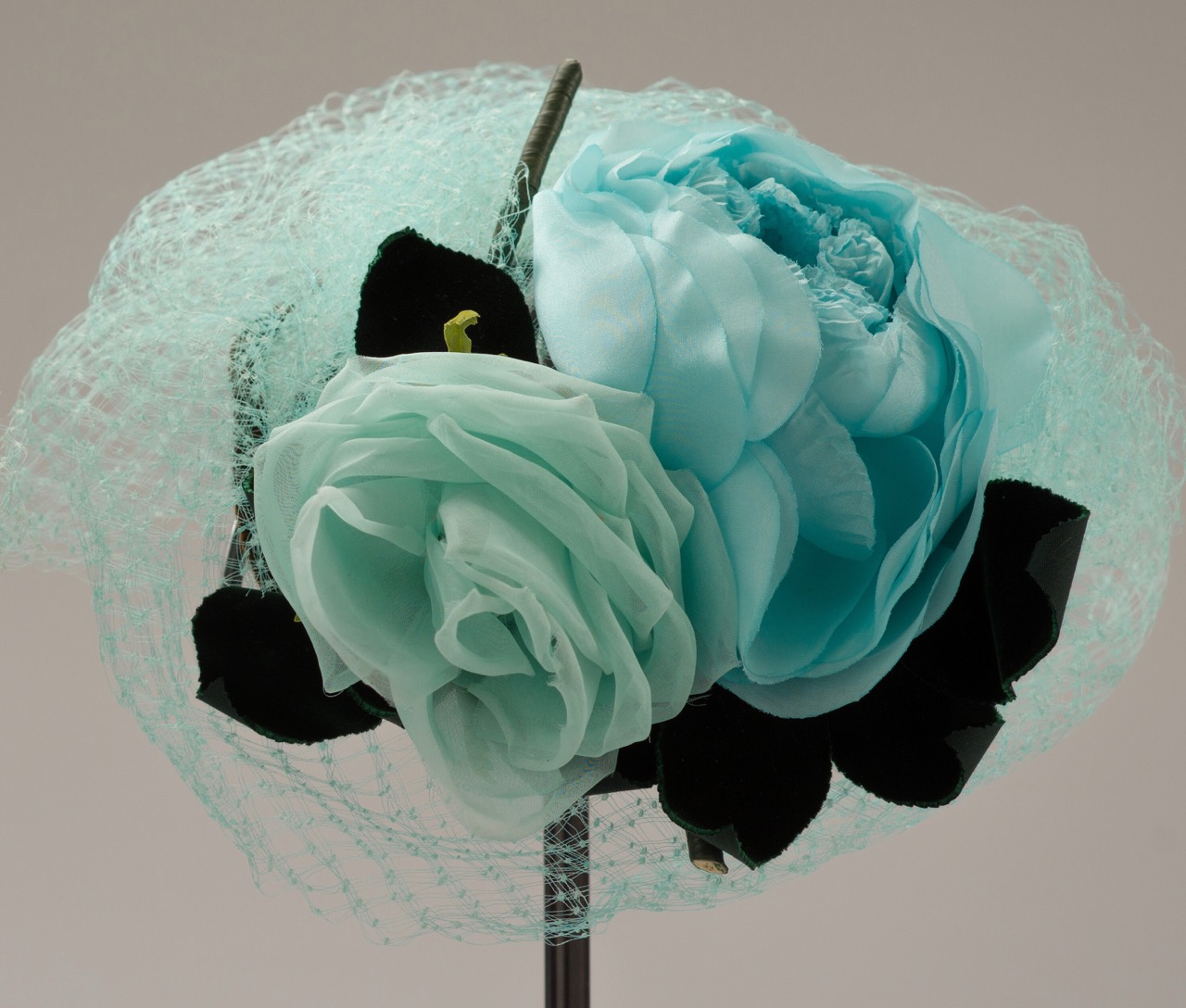
Besides the charming childhood fashions, those from the late 1940s, when Princess Elizabeth was finding her fashion feet, reflect significant moments in her own life, such as the natty white yachting skirt suit with gold naval buttons by Hartnell, worn during the royal tour of South Africa in 1947, or the blue velvet gown from 1948, let out at the waist to accommodate a growing pregnancy bump. When The Queen (then Princess Elizabeth) toured Canada in 1951 she attended a square-dancing party given by the Governor-General of Canada in Ottowa. The photographs of that dance are famous, but it’s a delightful surprise to find that the ‘poodle’ skirt she wore, a design by former New York actress Juli Lynne Charlot, is still extant. Also on display is the crinoline-skirted gown and matching bolero jacket in pale cerulean blue, worn for her sister Princess Margaret’s wedding in 1960; the last time full-length dress was worn for a royal wedding in England. The Queen’s dress echoed the bride’s silhouette (both were Hartnell creations) and was complemented by a Claude St-Cyr hat adorned with three large blue silk roses.
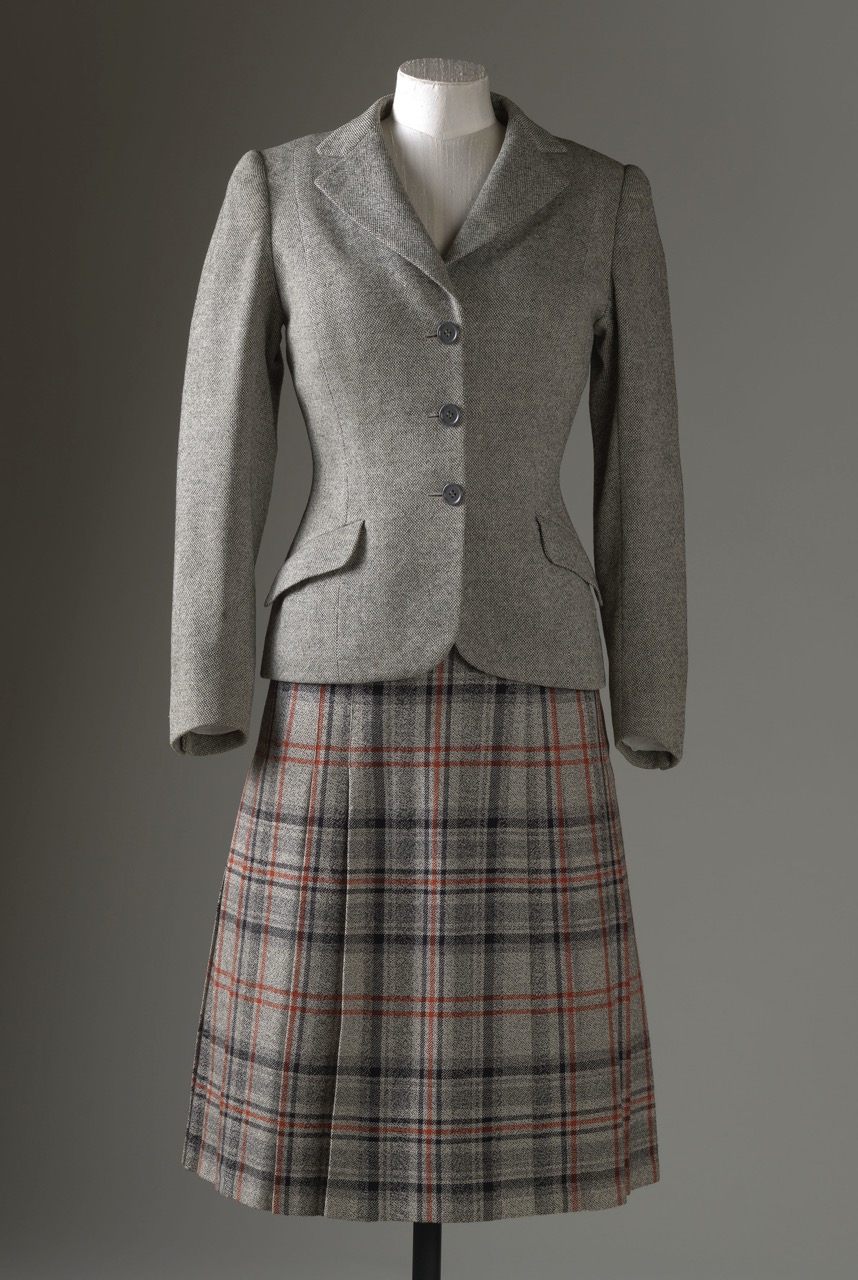
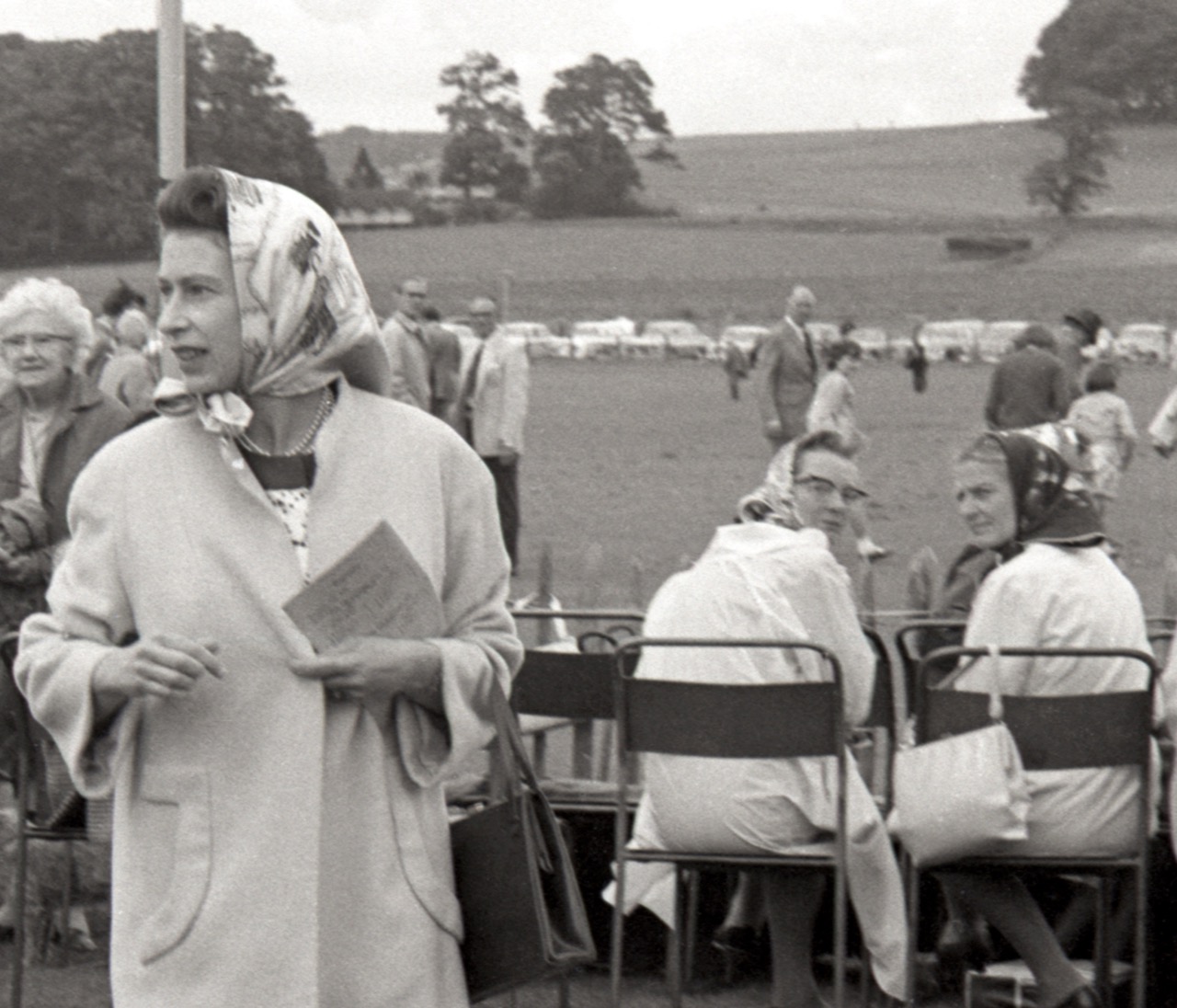
Alongside the show-stopping taffeta and satin gowns are examples from The Queen’s private, off-duty wardrobe. A country woman at heart, her beloved tweed suits, riding clothes, practical Macs and the ever-present headscarf constituted a look that was unmistakably hers and has provided inspiration to more than one designer of the future. We might immediately think of Vivienne Westwood’s subversive homage to regalia and traditional tailoring, but countrified jackets, kilts and pleated skirts have been seen in high-street stores in recent seasons, proof, if any were needed, that The late Queen’s classic style endures. Representing her tweedier tastes will be a jacket and kilt by Norman Hartnell, a hacking jacket by Bernard Weatherill (the firm held a Royal Warrant from 1952 to 2022) and, the ‘Loden’ rain coat in Edinburgh green, designed by Angela Kelly and worn by the Queen for her final birthday portrait where she stood flanked by two white fell ponies at Windsor Castle in March 2022.
This, after all, is an exhibition that covers all 10 decades of her life in style. It’s a chance to get close up to the clothes of the world’s most famous woman. Someone who didn’t follow fashion but instead rose above it I’m watching with interest to see what trends are sparked by this very special show. My money’s on the head scarf making a comeback.
Fashion Forward
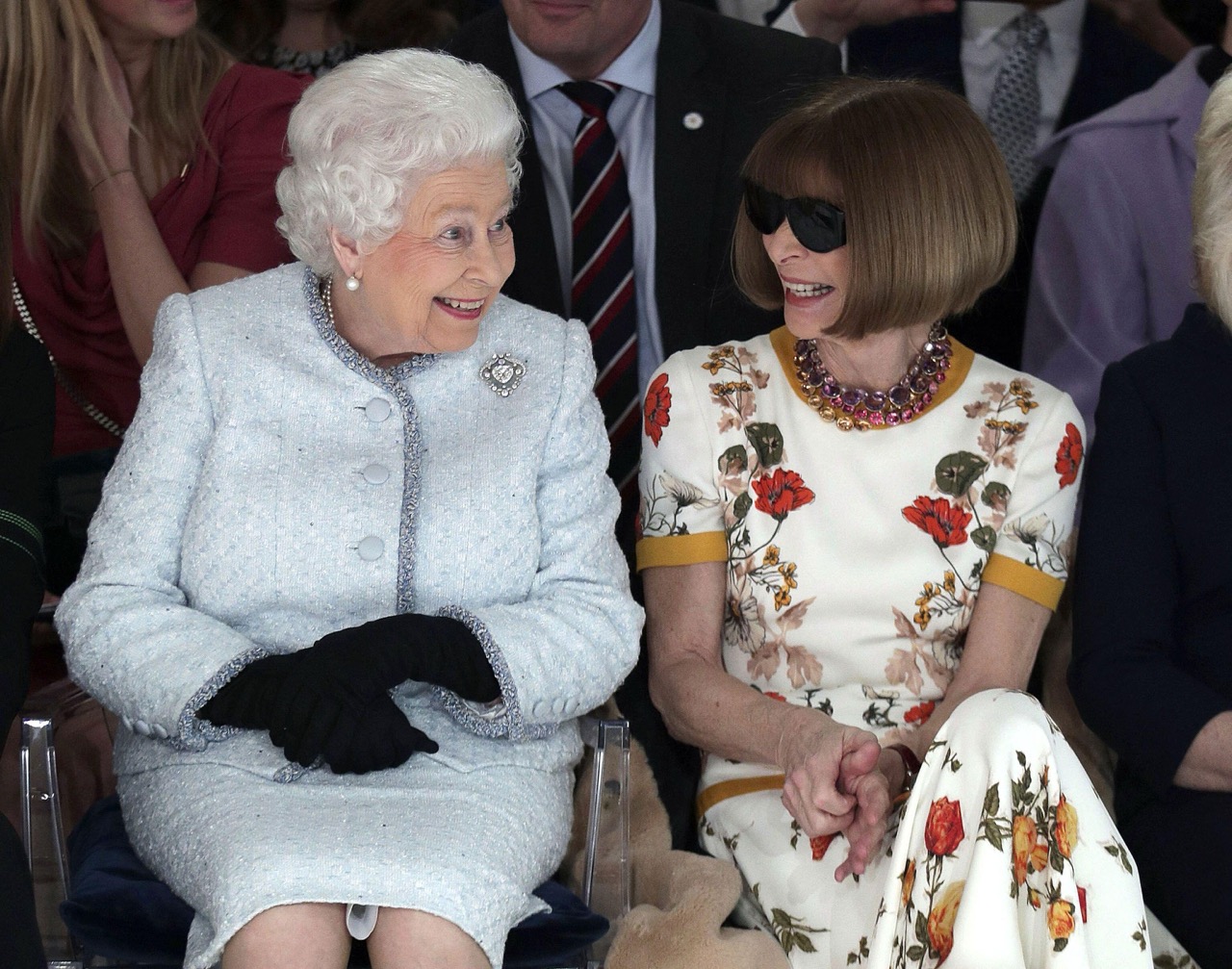
Who can forget those images of The late Queen seated on the front row at Richard Quinn’s 2018 catwalk show, chatting to American Vogue editor, Anna Wintour? The sight of them together may have seemed incongruous but in fact, they were two fashion powerhouses, and Queen Elizabeth II was no stranger to catwalk shows, having attended many and, as she told Wintour, even taken part in one some time back in her youth. She would have approved, therefore, of the decision that this should be a show that looks forward aswell as back, fully supporting the idea that Queen Elizabeth II’s style legacy carries on. Quinn was the winner of the inaugural Queen Elizabeth II Award for British Design. Together with two more successful British designers, Erdem Moralioglu and Christopher Kane, he has contributed a piece to the exhibition chosen from a past collection and influenced by Queen Elizabeth II’s distinctive style. Each modern piece is being displayed alongside a related item from The late Queen’s fashion archive. Quinn is in no doubt about her influence, calling her promotion of British fashion over the years, “the ultimate stamp of approval” while Anderson describes her wardrobe as “one of the most significant living archives inmodern fashion history”, placing her at the very fulcrum of Britain’s textile, design and tailoring heritage. “Her garments tell the story of Britain,” he believes, “and its changing identity through fashion. For designers and students, it offers amasterclass in silhouette, construction, repetition, symbolism and, perhaps most importantly, restraint.”
Designs for Life
Kate Strasdin pays tribute to the makers and craftspeople whose skill was woven into every one of The late Queen’s outfits.
There are few among us who cannot recall at least some element of Queen Elizabeth II’s public wardrobe, whether it be a sparkling ceremonial occasion gown or an eye-catching ensemble at one of the many civic functions that she attended through the course of her long life. She recognised the soft power of dress, commenting “I have to be seen to be believed” and thus ensured she struck the appropriate sartorial note for any given occasion. Not only does this year’s exhibition of The Queen’s clothes at The King’s Gallery in Buckingham Palace acknowledge the central role dress played in the public life of The Queen. By extension, it is also a celebration of the artisans whose work it was to design and make the many and various items worn by her. Makers such as Cornelia James, the glovers who have long held a Royal Warrant of Appointment and who kept The Queen amply supplied with the soft white jersey gloves that became part of her daily public wardrobe. The company was founded in the 1940s by a young Austrianglovemaker who came to Britain in 1939 as a refugee from the Nazi regime. Her colourful gloves filled a void in post-war Britain and she started to receive attention from high-end dressmakers and appeared in Vogue. She was commissioned by Norman Hartnell to make the gloves for Princess Elizabeth’s going-away outfit in 1947, and so began a long working relationship that would see her awarded the Royal Warrant of Appointment in 1979. Today, the firm is run by Cornelia’s daughter Genevieve and her husband Andrew, the gloves made by a small team of seamstresses from start to finish by hand.
If the gloves were so recognisable a component of The Queen’s wardrobe, so too were her hats, which became more and more distinctive and colourful as the years passed. The Queen awarded her warrant to a host of milliners over the course of her life including Danish designer Aage Thaarup. In her later years, however, she relied increasingly on her own in-house milliner, Stella McLaren. Stella had undertaken a millinery apprenticeship in 1967 before eventually finding work with royal milliners Frederick Fox and Philip Somerville. After Somerville’sretirement, The Queen’s dresser, Angela Kelly, offered Stella her own workroom at Buckingham Palace and here she would fashion many ofThe Queen’s most memorable hats. Stella described to me the shape of her working week, recalling, “I worked on forward planning withAngela, trips that were coming up and so on. We often went out and bought fabrics and sorted the blocks out and the shapes. And then wewould go downstairs and fit it on The Queen. Such a wonderful job.” Stella’s hats were often made in conjunction with the designer Stewart Parvin who was awarded his own Royal Warrant of Appointment in2007 after several years of creating memorable outfits for The Queen. He remembers the day that Angela Kelly first approached him in thebasement workroom of his premises at 14 Motcomb Street in Knightsbridge. She indicated only that she had a VIP client looking for some original pieces. Parvin offered to cut some fabric swatches and provide sketches for the client to inspect. “I did three or four alternatives foreach fabric and she came back and collected them. About a week later she rang back and said she had good news. The client had actually chosen a sketch from each of the fabrics.”
It was at this point that Kelly revealed the client’s identity and so a new working relationship began to flourish. Stewart would visit the Palace with his seamstress Barbara for the fittings, just a part of the collaborative process that accompanied his work for the Royal Household involving frequent exchanges of sketches as well as conversations about style and colour. After decades of similar interactions with designers, The Queen knew how she wished the world to see her. There are hundreds of similar recollections that makers to the royal wardrobe might offer. From The Queen’s favourite shoemaker, Rayne, to the embroiderers at Norman Hartnell and the tailors at Hardy Amies, these are the lives of ordinary people, far from the palaces. Many are the workers at Corgi socks in the small town of Ammanford,South Wales, and the tartan weavers of Kinloch Anderson in Edinburgh. Behind the ever-distinctive figure of Queen Elizabeth II, countless makers wove, knitted,embroidered and stitched in studios and workshops around the United Kingdom. Their names may not always be known, but their legacysurvives in every royal garment.
Dressing with Style and Comfort
Comfort and practicality was as important to Queen Elizabeth II as elegance. Michael Pick reveals some of her designers’solutions.
In an age of continually expanding media scrutiny, public image is everything. In the case of a monarch, their clothes are a vital asset in defining their personality as head of state. Arguably, maintaining that image is less complicated for a king, as uniforms, formal clothes and suitsvary little in design. The late Queen epitomised her role as a young 25-year-old sovereign, responding to changes in fashion, while never compromising on comfort or practicality. ‘Wardrobe malfunctions’ were considered and avoided. For The Queen, such complications also relied upon her own acute dress sense and a few experienced advisers. In 1952, following the Festival of Britain, she was regarded as the harbinger of a New Elizabethan Age, so her own taste and style were critical. She took a keen interest in her own appearance, understanding its significance in emphasising her position at the centre of a strong monarchy. While conforming in silhouette to current trends, she was not ultra-fashionable. Instead, from childhood onwards, she dressed appropriately for each occasion, with every aspect of her appearance carefully considered. Ultimately the final touches were hers: she applied her own make-up and could even put her tiara in place while walking fully dressed.
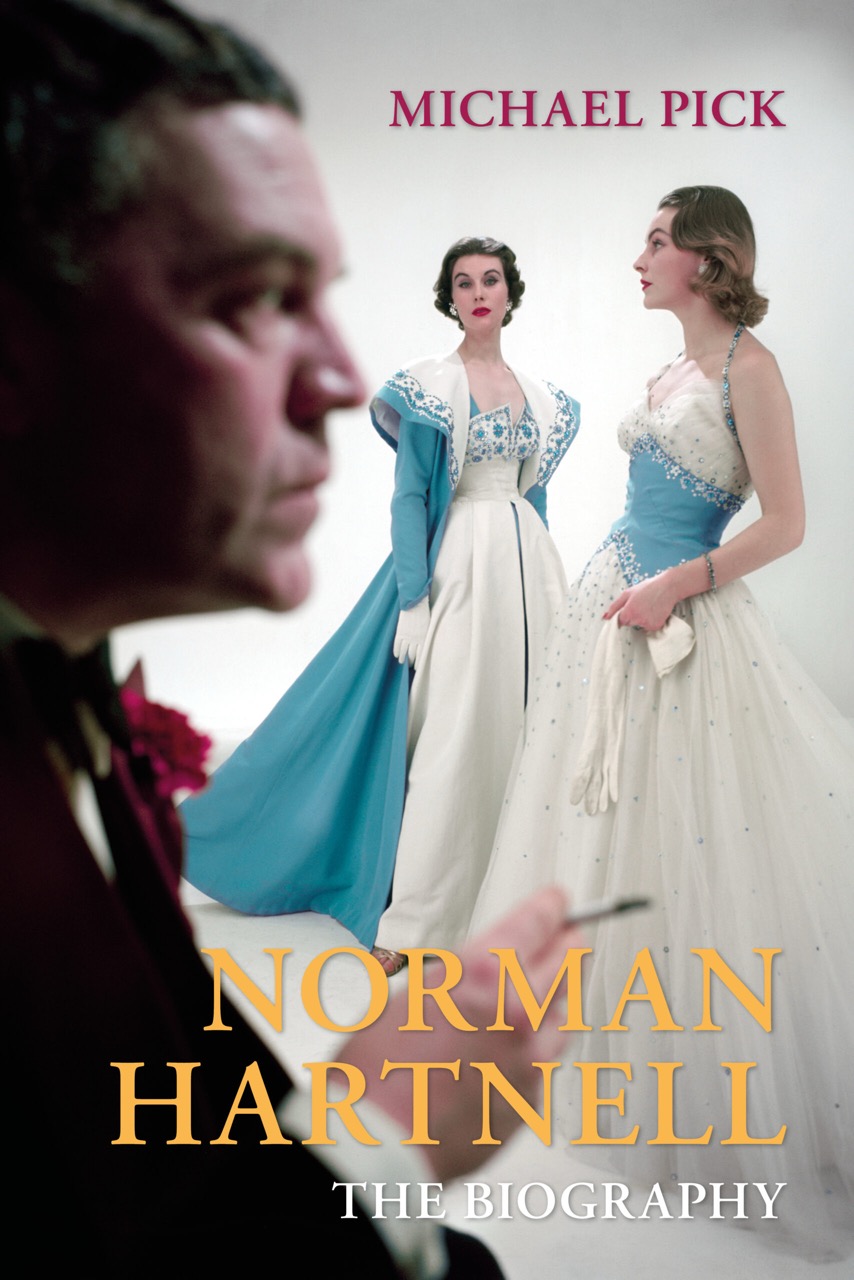
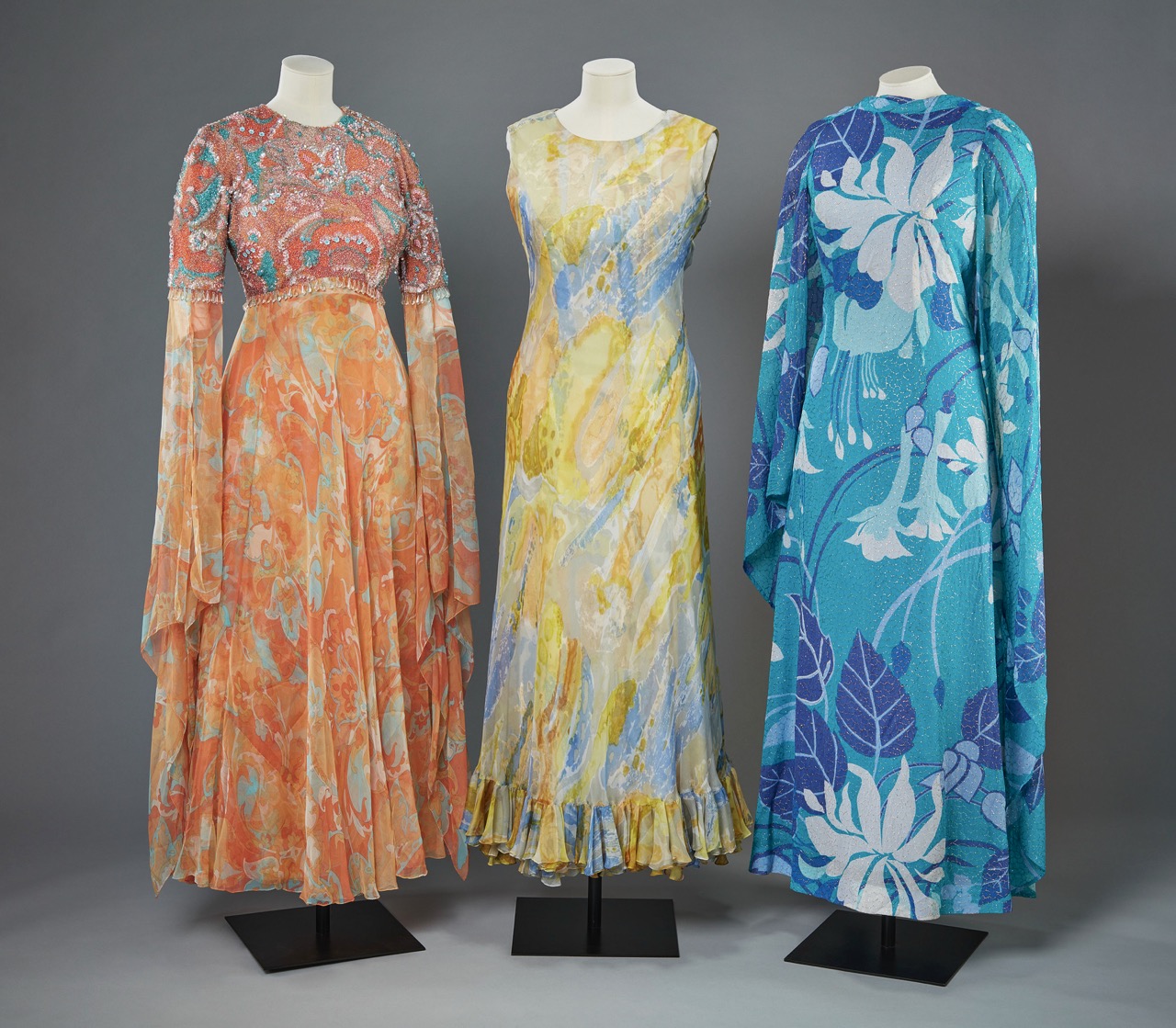
Hardy Amies (1909-2003), her second Dressmaker by Royal Appointment, exemplified excellent British cut and construction, his day wear particularly referred to by The Queen as clothes for “going about my business”. After approving a sketch and fabrics, comfort was achieved during three fittings. Jon Moore, the last Amies designer, achieved perfection after fabric was deliberately cut too large, altered after the first fitting and then tested by The Queen while walking, sitting and moving. Ian Thomas (1929-1993) third Dressmaker by Appointment, formerly assistant to her first Royal Appointment, Norman Hartnell (1901-1979) later evolved a series of less-fitted, flowing, chiffon evening dresses for The Queen, even worn on state visits. The Queen’s dresser, MissMacDonald, initially telephoned him for sketches. “What will Mr Hartnell say?” he asked. “Mr Thomas, THE QUEEN wants YOU to submit designs.” His easy-to-wear designs, and instinctive colour sense resulted in the gift of a dog.
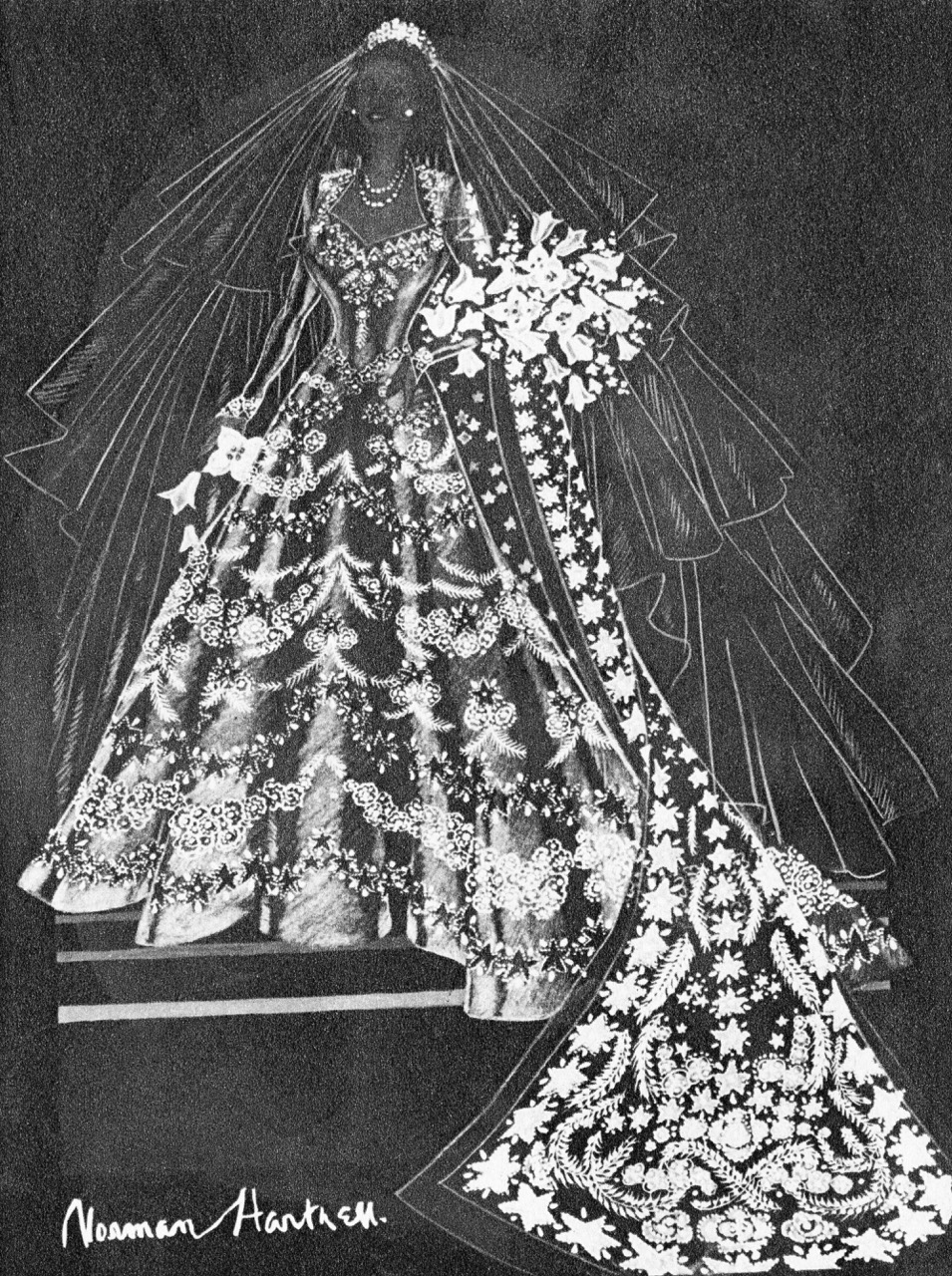
Wearing the State Crown was a precarious business: one false movement might result in a dislocated neck, as The Queen stressed, dresses were always a foil. Hats were the usual substitute of her status in a crowd, usually off the face for visibility and weatherproof, they were integral to daywear designs made by milliners such as Amies stalwart, Frederick Fox or Aage Thaarup and Kate Day, a childhood friend of Hartnell. Hartnell was famous for glamour and innovation; patronised by Queen Mary, he reinvented the crinoline for Queen Elizabeth, the Queen Mother and was admired by Christian Dior. Princess Elizabeth’s first wartime evening dresses were created from her mother’s 1930s gowns, altered to conform to clothes rationing. Later, he designed her 1947 wedding dress. The 1953 Coronation Dress proved stressful for Hartnell and his staff. Every detail of that iconic dress was discussed with The Queen, especially the embroideries, a Hartnell speciality, representing her realms and dominions. The embellishment added considerably to the weight of the heavy silk fabric and on a trial run in Westminster Abbey, Hartnell witnessed it listing to one side “like a stricken galleon”. His experienced workforce eventually lined and backed it with cream taffeta, “reinforced with three layers of horsehair crinoline… [so] it could swing with the correct balance”, for the final fitting.
The Queen sat, walked, checked the balance and swing. Finally, her verdict: “Glorious”. Coronation Day was chilly and damp, but if The Queen felt the great weight of the gown, she did not show it. The dress was worn in Australia and New Zealand during the royal tour of 1953-1954. The Queen later remarked it felt like “being encased in a radiator”. Comfortable shoes were an essential component of Her Majesty’s wardrobe. Her wedding and Coronation sandals were designed by Hartnell and made by H&M Rayne. On Coronation Day, she chose another Rayne design, later replicated for wear with heavily embroidered dresses until the 1960s. The firm of Rayne closed in 2003, and other firms were used, Angela Kelly often breaking shoes in to ensure full comfort. In 2013 Nick Rayne, great-grandson of the founders, was asked to supply shoes again, usually in black, and of soft calf, nappa or patent for daywear and black satin or silver for evening and state occasions. Commenting to the Queen that he knew how pleased his late father would have been with the renewed arrangement, she smilingly replied, “Well, we are very pleased too, Mr Rayne.”
Through the Wardrobe
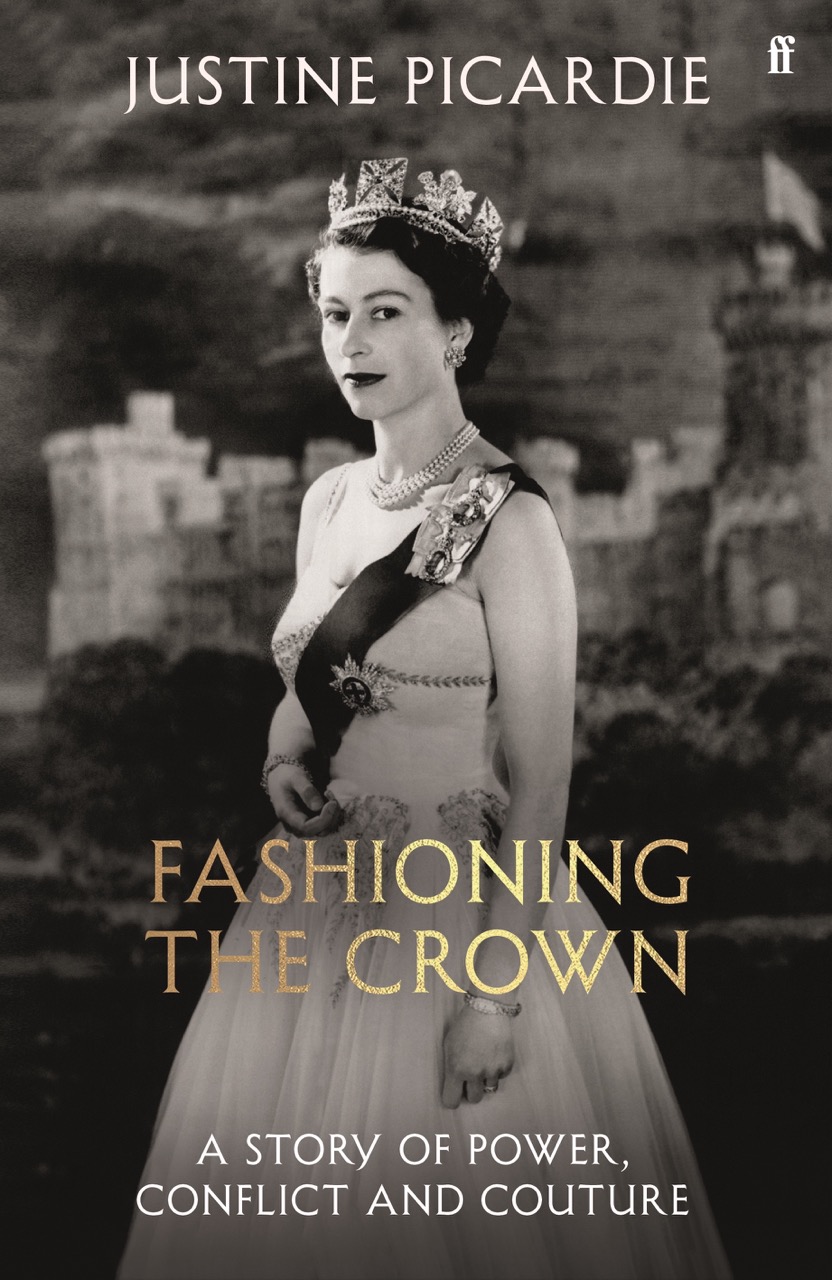
In an extract from her new book, Fashioning the Crown, Justine Picardie goes behind the scenes in The Queen’s fashion archive at Windsor and encounters a dress that brings the past vividly to life.
Many of the monarchy’s greatest works of art can be viewed at Windsor: portraits by Anthony van Dyck (including a monumental one of Charles I astride a white horse, and his famous painting showing the same king from three viewpoints); masterpieces by Rubens, Titian, Bruegel and Holbein. Magnificence and wealth are everywhere: superb silver and gilded furniture, quantities of valuable porcelain, countless marble busts, umpteen golden candelabra and crystal chandeliers. But aside from these visible exhibitions of power and privilege, dating back to the time when the Crown claimed its divine right to rule, a hidden history is kept safe at Windsor Castle, in the form of the vast Royal Archives amassed within its walls. A few records lie deep in the network of basements that form an underground labyrinth; the vast majority are stored high up in the 12th-century Round Tower. The Queen’s clothes, however, are now preserved in the care of a textile conservator, who works with a small team in a modern building inWindsor Great Park. It took some months after The Queen’s death for her surviving clothing to be assembled there, alongside her mother’s, and even longer for the process of cataloguing to commence. My request to see the most significant of The Queen’s gowns designed for her by Hardy Amies has therefore taken a year to be granted. But at last I am returning to Windsor on a rainy day in February, when the grey skies are dour and glowering, and the morning is as dark as twilight. The security is strict: two different forms of ID are required, following a previous online screening process, and I must enter via a gate guarded by armed police. Their grave faces seem to reflect the sense of occasion; heightening my own, slightly uneasy feeling that in coming here, I am disobeying Walter Bagehot’s warning against poking around and destroying the mystique of the monarchy.
The surroundings are not in the least magical; the building is utilitarian and anonymous, in a small complex of workshops and warehouses. The contents, however, are remarkable: on my way to the textile studio, I pass a restorer at work on a red satin-covered chair that looks very much like the one I saw The Queen sitting on when I encountered her, more than a decade ago, in the Crimson Drawing Room of the nearby castle. There is a treasure trove of royal clothes, too, forming as compelling a historical collection as the annals contained within the Round Tower. Like a handwritten letter or diary that survives long after the death of its author, these corporeal garments are testaments to a past life. The Amies dresses that I am here to see today are stored in grey boxes, like coffins, to keep them safe from daylight, fluctuations in temperature, and the fatal depredations of clothes moths (whose larvae spin tunnels of silk and feed off the materials that they inhabit, and eventually destroy). The conservator and one of her colleagues open the first box, removing the layers of tissue paper that shroud the garment, and then they don special gloves to lift it onto a display table. It is a strapless red velvet evening gown, with a tiny waist – only 23 inches – and identified by the curators as having been worn by Princess Elizabeth in the late 1940s. Hardy Amies opened his couture house in January 1946. This gown appears to be strikingly similar in style to Christian Dior’s debut New Look collection, launched in February 1947, which introduced long, extravagantly full skirts, in marked contrast to wartime rationing and austerity. A small yet distinctive label – consisting of Amies’s own handwritten signature and address (14 Savile Row) – is neatly stitched inside a seam within the black satin lining, hidden by the folds of the floor-length skirt. The crimson is an undeniably regal colour, but this is a party dress for a princess to dance in, rather than stand to attention in her formal regalia. The velvet feels soft to the touch, almost warm in its intimacy, as if it has only just been shrugged off by Lilibet, the laughing girl who wore it in her youth.