On a hillside in northern France in May, two glasses of Champagne were being poured. The location was both glamorous and not: a classic picnic bench on a day cool enough to make me wonder if climate change was quite the threat we hear about. But the two bottles, one white and one pink, had come out of an elegant wicker hamper; their labels were designed by Philippe Starck, their contents were Roederer Brut Nature 2015, and they were being served overlooking the Cumières vineyard from which they came. And besides, both glasses were for me.
The Low-Sugar Champagnes hitting the Sweet Spot
Words by
Nina Caplan
10th December 2025
Nina Caplan explores the pure and elegant low-sugar Champagnes, the flavour of the year.
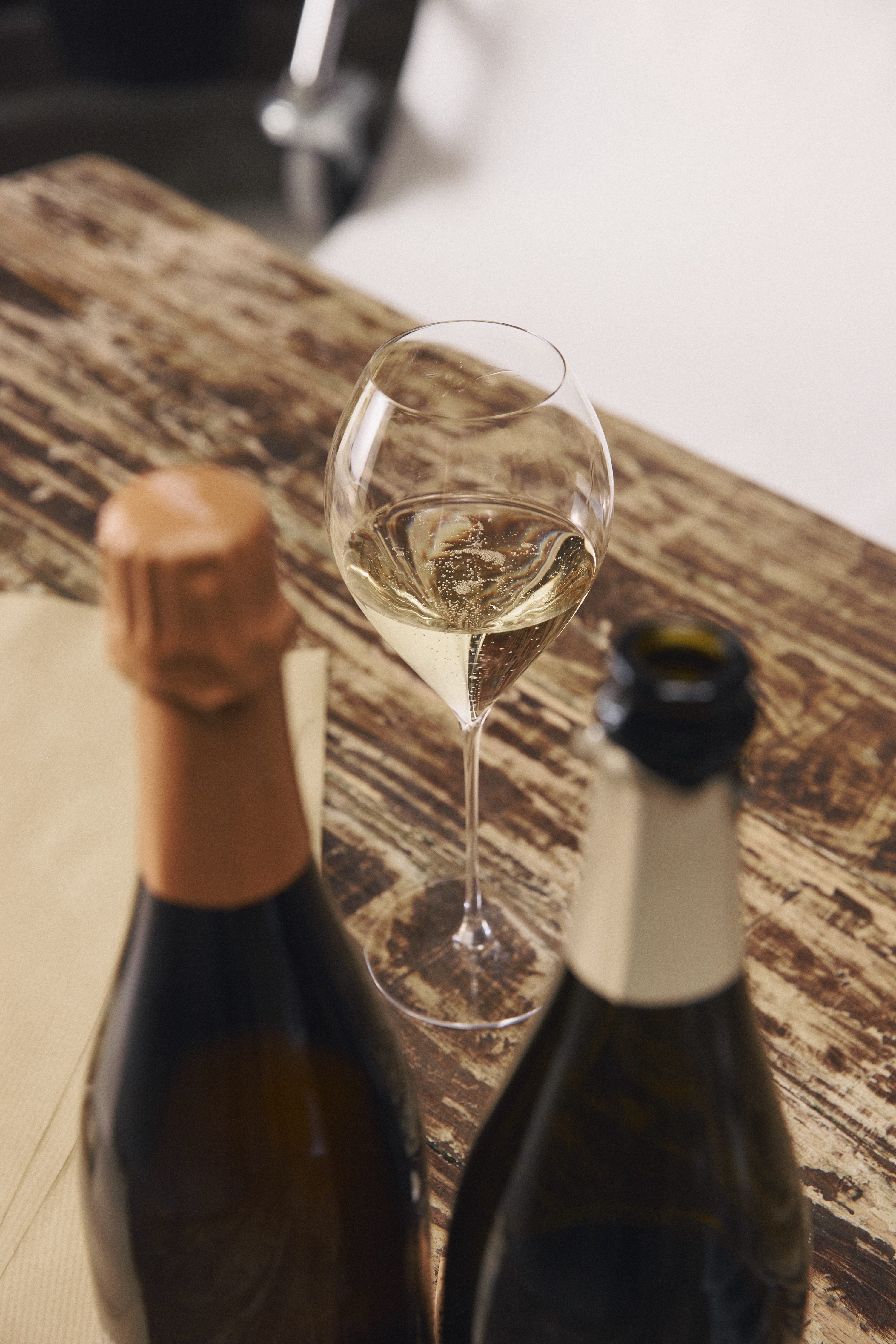
The latest releases of Louis Roederer Brut Nature, a longstanding collaboration with designer Philippe Starck, are the 2018s.
To understand what Brut Nature is and why it matters now, it helps to look back about three centuries. Back then, the fizz was considered a fault: Champagne, like any other wine, was supposed to be still. The region’s cool climate, which led winemakers to blend grape varieties, plots and reserve wines from previous years to achieve the final flavours they sought, also meant that the yeasts often went to sleep before they had finished their work, awakening as the temperature went up in spring and returning to duty, often with explosive results. Once those bubbles became desirable, it was a question of adding sugar for the yeast to work on in the bottle: alcohol is the byproduct of that process, although that wasn’t properly understood until the 19th century.
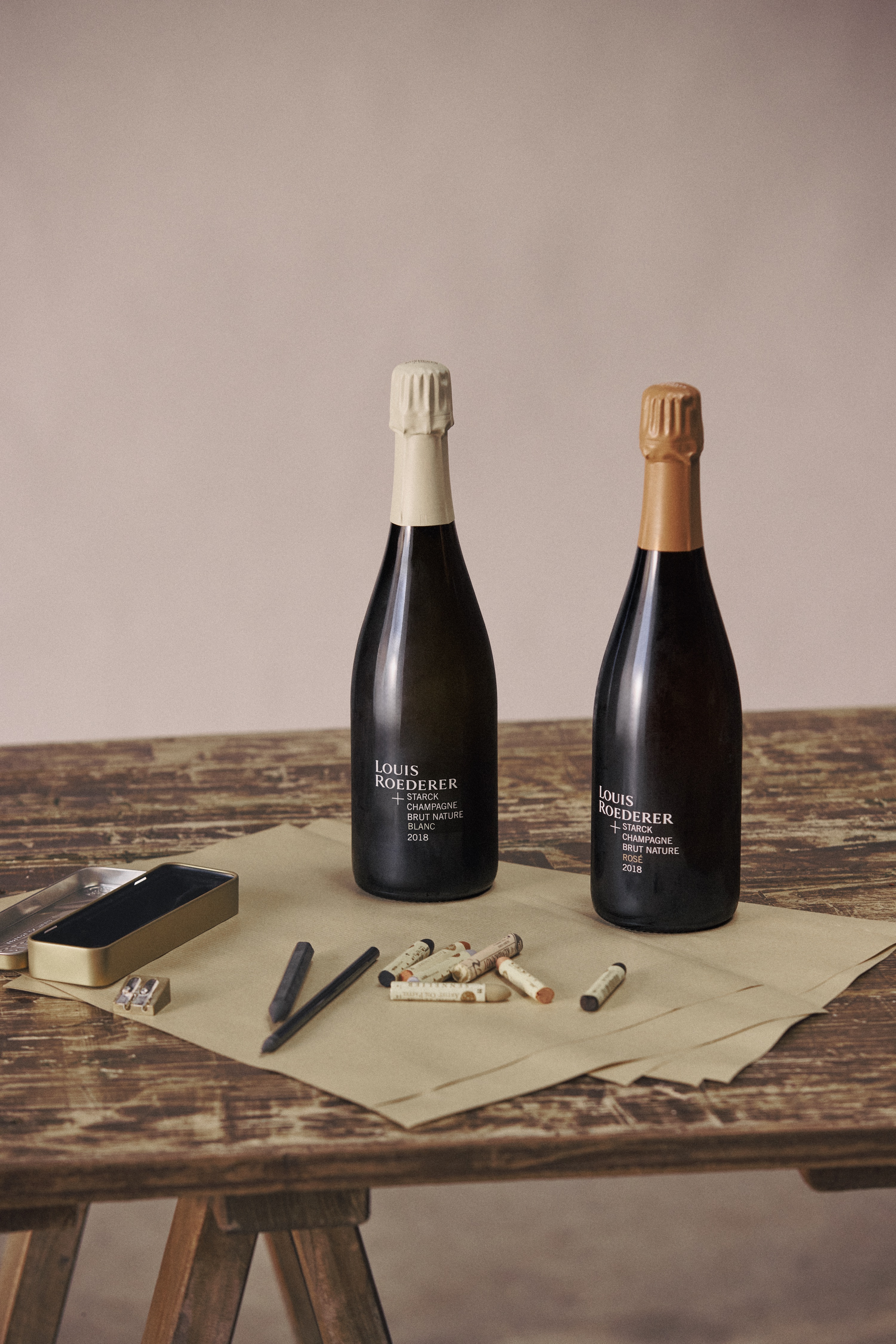
The latest releases of Louis Roederer Brut Nature, a longstanding collaboration with designer Philippe Starck, are the 2018s.
There are two types of sugar added to Champagne: the liqueur de tirage, which kicks off the secondary fermentation (which must, according to the rules, take place in the bottle) and the liqueur d’expédition, needed to top up the bottle before the cork goes in. Once the yeast has finished work, it dies, and the dead yeast — the lees — enriches the wine as it ages. But it doesn’t look terribly nice to have a layer of gunk in the bottle. This is where the ingenious riddling system comes in, gradually turning and tipping the bottles over months until all the lees are collected in the bottle’s neck, to be frozen and then removed. (This is called disgorgement.) All of this is easier now that we have automation: there must have been nearly as much bodily harm from frozen lees hurtling at its liberator as from the bottles that exploded in the cellars. But it leaves the level of liquid in the bottle lower than it should be, and so a blend of sugar and wine is used to top it up. How much sugar — known as the dosage — is what determines the sweetness of the finished Champagne.
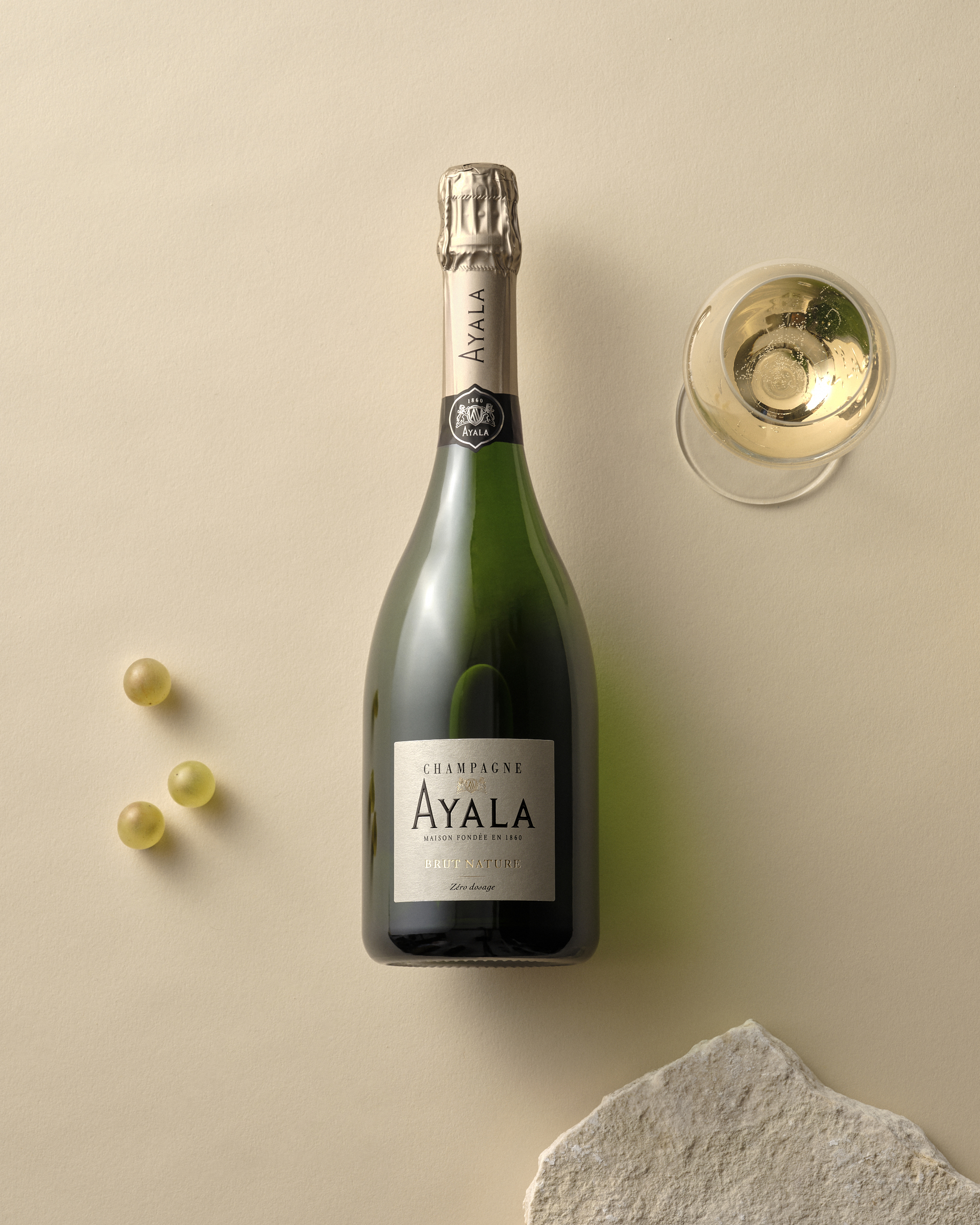
The low- and no-dosage cuvée of Champagne house Ayala.
How sweet should Champagne be? That depends on whom, and when, you ask. Champagne used to be very sugary, with the Russians in particular demanding Champagnes that make Coca-Cola look healthy. Officially, a Champagne is sweet at over 50g/l: some fizz destined for the Tsars used to have 300g/l.
Everyone had a sweeter tooth back then: sugar was an import, exotic and expensive. Anybody who has ever seen pictures of the fantastical sugar-paste fantasies that the early 19th-century chef Marie-Antoine Carême created as table decorations — edible classical buildings, to delight an aristocracy enamoured of Ancient Greece and Rome — will know what allure the “white gold” had, but it was also necessary.
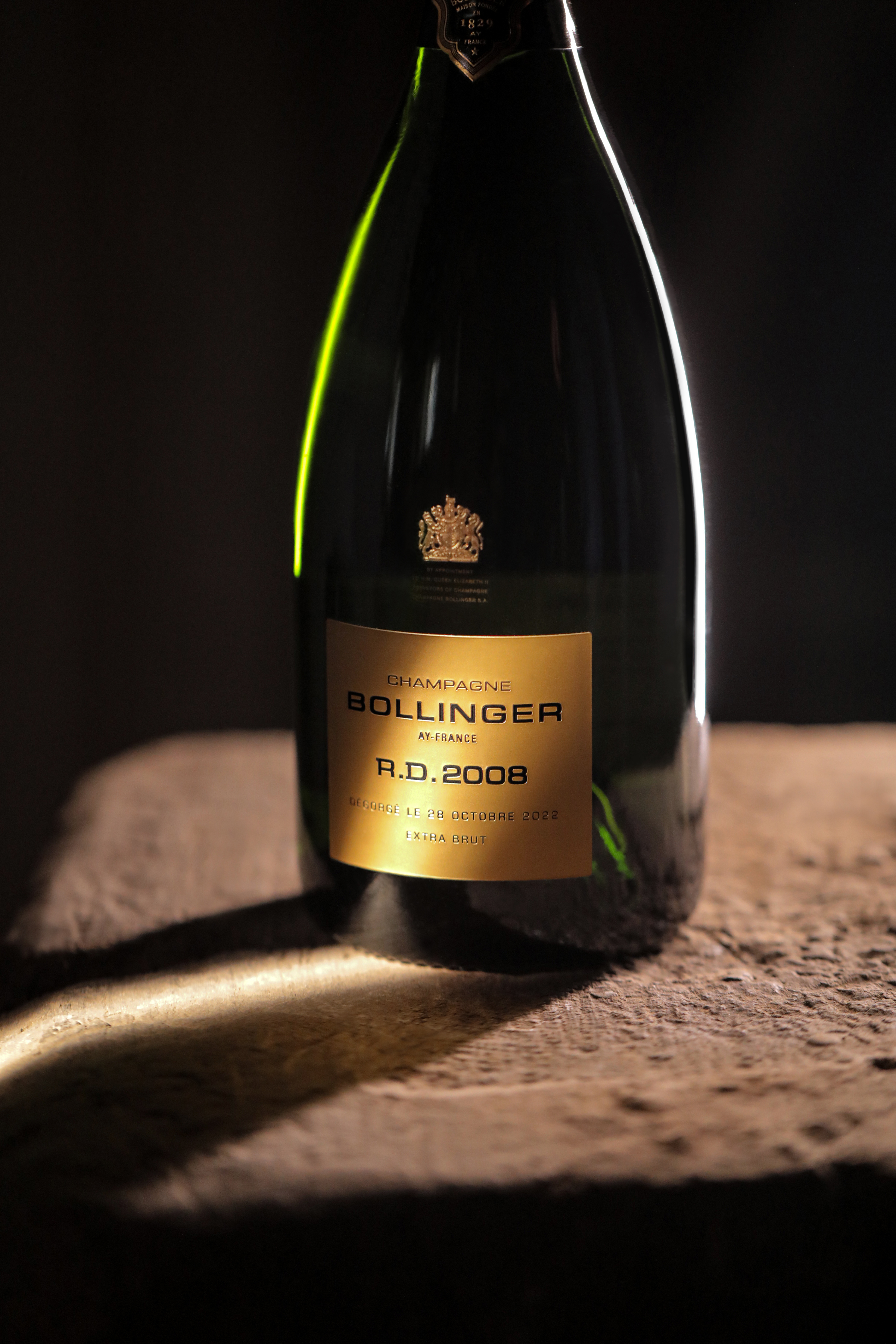
The low- and no-dosage cuvée of Champagne Bollinger.
Before climate change, Champagne was a much colder place, and it wasn’t only yeast that found it hard to thrive. Grapes had trouble ripening: they might stay on the vine until October, with growers praying that the summer would be hot and long, but since it was never that hot or that long, they were still high in acidity and relatively low in sugar. Which, it turns out, made them perfect for sparkling wine. Acidity gives freshness and helps ensure ageability, while sugar rounds out the wine; together, they provide balance, which is as essential to wine as alcohol. (The alcohol needs to be balanced, too.)
The combination of sugar’s popularity, acidity’s prevalence and the novelty of bubbles made Champagne one of the most popular luxury products in the world, associated with every celebration. And that is still the case, because a drink that has shown all kinds of ingenuity throughout its history wasn’t about to be beaten by changing tastes, weather patterns or anything else.

The low- and no-dosage cuvée of Champagne Drappier.
Already, different dosages were added for the English, who preferred their Champagne more savoury, than for those sweet-toothed Russians. In 1842, Perrier-Jouët started exporting Champagne that was only lightly sweetened to London, while Ayala created “Dry Champagne” (the English name a clue to the target clientele) in 1865. At 21g/l, it sounds pretty sweet to today’s drinkers, but at the time, usual levels were seven times that. In 2007, the same estate created Ayala Brut Nature, which is zero dosage: the modern equivalent of 21g/l.
In 1874, the canny Madame Pommery released “Pommery Nature,” and 15 years later, the first Brut Nature was created by Mathilde Perrier at Laurent-Perrier: Grand Vin Sans Sucre. Because fashions are cyclical, this was revived by the late Bernard de Nonancourt, Laurent-Perrier’s President for over 50 years, in 1981. He called it Ultra Brut.
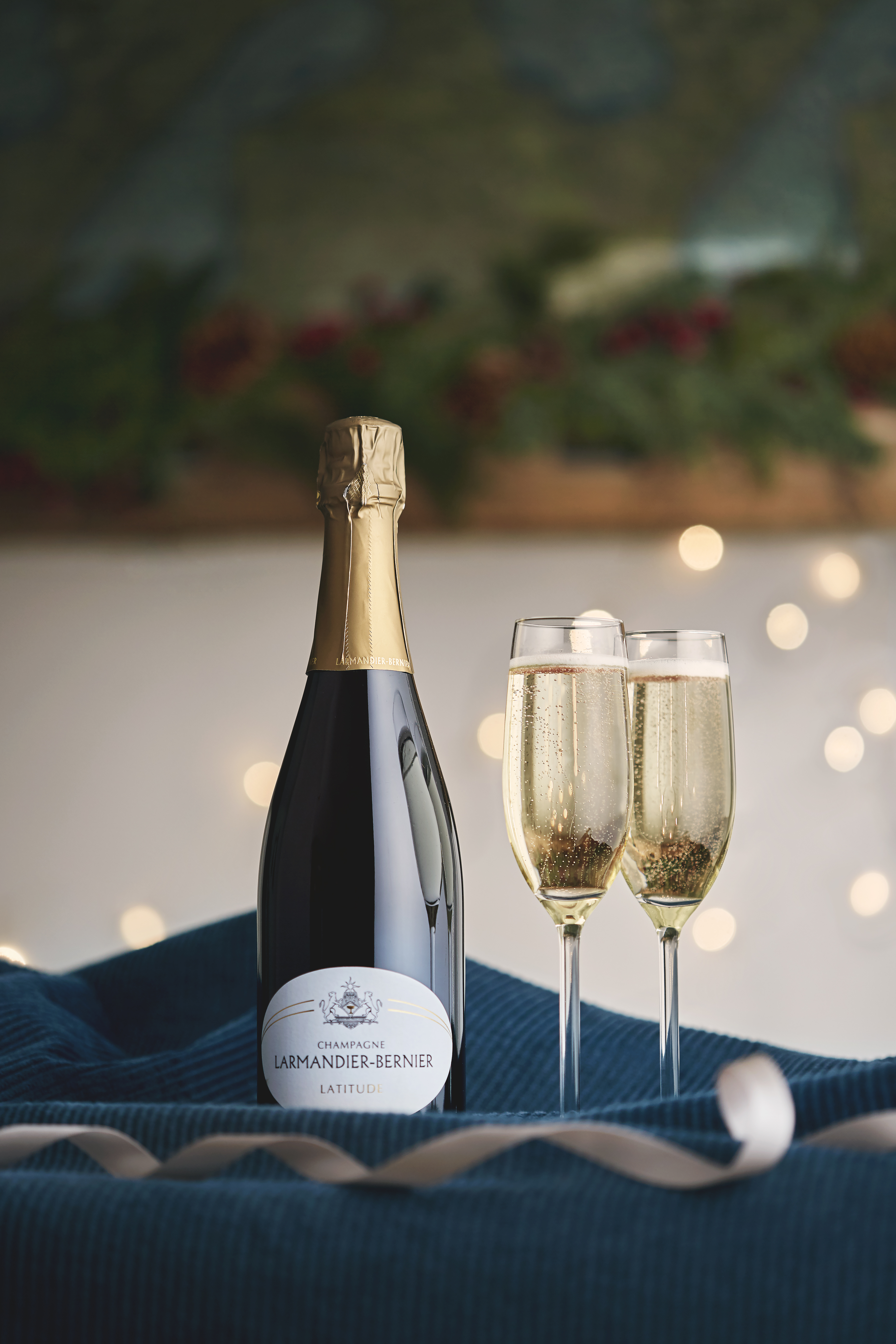
Champagne Larmandier's low-sugar offering.
Around this time, Michel Drappier, who is the seventh generation of his family to produce their Champagnes, also became interested in reducing sugar levels. He and his children make several, including a version with no added sulphur, and their other cuvées have a very low dosage, too: Clarevallis, a blend from organic vineyards that is one of the finest Champagnes I can remember trying, is just 4g/l.
There is currently no more fashionable style of Champagne. Some love the purity, believing that removing those drops of sugar lets the terroir express itself more fully. The grower- vignerons (small producers making Champagne from their own grapes) tend to be purists, so this works for them. “No dosage, no blending, one variety,” says Bertrand Gautherot of Vouette & Sorbée: he claims he would even remove the bubbles, if he could.
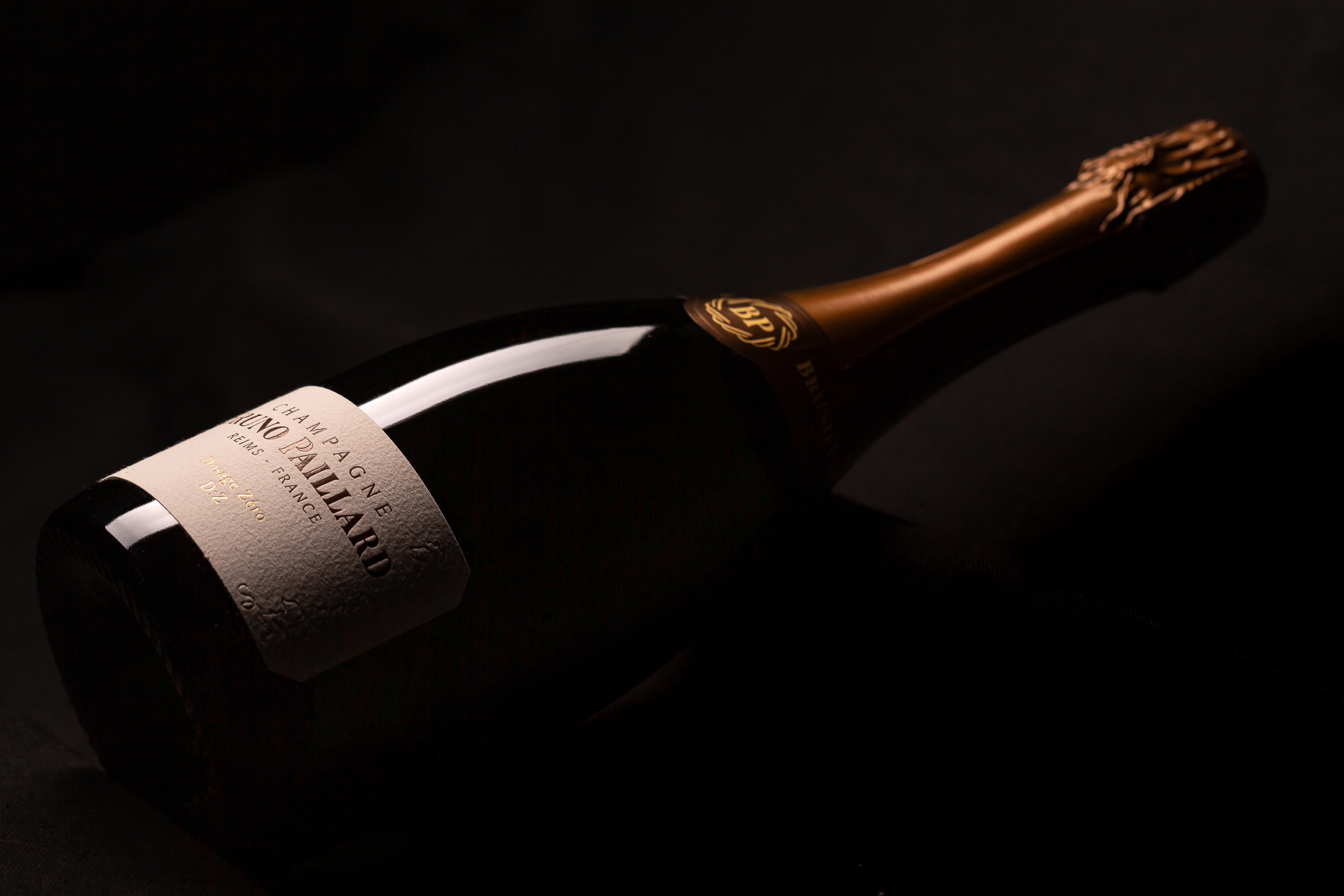
Champagne Bruno Paillard. ©Etienne Ramousse.
“Zero Dosage Champagnes have become more common due to better natural ripeness in the grapes,” agrees Dawn Davies, head buyer for The Whisky Exchange and a Master of Wine, the most prestigious designation of expertise in the wine world. Consumers looking for drier Champagne styles has gone hand in hand to some extent with the popularity of Grower Champagnes, as the small growers tend to prefer lower or no dosage.
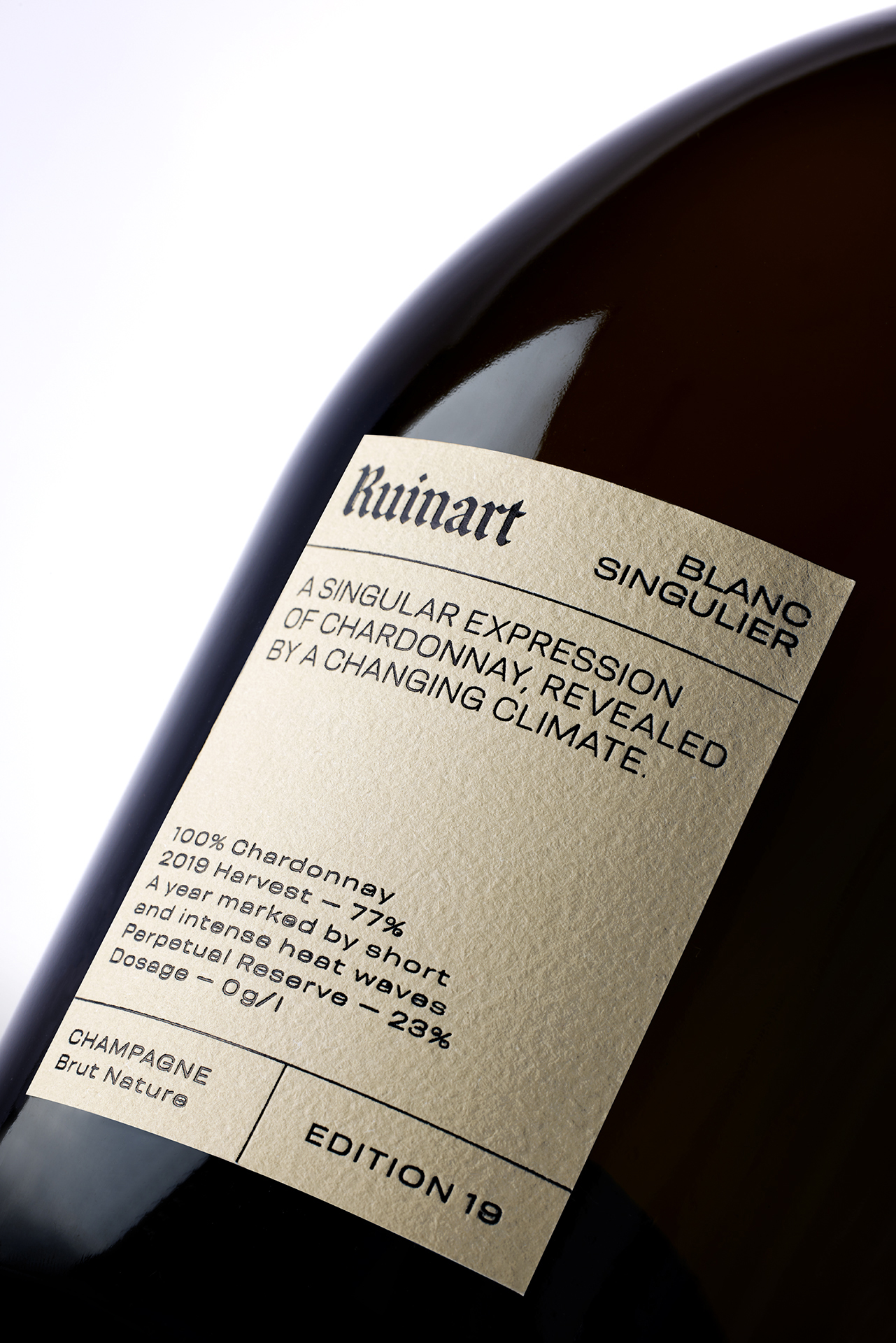
Champagne Ruinart Blanc Singulier.
Aurélien Laherte, seventh generation of Laherte Frères, an 11-hectare property in the Marne Valley, makes several; also in the Marne Valley, Melanie and Benoît Tarlant, siblings whose family have been winemakers here since 1687, have made zero dosage, along with long ageing, a signature. “The idea is to be authentic and stay connected to our terroir,” says Melanie. She was talking at an event on Women in the World of Wine at the magnificent Royal Champagne Hotel & Spa, owned by Denise Dupré and Mark Nunnelly, whose Champagne brand, Leclerc Briant, also has a strong focus on low and no dosage. “It’s never my decision,” says their winemaker, Hervé Jestin, talking about whether to add sugar and if so, how much: “it’s the wine’s decision.” Or sometimes, it isn’t: all the Larmandier-Bernier Champagnes have 2g/l, because that is what the family thinks tastes best. There is no right or wrong: both these producers make delicious Champagnes, just the right side of austerity.
Also opting for low, rather than no, are Billecart-Salmon, whose wonderful Clos Saint-Hilaire, from a single hectare of old Pinot Noir, and Blanc de Blancs are both under 2g/l, and Bollinger, whose magnificent RD 2008 has 3g/l. Telmont’s Réserve de la Terre, meanwhile, is 2.5g. Acidity is vital in all these grand Champagnes because they are intended to age. Even the Bollinger, which is already 17 years old, can be laid down, and in this case the dosage is a late addition: RD stands for recently disgorged.
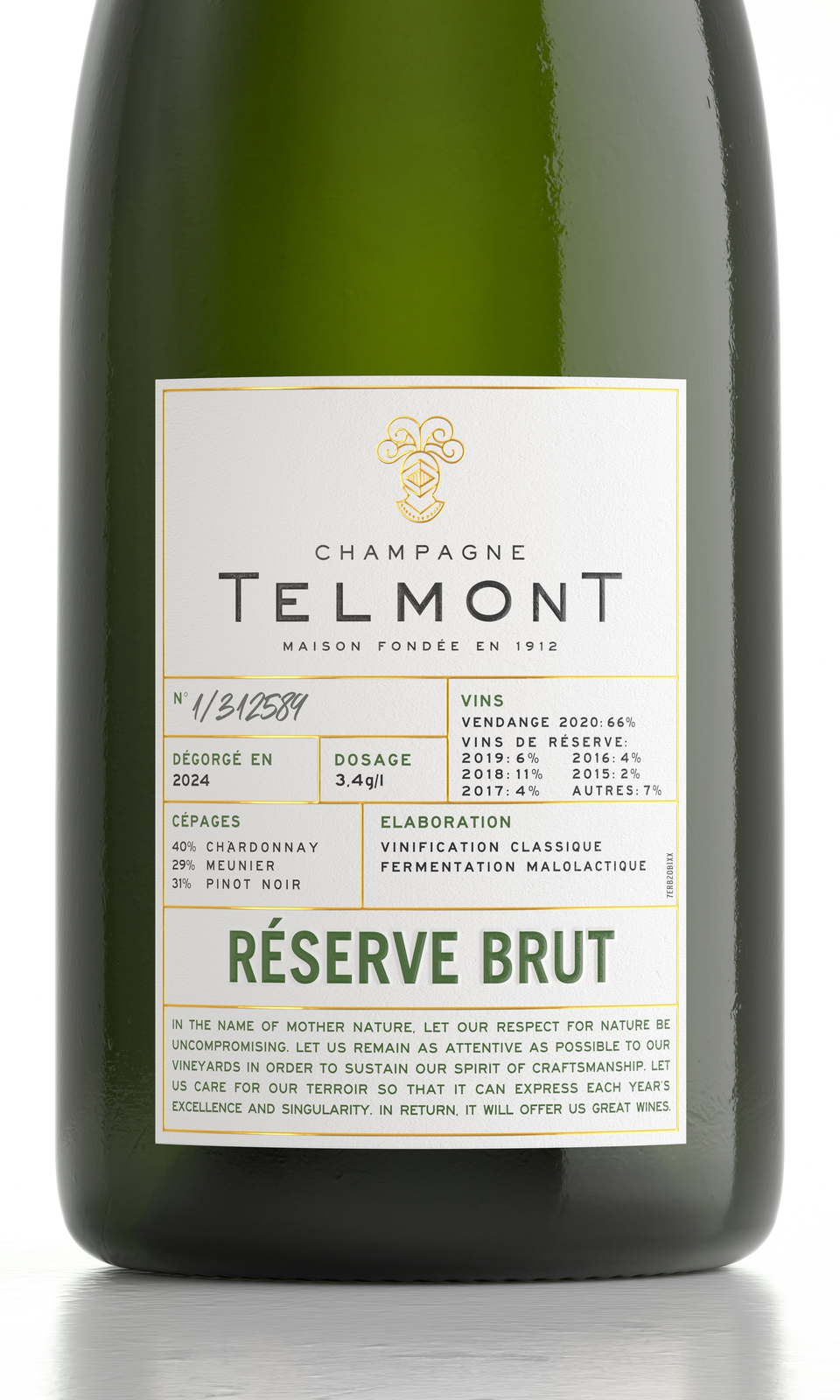
Champagne de Telmont Brut.
But for some, the climate means that the sugar is no longer needed at all. For the late, much-missed Frédéric Panaïotis, Cellar Master of Ruinart, their Blanc Singulier 2019 reflected “the impact of climate change on Champagne”: it was an especially hot vintage. Still, they make this zero-dosage cuvée every year. Bruno Paillard also produces a Zero Dosage, and Pol Roger Pure is a pretty, lemony version, very different from their other wines. At Philipponnat, meanwhile, they have it both ways: their Royale Reserve — a blend of the three principal Champagne varieties, all from Premier and Grand Cru vineyards, and named in honour of the Champagnes they once made for Louis XIV — has 8g/l but now also comes in a zero dosage version.
The day after my picnic, the 2018 vintage of Roederer’s collaboration with Starck was launched, beneath the pure iron curves of Paris’s Grand Palais. Cellar Master Jean-Baptiste Lécaillon said that, while Champagne-makers used to fight for ripeness, these days the struggle is for freshness. For Starck, however, it’s a question of style. “All my life I have tried to have less, to find inner joy through minimalism,” he said. I looked at the glass and metal structure above us, proudly displaying its own beauty while also enabling us to see the sky, and knew just what he meant.
If you enjoyed this, you may also like our article on volcanic wines born from Europe's fiery landscape.