Jay Rayner: "I've Only Regretted One Bad Review"
Words by
Clara Taylor
23rd September 2026
The iconic British food writer, Jay Rayner, takes us inside the art of being a critic, the one review he regretted and the London restaurants he recommends trying now.
It's a sequel to Nights Out at Home, which I wrote when I realised I was approaching a big anniversary – reviewing restaurants for 25 years. I’d long been taking ideas home with me from the restaurants I reviewed. I love the process of cooking and have felt increasingly confident in my culinary skills and my ability to communicate them. I’ve reviewed every kind of restaurant so the recipes could come from anywhere. As could the stories. And that’s what it is: a book of stories.
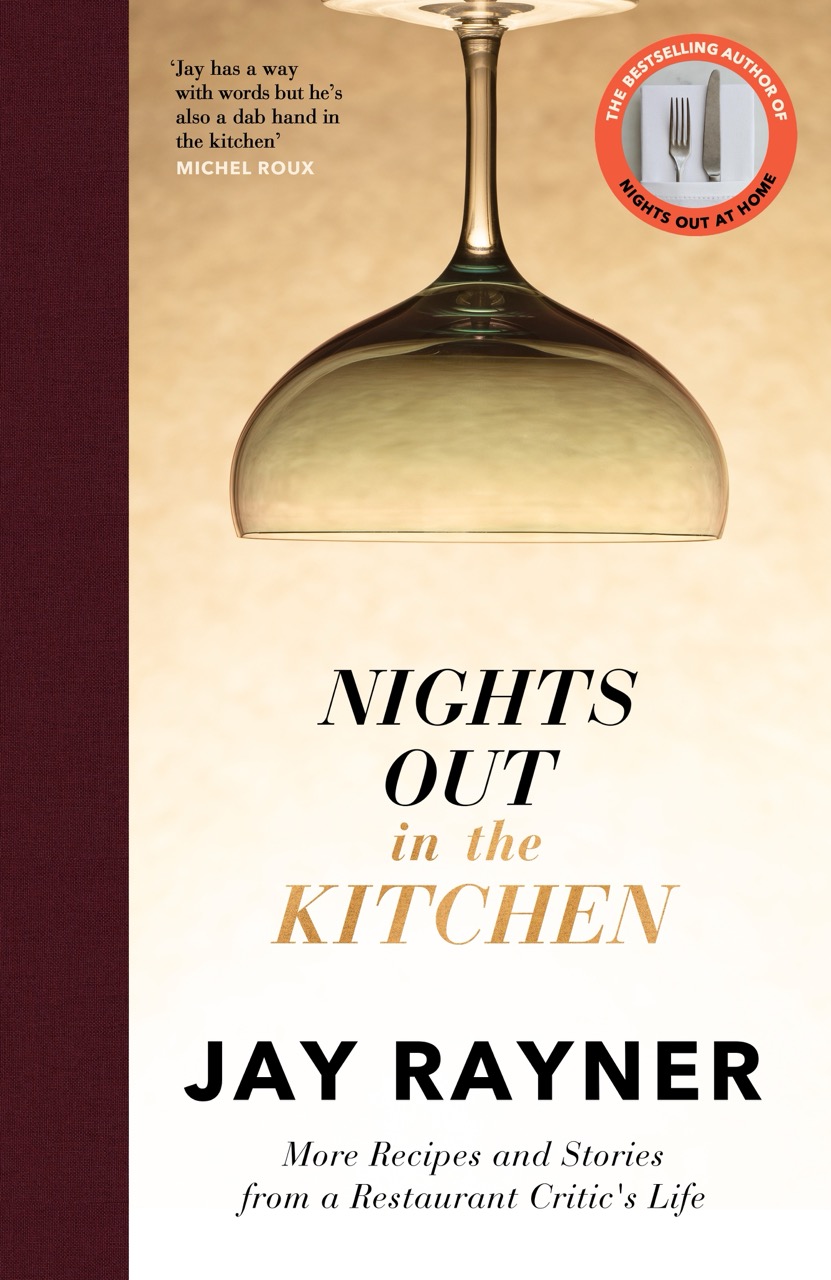
Jay Rayner's Nights Out in the Kitchen. ©Penguin Randomhouse.
When writing books, and especially a book like this, did you feel vulnerable? The critic being critiqued.
I do a lot of things that are reviewable. I've written fiction, I perform live on stage and I have a show on radio. I don't have a problem with it. But I stick to a clear rule: if you take a lot of personal pleasure and satisfaction from a good review, you have to accept a bad review at face value. So, it's your choice. How are you going to respond to the contents of reviews? I treat them with passing interest. I do not argue with anybody's right to review me. They can say what they like, but if they say something factually inaccurate, I will pick it up.
Has your experience as a critic changed over your 27-year career, particularly as you became more recognisable?
In truth, the “early days” didn’t last very long. While, I might not have had much of a wider public profile, I very quickly became known within the London restaurant industry, so it hasn't changed markedly.
I do book under a pseudonym, so they don't know I'm coming. There is very little they can do to change the experience for you on the night. Restaurants function on preparation. They've written their recipes, they've bought their ingredients, they've trained their staff. They can try and change, but I'll spot it, and they know that. I ignore them trying to fawn over me.

Jay Rayner photographed by Pal Hansen.
Do you ever go back to the same place, or is a review based on just the one night?
It's pretty much just on the night. Restaurants are expensive – particularly at the restaurants that the Financial Times likes me to review. The bill is rarely less than £200 for two. That's a lot of money. Most punters only go once and if they’re spending their money, they deserve a good experience.
Generally, a place that turns out to be bad is as a result of one of two things: a proposition that looked ludicrous to me and I wanted to find out if it was as ludicrous as it sounded, or it's a failure of research on my part. If I go somewhere I thought was going to be great and it turned out to be awful, then I either misread something or I have been misdirected.
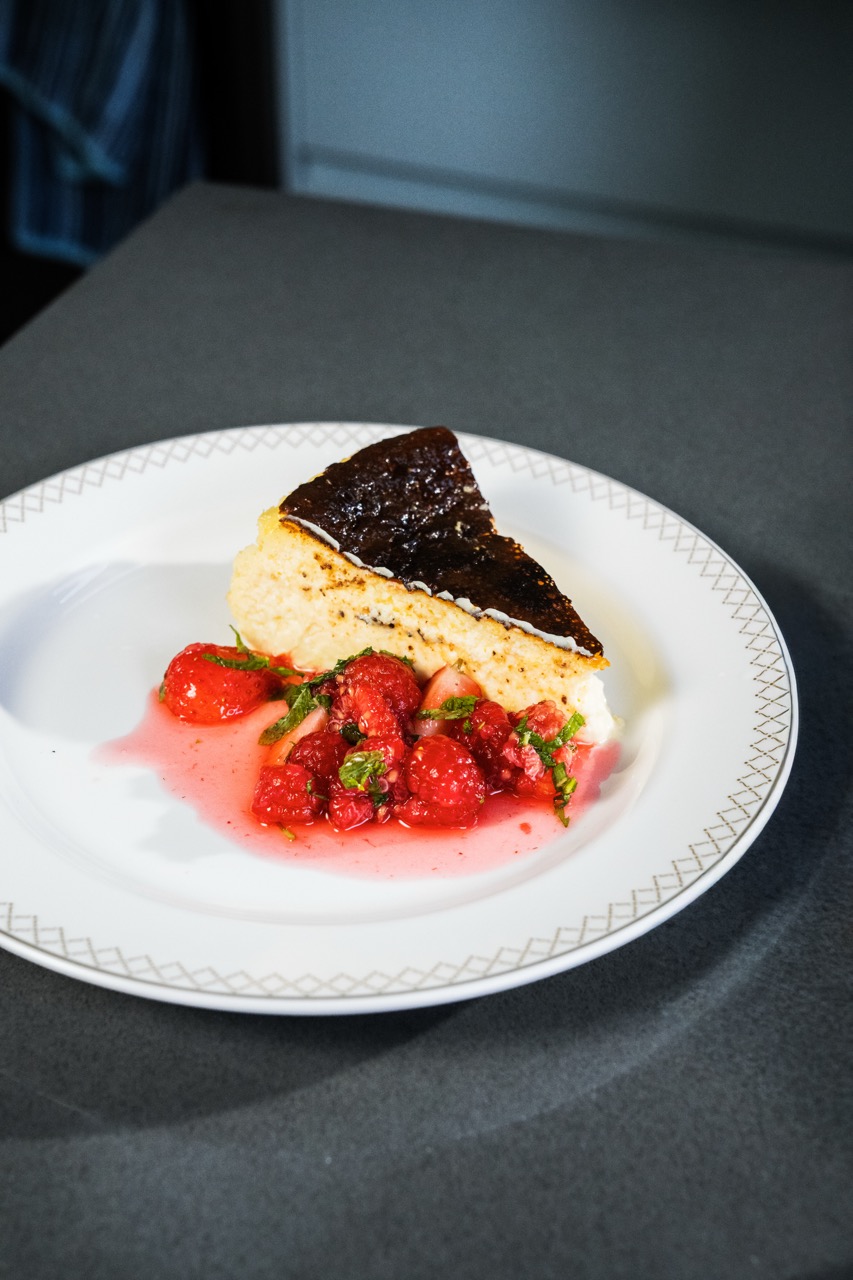
Jay's take on James 'Jockey' Petrie's Basque Cheesecake. ©Will Carne.
Have you ever regretted a bad review?
Only one, because I made a factual error. Years ago, I reviewed Locanda Locatelli, Giorgio Locatelli’s flagship restaurant at the time, and I criticised the service. My wife had asked for a decaf coffee at the end of the meal and then stayed awake all night, which suggested to us it hadn't been decaf. A reader kindly wrote in reminding me that we’d also had the tiramisu for dessert. That has enough caffeine in it if you're sensitive.
The only other one I can think of, and I don’t think what I said at the time was wrong; I just didn’t get it. I went to a Mumbai-inspired café on St Martin’s Lane and didn’t understand what they were trying to do; I couldn’t see how it was going to work and it felt like something that was limbering up to be a rollout. I didn’t think it would succeed. Anyway, Dishoom’s done just fine.
Lots of people would think being a restaurant critic is a dream job. Is it always what you always wanted to do?
I say in the book, actually, that I had no intention of being a restaurant critic. I was a general reporter and feature writer; I wrote about absolutely everything. It hadn’t even occurred to me to be a restaurant critic until I went out for lunch with the editor of the Observer Magazine in 1999. She told me the restaurant critic was moving on and asked who I thought they should get in. My hand went up. There was some pushback from the overall editor of the Observer who didn’t want me to do it – he thought I’d disappear into the world of food. He was absolutely right, of course.
I’m on tour at the moment with my one-man show and I always tell audiences that food isn’t about how things taste. It’s about memory, family, history, politics and economics – about who we are and how we live as a species. As a writer, it gives me an access point to a lot of the human experience. What better thing could there be than that?
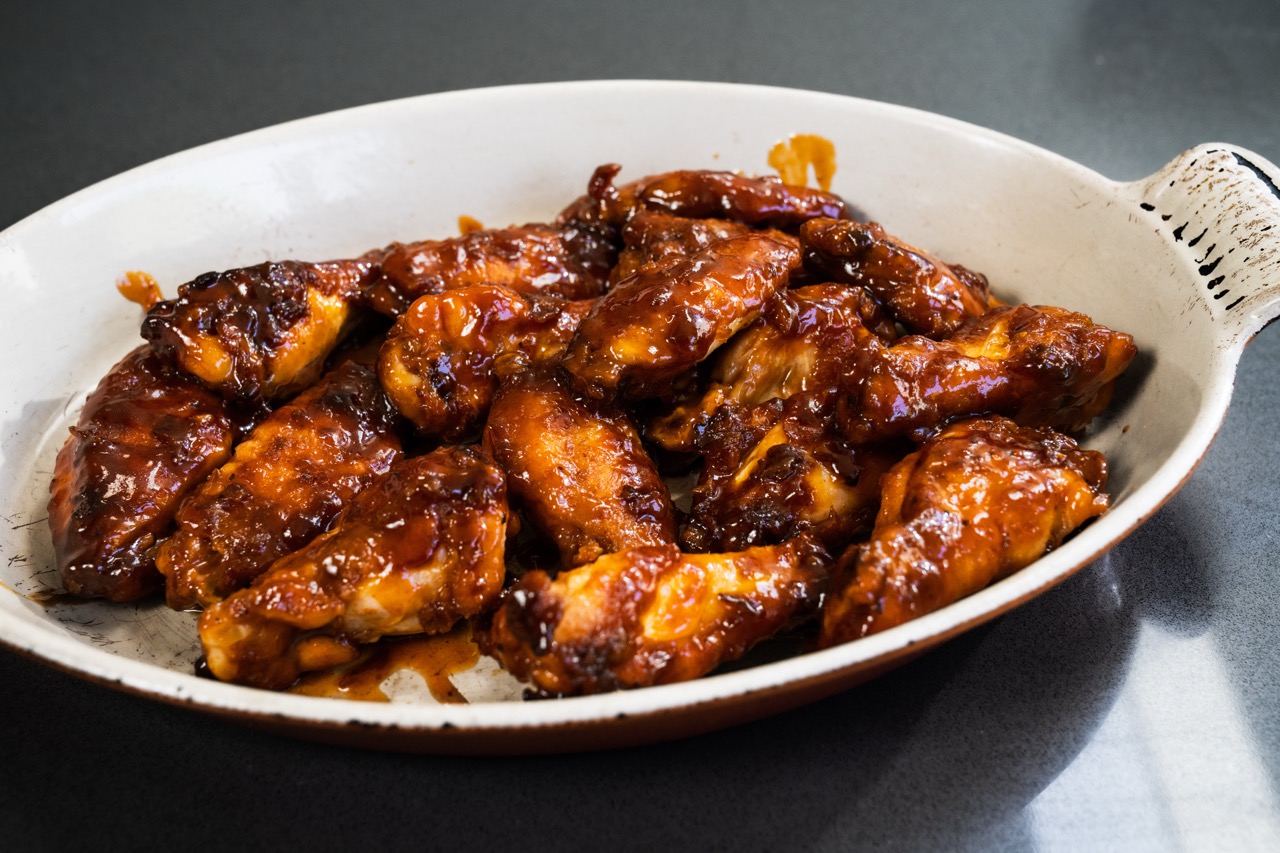
Jay's BBQ sauce chicken wings inspired by Moreley's. ©Will Carne.
Over the years, you’ve dined at a lot of Michelin-starred restaurants. If you were redesigning the system from scratch, what would you change?
There’s a lot of talk in the industry that it is literally an impossible job. There are so many restaurants; inspecting them all is impossible. The system worked in the 80s and 90s when there were far fewer places worthy of that kind of attention.
The Michelin Guide has always been extremely narrow in its interests and it’s obvious by the fact that they get so excited when they award a star to something that lies outside of those interests. One deplorable moment was when they got very excited about awarding a star to Chishuru – a terrific restaurant run by Joké Bakare. I’m not taking anything away from the restaurant, but Michelin were going on and on about how they’d given a star to the first Black African woman. It’s 2026 and you’re proud of that?
It’s so Eurocentric, so blinkered and so bizarre. I don’t think it’s possible to create a system with an aesthetic and award process that makes any sense. I understand why chefs like it – we all love something to aim for and we all like being told we’re the best at something. But that system, or the idea of one, doesn’t work when there are so many restaurants aspiring to be seen as great. I am unequal to the task and so is Michelin.
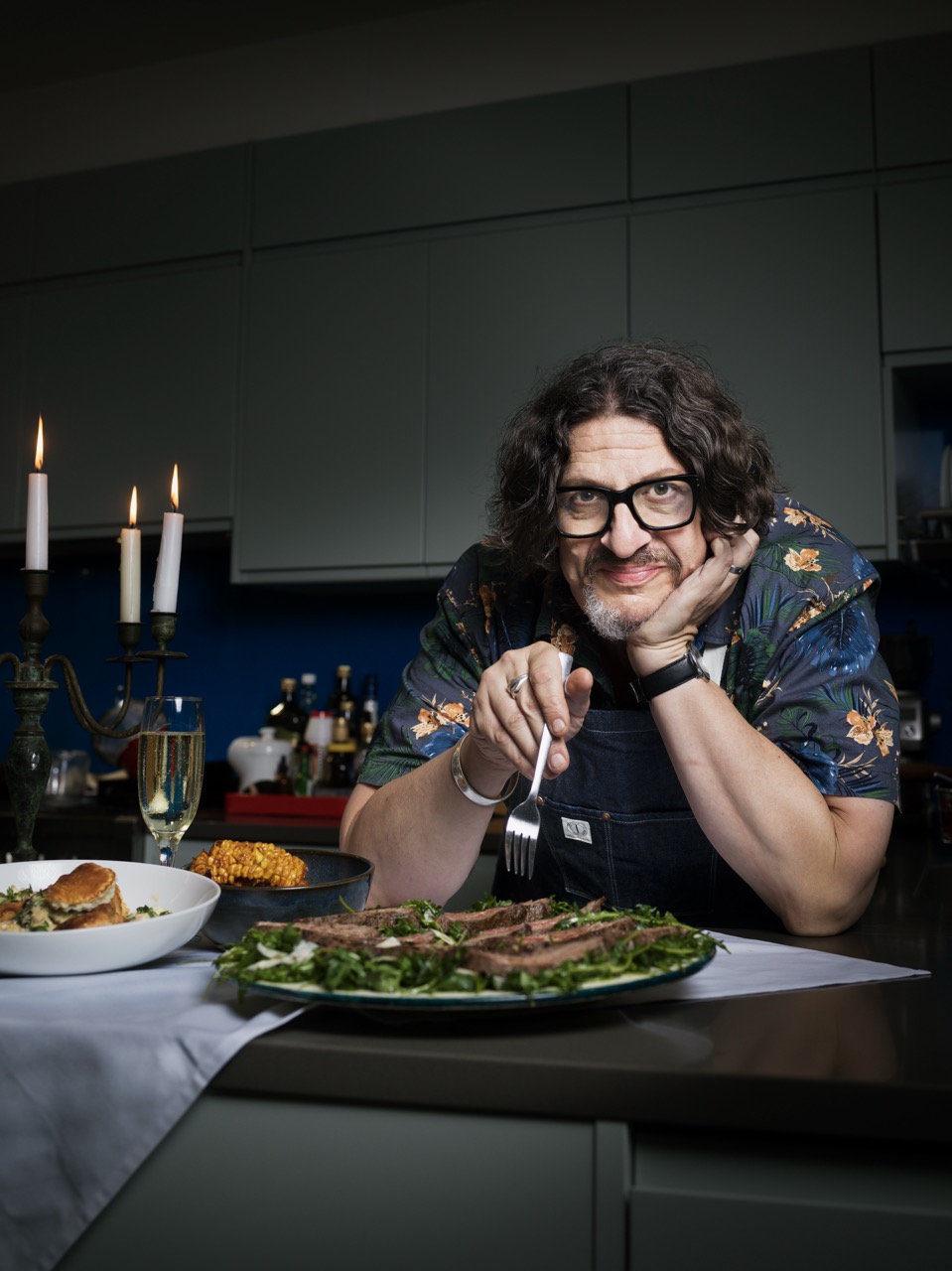
Jay Rayner - restaurant critic, broadcaster, musician and author. ©Pal Hansen.
You described Negronis as a punishment for something you didn't know you did wrong. What would be your drink of choice?
In the book, I open with the Twinkle, which is Champagne, vodka and a little bit of elderflower cordial. It’s a sparkly name for a drink that isn’t going to knock you out. So that, or a classic daiquiri. A proper one, not one of those ridiculous fruit-based, frozen drinks.
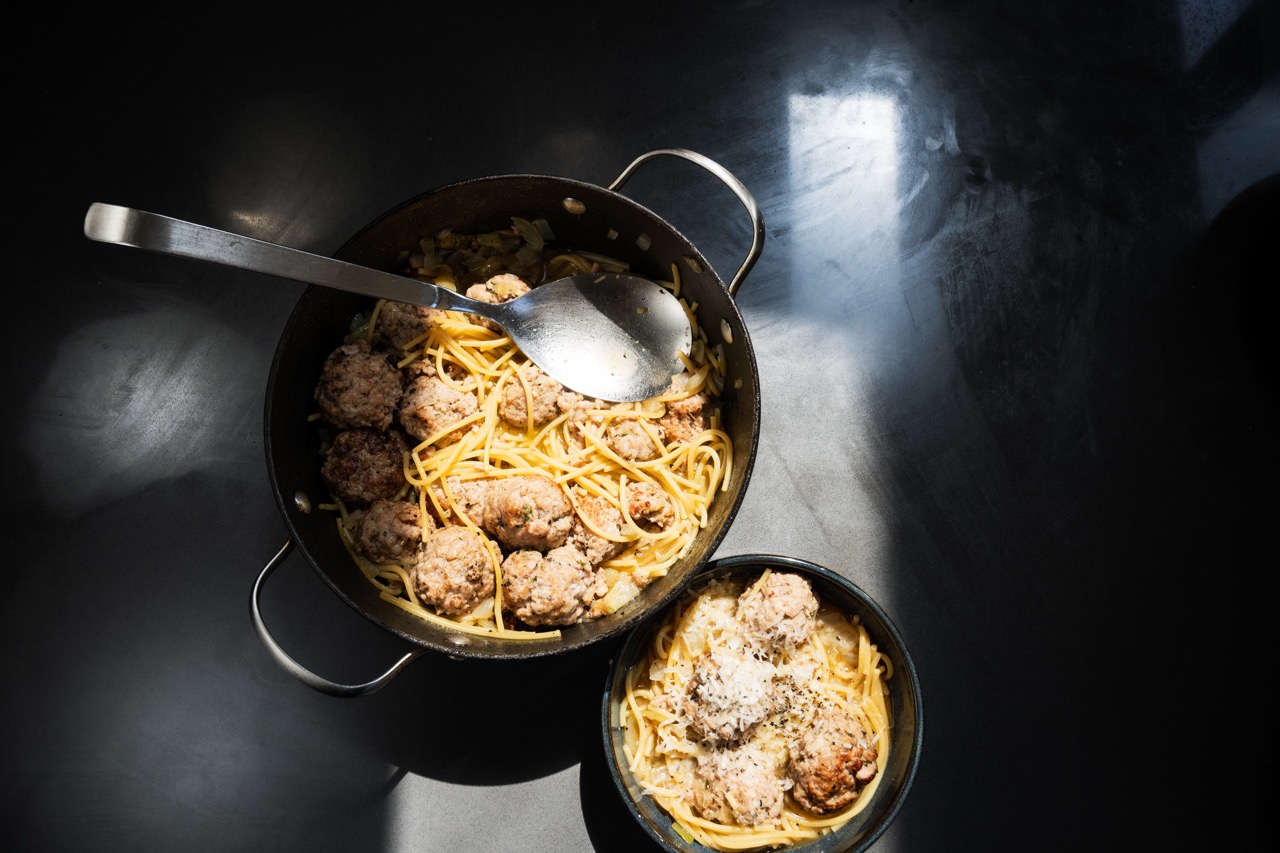
Meatballs and braised spaghetti, featured in the book. ©Will Carne.
What’s your biggest bugbear about the London dining scene right now?
The websites and the booking systems say, “Please let us know if you're going to be late,” and then give you no means by which to do so. Most restaurants don’t have a phone number on their website, and it’s infuriating. And while we’re at it, the number of restaurants that don’t have their opening hours clearly on their website is astonishing. It drives me insane.
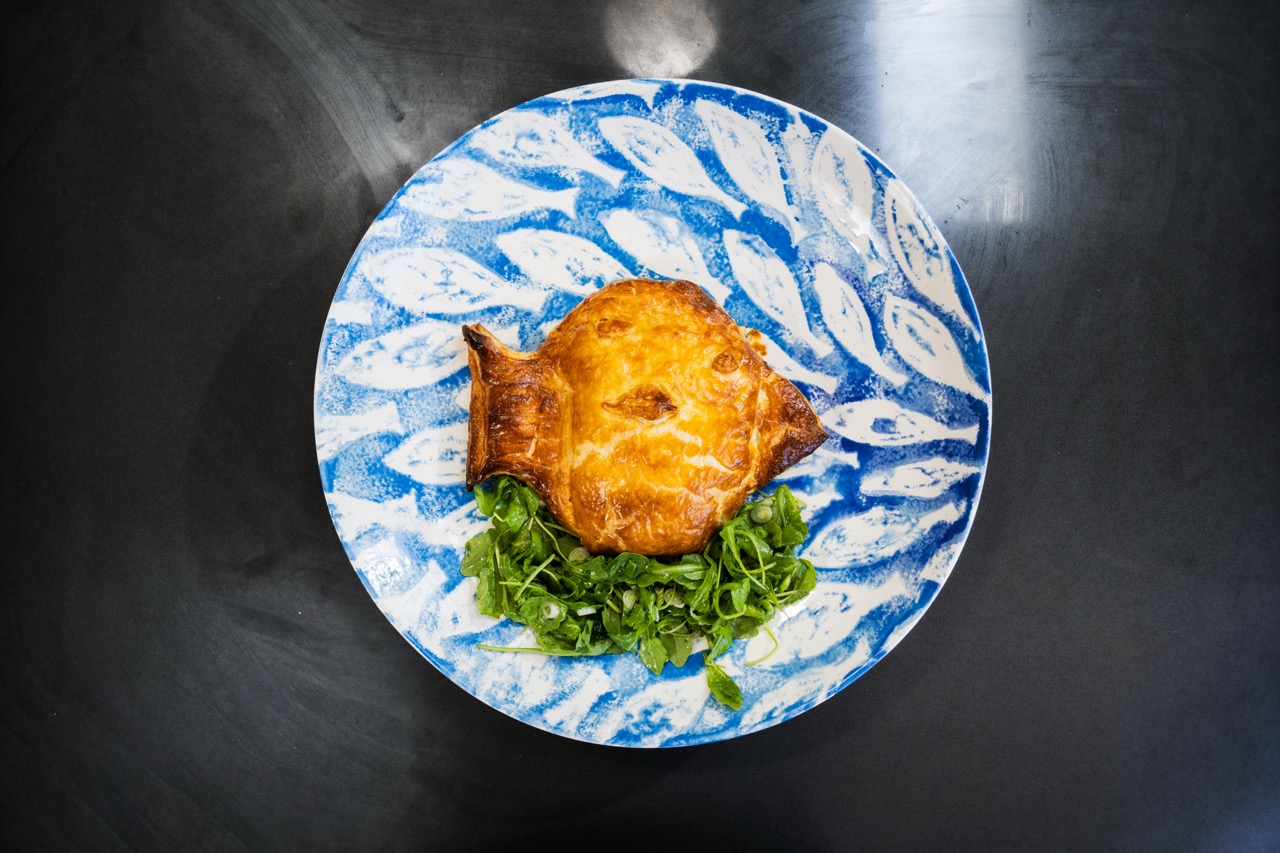
Salmon en Croute featured in Nights Out in the Kitchen. ©Will Carne.
What are your top three London restaurants right now?
Oh, I'm not doing that! I decline to play the top three game, but here are three restaurants I really like. Dover Street Counter, which makes the business of laid-back restaurants look very straightforward. I’ve just written a rave of IGNI. I thought it was terrific. I also very much loved Saawaros above The Albert Arms in Elephant and Castle.
Have you eaten anything recently that you wished you could have put in the book?
A very simple plate of whipped ricotta piped back and forth on the plate, dressed in chilli oil and laid with caramelised fennel seeds. It was a lovely, lovely dip and the kind of simple idea that would’ve worked in the cookbook.
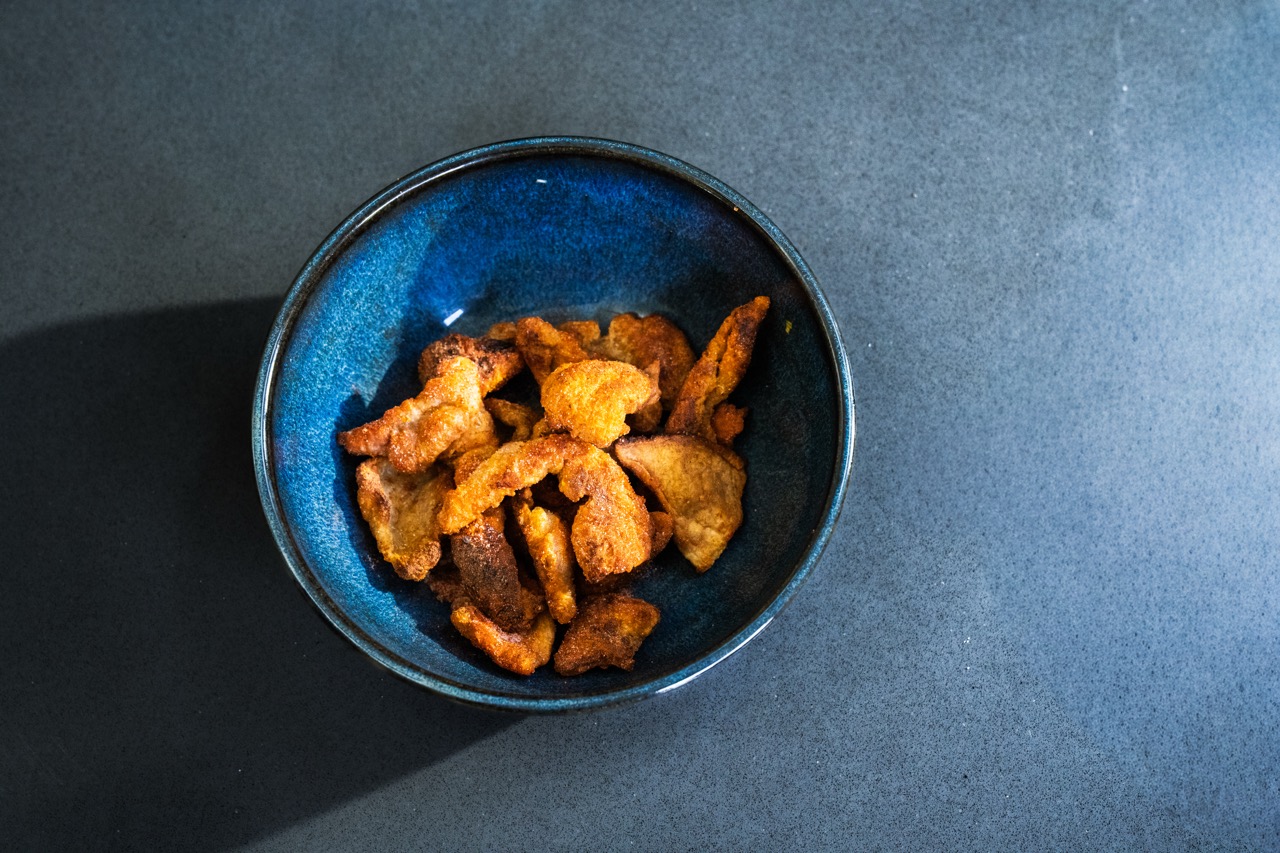
Chicken scratchings, inspired by those served at Whyte & Brown, Bone Daddies, Speedboat Bar and elsewhere. ©Will Carne.
Where is your favourite country to travel to for the food?
It’s a long way to travel, but on the two occasions I’ve been to Tokyo, I’ve been left with the strong sense that I’d only scratched the surface. It’s so deep and the culinary culture is so great.
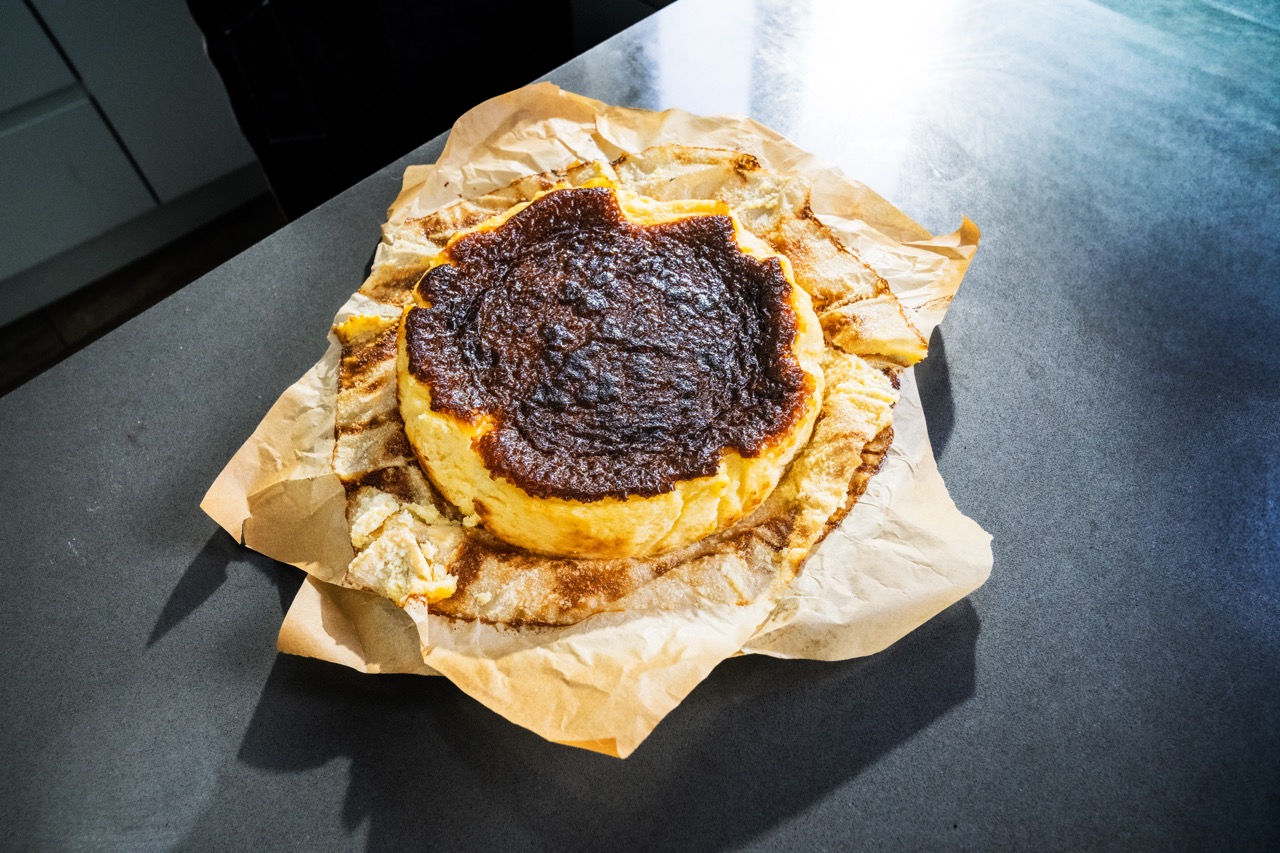
Basque cheesecake, inspired by James 'Jockey' Petrie's from Brat. ©Will Carne.
What does luxury mean to you?
Having time to do things. And really high-quality bed sheets with a serious thread count.
Kitchen Nights Out is available to buy now. Jay Rayner's next live show is on 3rd October. Tickets can be found at jayrayner.co.uk.
Articles may contain affiliate links; all selections are independent and at no additional cost to you.