To live like a King (or Queen) might seem like a pipe dream for most of us. But a taste of the royal lifestyle is within reach. Dotted around the country are rooms, suites and cottages with a regal connection, some at the present Royal Family’s homes as well as others with an intriguing historical past. Whether sleeping within the castle that was home to Henry VIII, or the palace where Queen Victoria spent her childhood, we suggest a special selection of well-appointed and royally approved places to stay. Valet not included.
Where to Book A Castle Stay in the UK
Words by
Izzy Schaw Miller
9th June 2026
From a medieval coastal fortress to the childhood London home of Queen Victoria, Izzy Schaw Miller reveals the best UK castle stays to give your next staycation that regal flavour.
Medieval Might - Dover Castle, Kent
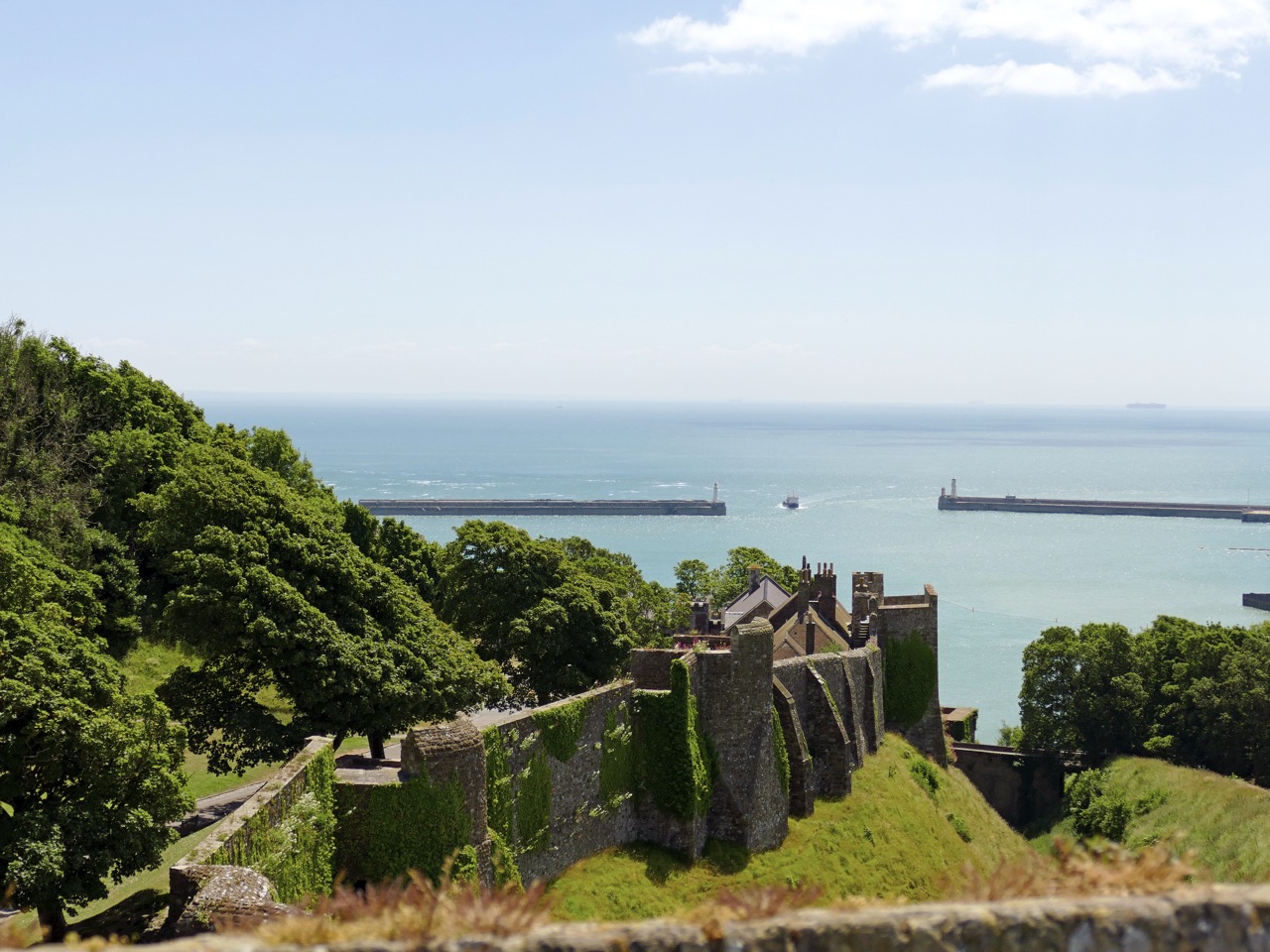
Views from Dover Castle. ©Engish Heritage,
The mighty Dover Castle on the Kent coast was built on the orders of William the Conqueror shortly after his victory at the Battle of Hastings. In the intervening thousand years, it has been a formidable and strategic defensive fortress, positioned as it is at the narrowest point of the English Channel. The castle’s most impressive feature is its intricate winding tunnels, which were used throughout the Second World War and up until the Cold War as a shelter, a defensive network and even as a hospital for troops. The inner and outer baileys and the great keep were built by Henry II, fashioned with the intention of impressing distinguished visitors from abroad – and deterring invaders. Today, the castle features recreations of his resplendent interiors, including his throne and bed.
Now, it is open for stays in both its three-bedroom cottage, The Sergeant Major’s House, with captivating views over Dover town and out towards France, or the romantic, 13th-century one-bedroom turret, Peverell’s Tower, accessed via a winding stone staircase and with a private rooftop terrace. Both can be booked through Dover Castle’s custodian, English Heritage.
Book a stay in Peverell's Tower or The Seargant Major's House.
Tudor Splendour – Hampton Court Palace, London
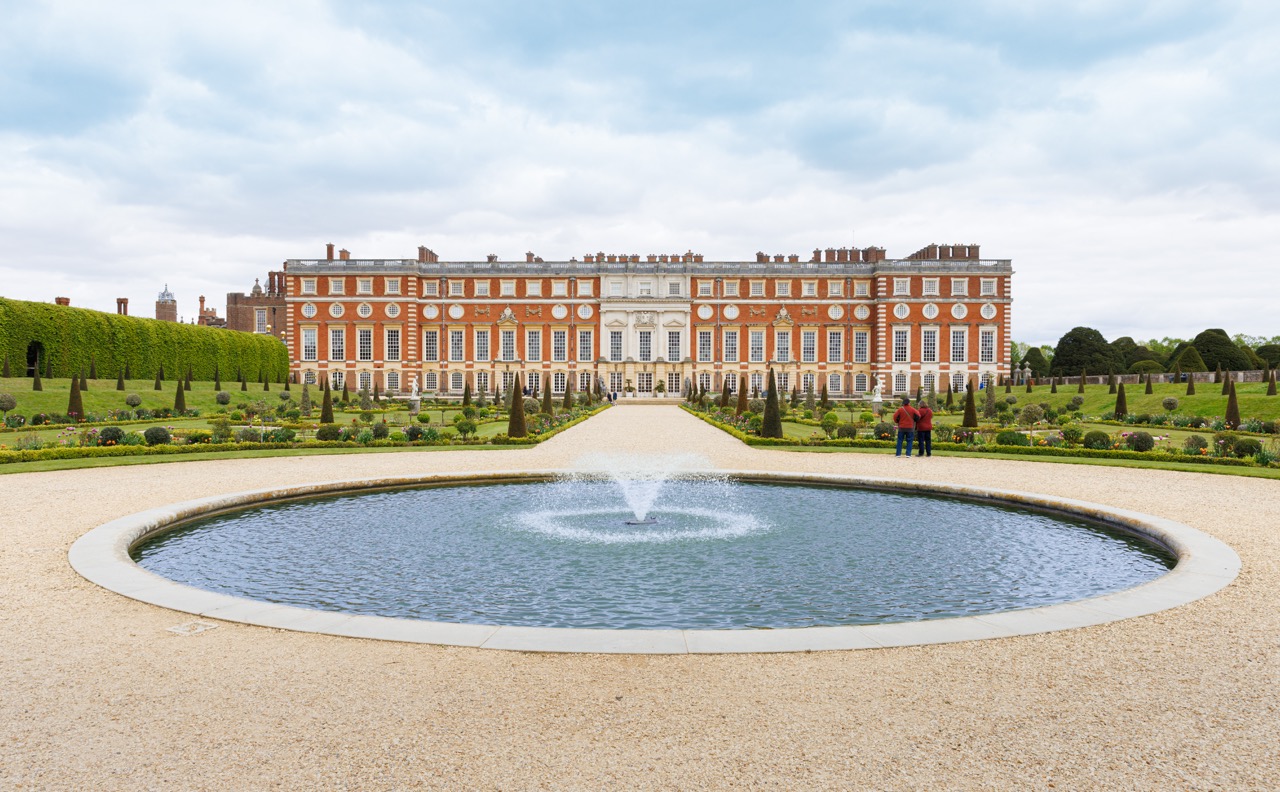
The exterior of Hampton Court Palace. ©Historic Royal Palace.
Henry VIII was one of the most prolific of royal builders. By the end of his reign in 1547, he had built or amassed more than 50 different residences, so it is perhaps unsurprising that our next regal stay is another of his former homes. And what a home it is. Hampton Court Palace at East Molesey, to the south-west of London, originally belonged to Henry’s right-hand man, Cardinal Wolsey, who transformed it from a modest manor house into a magnificent complex in a fashionable Renaissance style. In 1529, with Wolsey’s star waning due to his inability to resolve Henry’s ‘Great Matter’ (his divorce from Catherine of Aragon), he surrendered Hampton Court to The King. It became Henry’s great pleasure palace, but its existence is down to Wolsey’s original investment and energy.
With the transfer of wealth from church to the crown’s coffers during the English Reformation, Hampton Court was the chief recipient of Henry VIII’s spending splurges, and the palace is as lavish as you can expect from a monarch who couldn’t resist showing off. From the ravishing Great Hall, where carved heads eavesdrop from the ceilings, to the delightful Little Banqueting House amid the palace gardens, where only the finest of food was served, this is a place where opulence reigns. Sumptuous remnants from The King’s reign still exist in the form of magnificent tapestries, woven with silk and gold thread, or the daintily carved, entwined initials of Anne Boleyn (A) and Henry (H) in the Great Hall’s ceiling, a reminder of happier times for the ill-fated Queen.
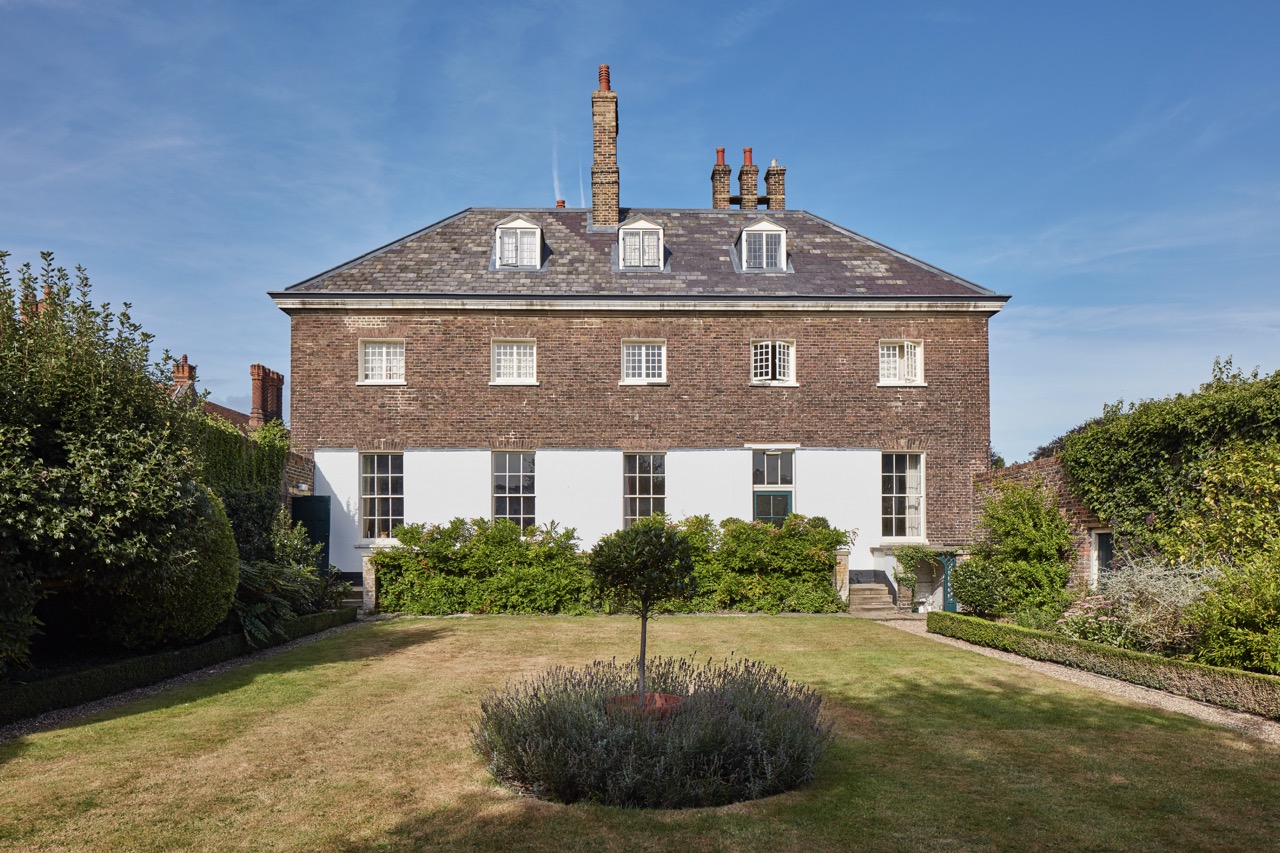
The elegant Georgian House at Hampton Court Palace boasts a private walled garden. ©Robin Forster Photography.
Secretive machinations took place within the walls of Hampton Court. The palace’s chapel with its deep blue and gold ceilings bore witness to Archbishop Thomas Cranmer voicing his suspicions of infidelity against Henry VIII’s new wife, Catherine Howard. It was these whispers that led to Howard’s downfall and subsequent execution, and legend has it his fifth wife haunts the palace’s corridors. No such ghosts have been reported at The Georgian House, an elegant 18th-century building on the alley leading to Henry’s Real Tennis Court, which is available for bookings of up to eight people. Built in 1719, the house was originally kitchens for George, Prince of Wales and later two houses, for the Clerk of Works and the Gardener. The eastern one is now cared for by the Landmark Trust and boasts a private walled garden draped with wisteria, a kitchen fashioned from the original enormous royal cooking arch and a view of the palace’s roofs and famous decorative chimneys from the attic rooms.
Reserve your stay at Hampton Court Palace.
A Royal Bolthole – Thornbury Castle, South Gloucestershire
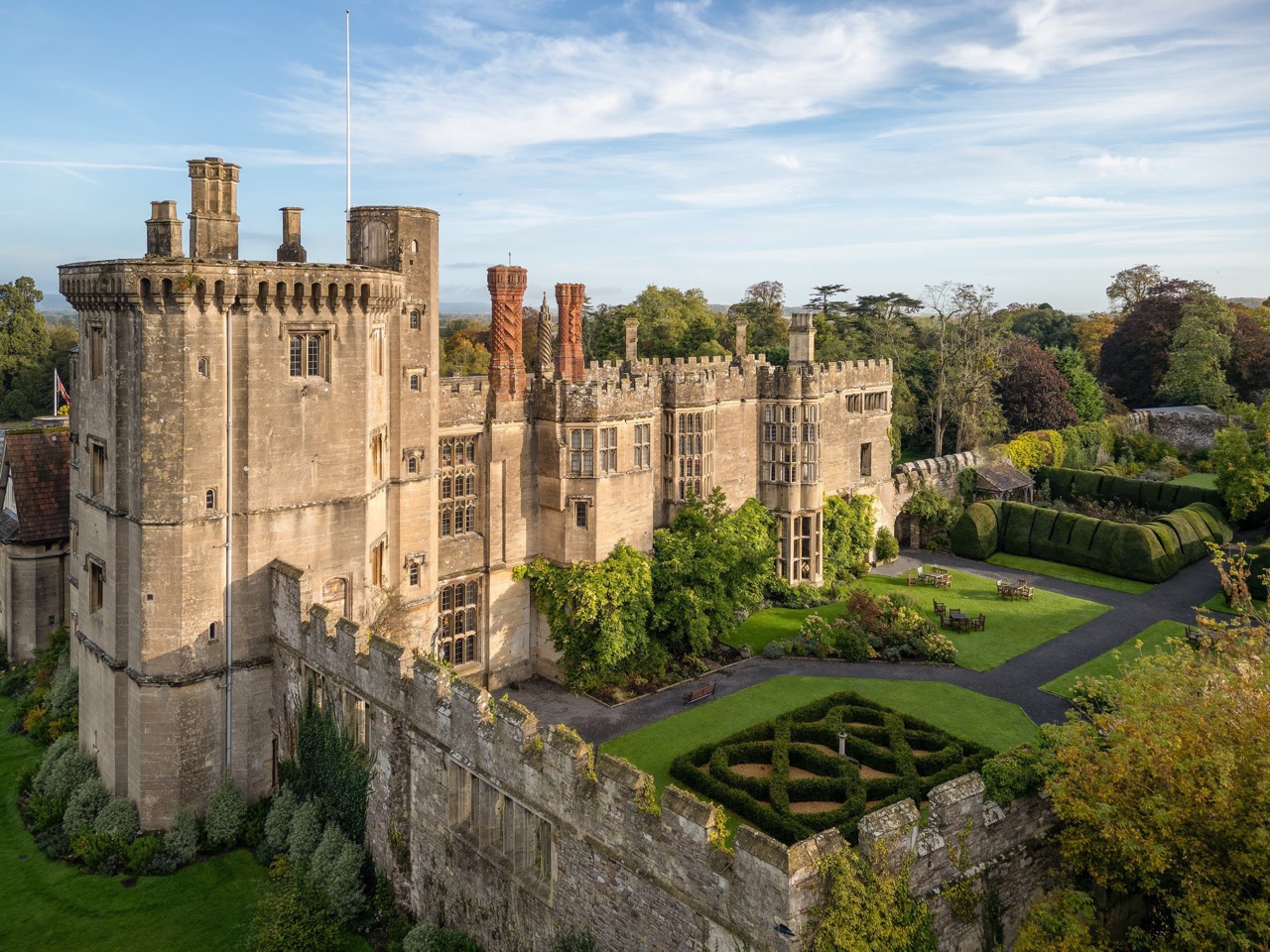
You can sleep in Henry VIII and Anne Boleyn’s bedchamber at Thornbury Castle. ©Thornbury Castle.
Standing majestically in the serene Gloucestershire hills, Thornbury Castle was built as an audacious symbol of wealth and power by Edward Stafford, Duke of Buckingham. Stafford was England’s second-richest man after King Henry VIII, and Thornbury Castle can be considered an unashamed example of one-upmanship on his part. Henry, of course, was not a man to be crossed, and not long after Thornbury’s construction, he executed Stafford for treason. Consequently, Stafford’s grand creation, the glory of which he did not get the chance to bask in, was left in Henry’s bloody hands. Thornbury was the choice of bolthole when Henry and his second wife, Anne Boleyn, withdrew here to escape from plague ravaging nearby Bristol. Now operating as a hotel, you can sleep in their very bedchamber.
Thornbury certainly lives up to Stafford’s ostentatious intentions. Enjoy grandiose rooms awash with plush sofas, satin sheets, elaborately patterned carpets and bold four-poster beds. Along with the swish interiors, the castle retains its Tudor ruggedness with stone walls and wooden beams, and its regal dining room serves up feasts inspired by those that satisfied the notoriously ravenous King.
Stay in Henry VIII and Anne Boleyn's bedchamber at Thornbury Castle.
Comfortable Captivity – Carisbrooke Castle, Isle of Wight
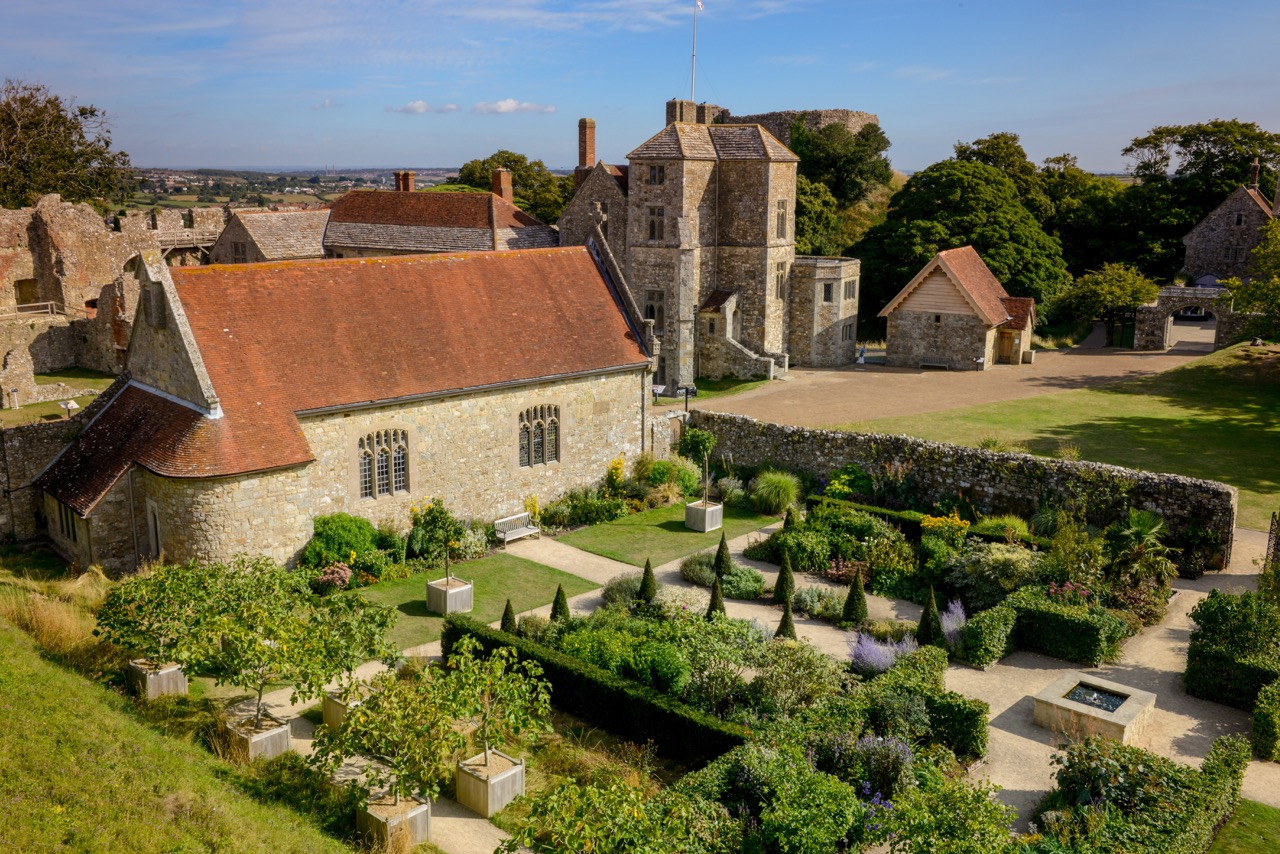
The Princess Beatrice Garden at Carisbrooke Castle. ©Jim Holden.
Osborne House, the sprawling Italianate mansion on the Isle of Wight with its own private beach, was Queen Victoria’s refuge. She died there in January 1901, after which it was gifted to the nation by her son, King Edward VII. Tourists flock to Osborne each year, but less well-known is the grey-stone fortress a short hop away – Carisbrooke Castle. Originally a defensive earthwork built by the Anglo-Saxons to ward off Viking raids, the current structure is a motte-and-bailey castle built by the Normans in the 11th century.
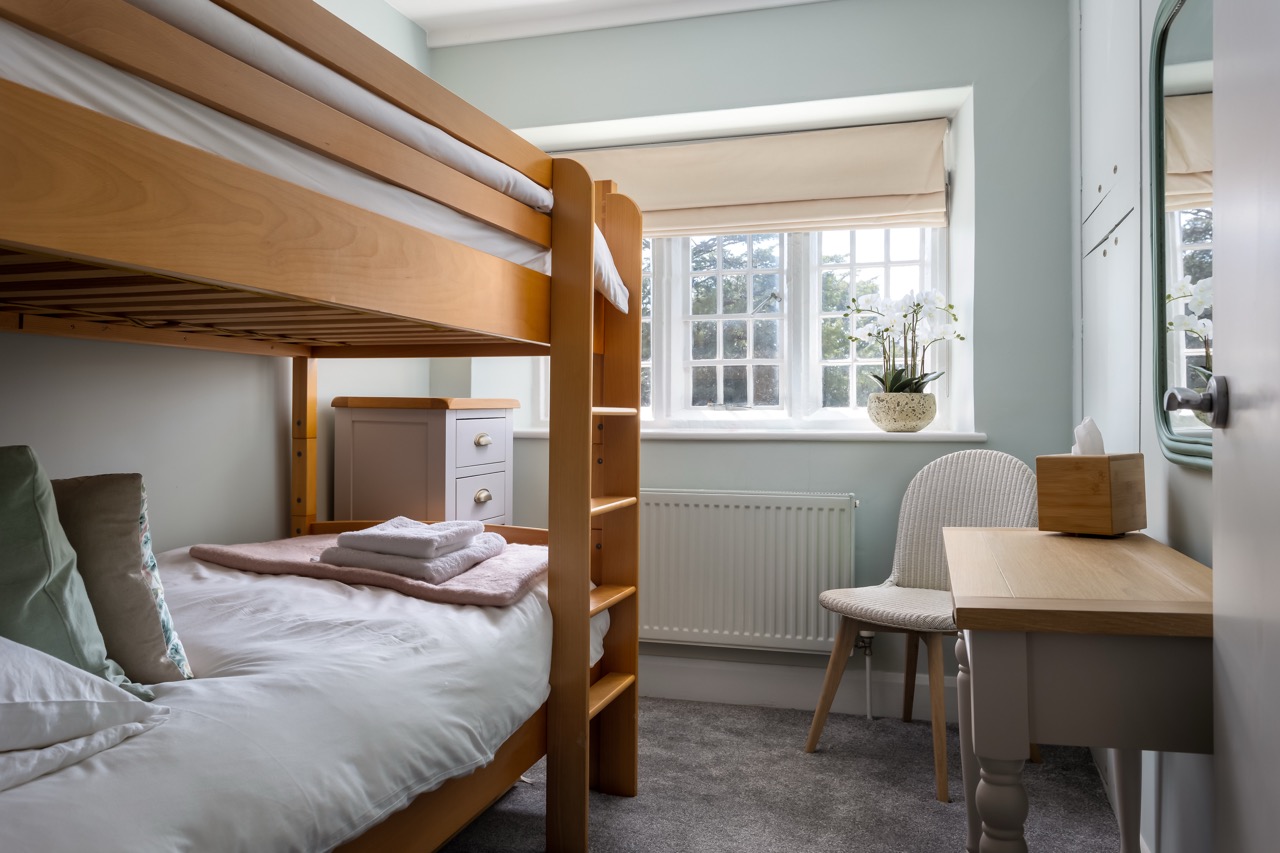
The Bowling Green Apartment at Carisbrooke Castle is perfect for a family stay. ©Oliver Purvis.
Queen Victoria’s youngest daughter, Princess Beatrice, spent her summers here while Governor of the Isle of Wight, and particularly enjoyed the gardens with its neatly pruned hedges and fragrant swathes of lavender. Charles I was Carisbrooke’s most significant resident when he was imprisoned here following his defeat in the English Civil War. The King enjoyed a comfortable captivity in keeping with this royal status, and The Bowling Green Apartment, which overlooks the lawn he once used for games, is now open for guests. A far cry from prison conditions, the apartment is ideal for a family of four, with children’s bunk beds in one of the two bedrooms; the ideal blend of contemporary luxury and adventure. While you’ll be living in majestic territory, the real kings of the castle are the donkeys, who have been gallantly plodding the grounds and keeping the grass trimmed since medieval times.
Book the Bowling Green Apartment. Sleeps 4.
THE KENSINGTON SYSTEM – Kensington Palace, London
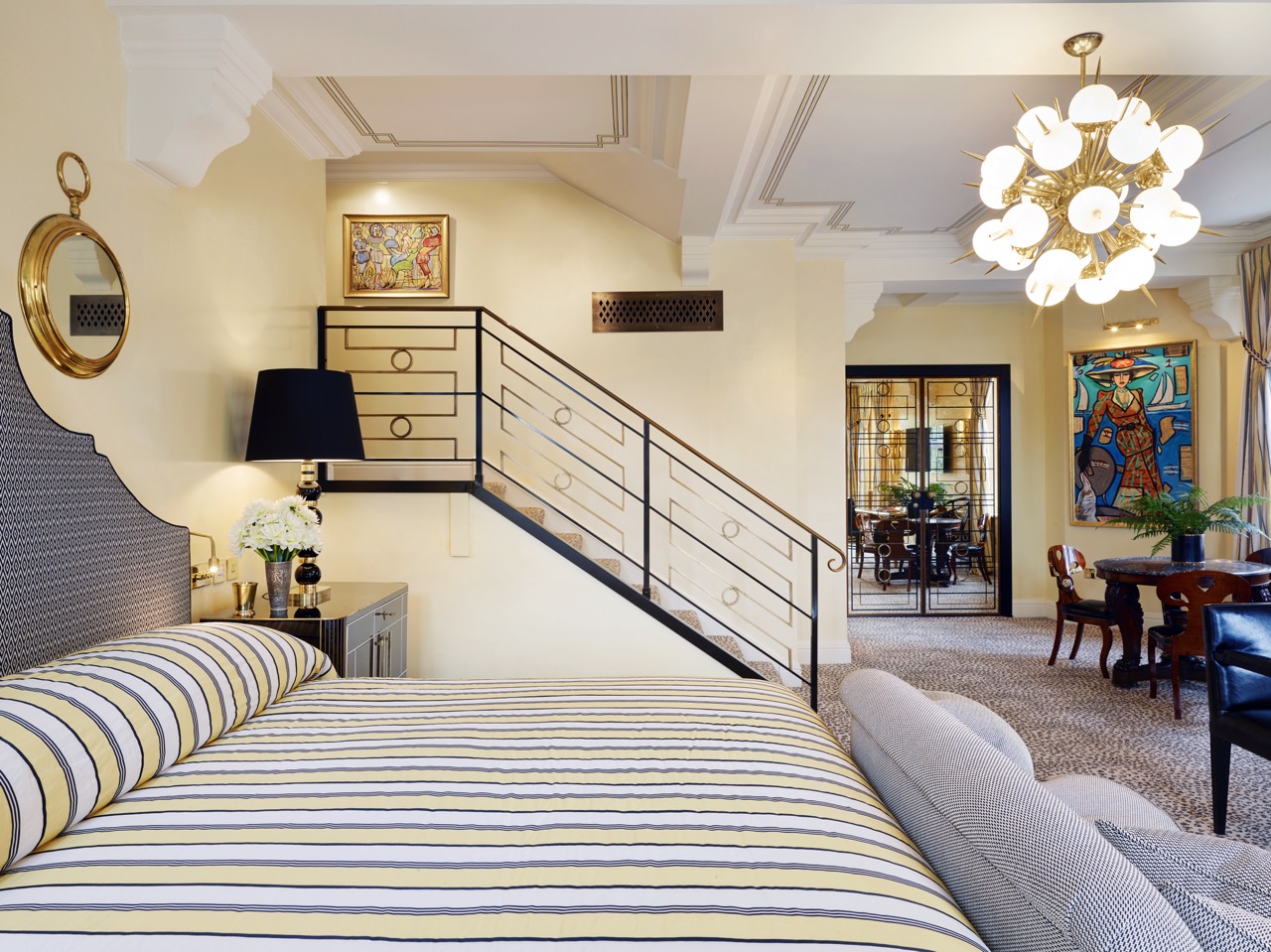
The Noël Coward Suite at the Milestone Hotel and Residences in Kensington. The hotel offers enviable views towards Kensington Palace. ©Richard Powers.
In 1689, King William III and Queen Mary II made history as the first King and Queen to be crowned together as joint rulers. Concerned about William’s health, the couple set their sights on a restful refuge to escape the city, moving to Kensington, a quaint village on London’s western outskirts at the time. It was there that they had Nottingham House extended and improved to create Kensington Palace. It became a favourite residence of successive monarchs until the death of George II in 1760. Queen Anne developed The Orangery in the gardens, where she entertained guests al fresco. It’s a delightful spot where, weather permitting, afternoon tea can be enjoyed on its patio or diners can enjoy a bite to eat in the restaurant with its airy, high ceilings.
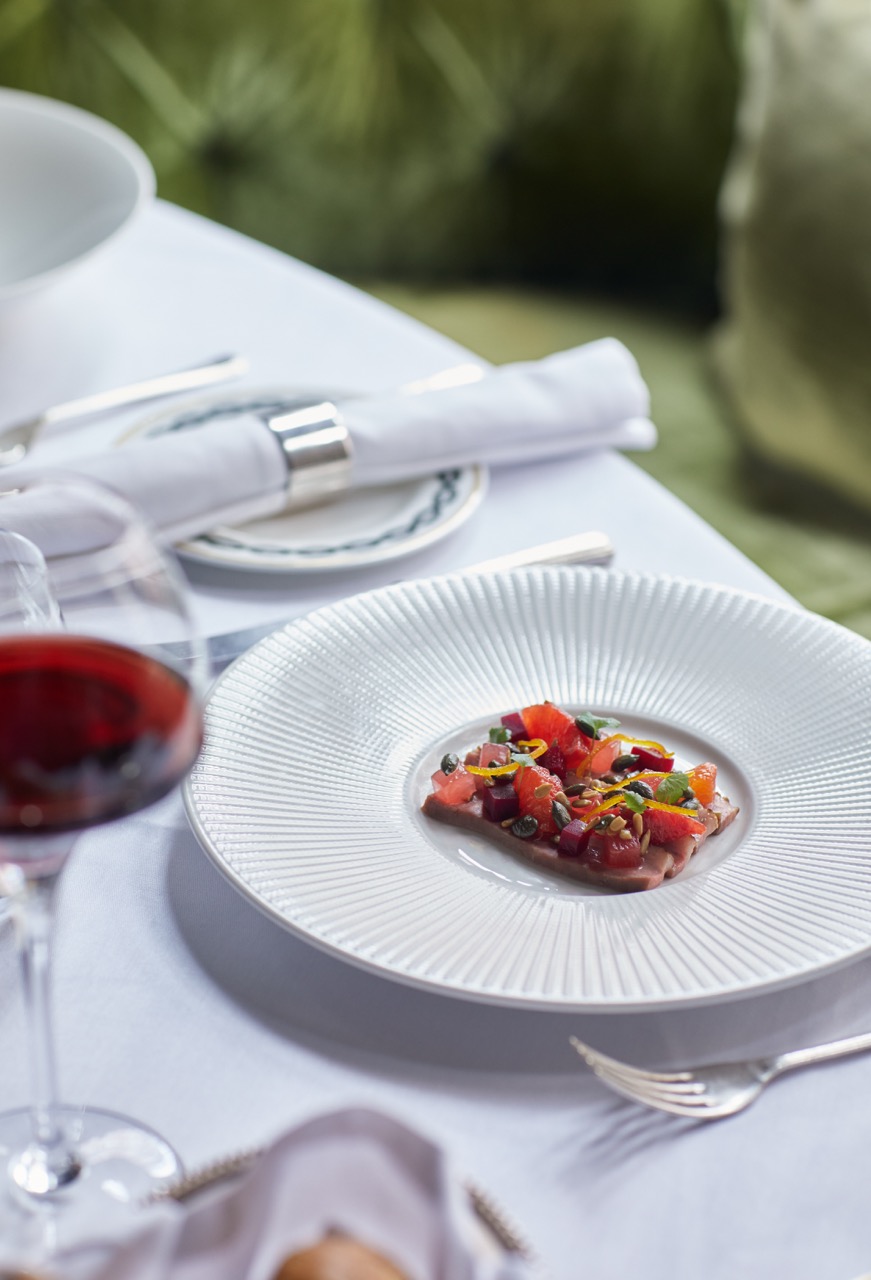
Chennerston's Restaurant at the Milestone Hotel and Residences.
Kensington Palace (‘KP’) remains a working royal residence containing the offices and London residences of The Prince and Princess of Wales, The Duke and Duchess of Gloucester, The Duke of Kent and Prince and Princess Michael of Kent. It was also the home of Diana, Princess of Wales, who lived here during and after her marriage. She was particularly fond of the Sunken Garden and this space now houses a statue of her by Ian Rank-Broadley, commissioned by her sons and unveiled on what would have been her 60th birthday, on 1 July 2021. Queen Victoria spent her oppressive and lonely childhood here, enduring the ‘Kensington System’ under the beady eye of her mother, The Duchess of Kent, and Sir John Conroy. It is also where she first learnt she had become Queen in 1837.
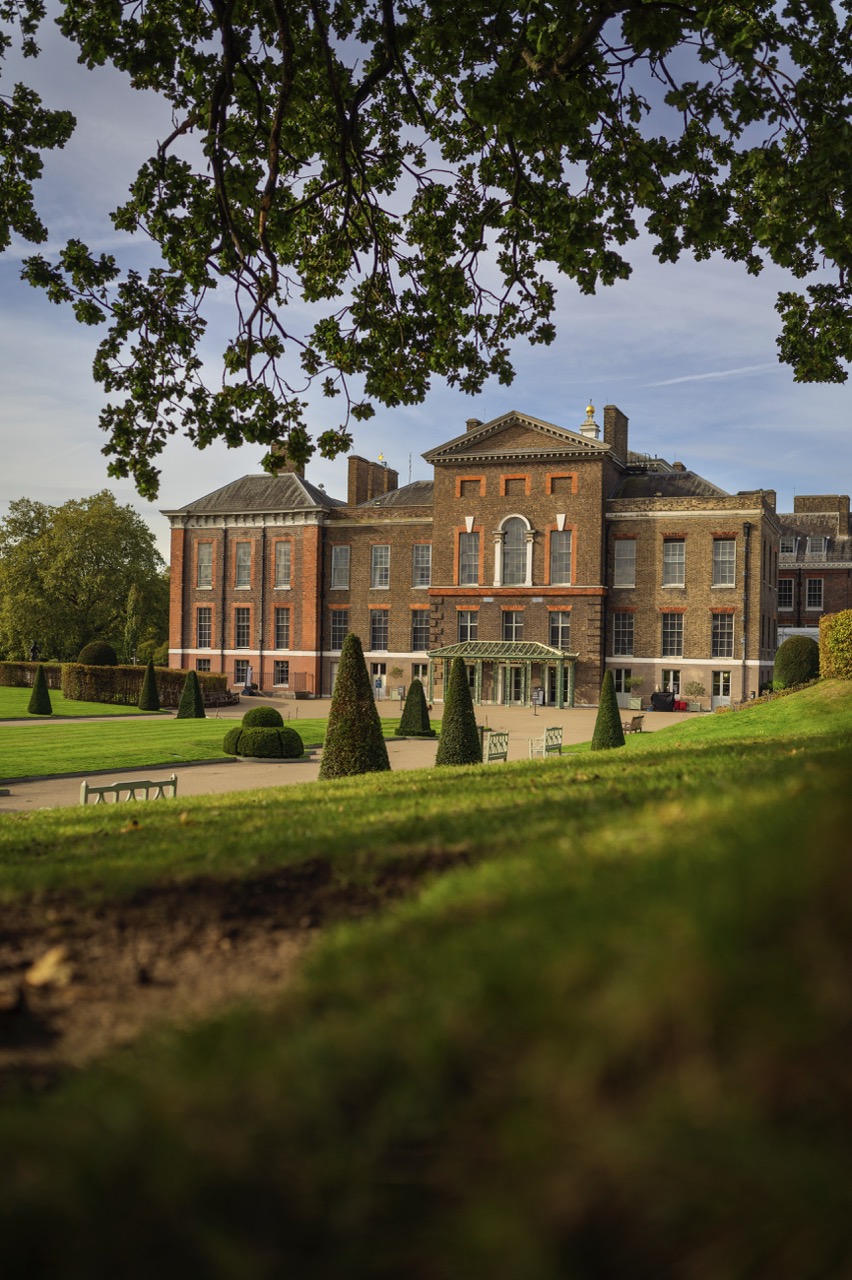
Kensington Palace. ©Historic Royal Palaces.
If you feel like soaking up KP’s storied past, then The Milestone Hotel and Residences is directly opposite, with exceptional views across the gardens towards the palace. Crammed with precious heirlooms, ritzy chandeliers and original artworks, it’s a destination in the heart of one of London’s most buzzy areas, with museums and shopping to enjoy in between exploring the palace. The Kensington Palace Residence is a three-bedroom apartment, peppered with all the fine touches you can expect from a palace, including vast windows framed by fringed, draping curtains, a grand fireplace and carpets so thick you could be walking on a cloud.
Book in to the Milestone Hotel and Residences.
A HIGHLAND RETREAT – Balmoral Castle, Aberdeenshire
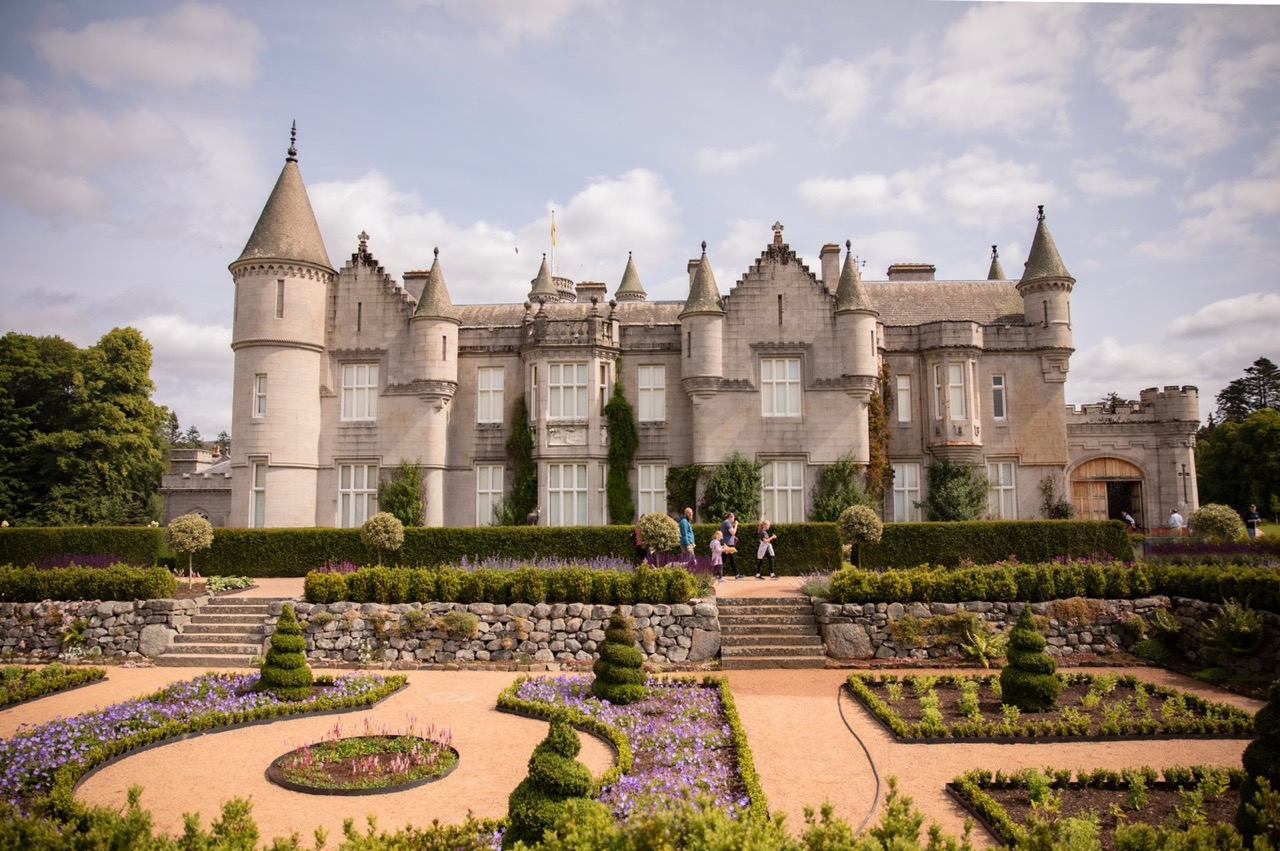
Balmoral Castle, where simple, rustic cottages on the 54,000-acre estate provide the perfect royal-style retreat north of the border. ©Sally Stevens.
Queen Victoria and Prince Albert’s visits to Scotland early in their marriage saw them fall in love with the Highlands and led to the purchase of Balmoral Castle, near Braemar, in 1852. Disappointed at the modest size of the original residence, the couple commissioned architect William Smith of Aberdeen to transform it into the striking 52-bedroom castle we see today. With its conical and pepperpot turrets, crow-stepped gables and asymmetrical finish, it’s a typical example of romantic Scottish baronial style. And although its design gives a nod to the defensive towers of the medieval era, Balmoral’s purpose is to be a comfortable, countryside retreat in a glorious setting; deer, Highland cattle, sheep and ponies all roam the 54,000-acre estate.
Queen Victoria adored its peace and serenity, and the rugged, mountainous landscape most of all – home to seven Munros (Scottish mountains more than 3,000ft high, first listed by climber Sir Hugh Munro in 1891). It also reminded her beloved Albert of the beautiful, mountainous area of with Scotland and promoted Highland culture at every opportunity, from ceilidh dancing to sporting a specially designed Balmoral tartan, with historian Michael Lynch noting how Balmoral gave “the monarchy a truly British dimension for the first time”. A collection of simple, rustic cottages on site, built in the traditional style of Scottish lodges, are used by Prince William and his family as a retreat when staying north of the border. When the royals are away, several properties – including Rhebreck Lodge, Tigh Na Garaidh Cottage, Sterinbeg Cottage or Milton of Braichlie Farmhouse – welcome public bookings. These Victorian-inspired retreats, fitted with deer antler chandeliers and snug country bedrooms, are, according to the Balmoral website, “a unique blend of historical charm and modern comforts” a testament to how living like a royal, particularly today, can be best experienced in the most understated of ways.
Stay at Balmoral for your next staycation.
Articles may contain affiliate links; all selections are independent and at no additional cost to you.